
The Vintage “Cooling” Kitchen Feature I Wish Every Home Still Had
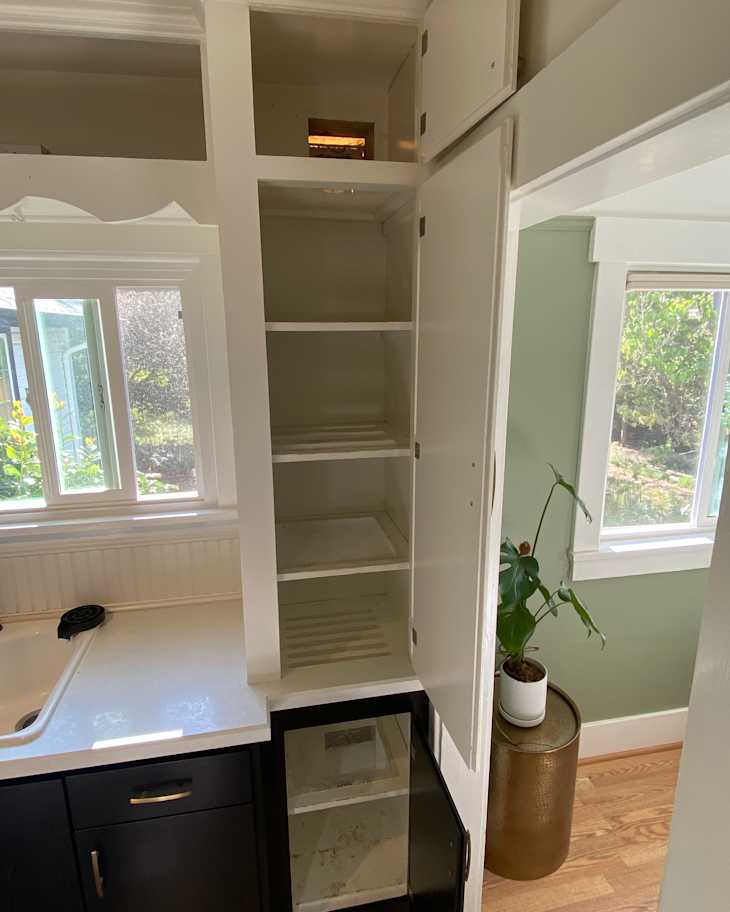
When I went to the open house of my now-home, I fell in love with all the charming little details of the 1930s farmhouse — from the crown molding and curved ceilings to the oddly placed windows and vintage doorknobs. There was one kitchen cabinet, however, that left me completely puzzled. It was a floor-to-ceiling cabinet that had wire shelves and what looked like two large vents (one at the top and another at the bottom) leading directly outside.
Living in the Pacific Northwest, the weather ranges from rainy winters to hot, dry summers. So having two holes in my kitchen leading directly outside? Not exactly ideal. I assumed it was a mistake and mentally marked it as the first thing to go if (and when) I remodeled. Four years later, that cabinet is one of my favorite features in the house.

The mystery cabinet goes by many names — cool pantry, the “California cooler,” a ventilated vegetable cabinet, root cabinet, even built-in bread pantry — but essentially, it’s a passive, self-regulating food storage system designed to keep certain foods fresher for longer. Here’s why you might want one in your home, too.

What Is a California Cooler, and How Does It Work?
California coolers or cool pantries were designed to maintain a lower temperature than the surrounding kitchen, slowing food spoilage and extending the life of items like root vegetables, garlic, onions, and some fruits. It was a natural evolution from the traditional external root cellar and brought cold storage into the home.
These cabinets rely on passive ventilation. Mine, for example, has vents at the top and bottom, which allows hot air to rise up and cool air to circulate it away. The wire or slatted wood shelves improve airflow, and fine mesh usually covers the vents leading outside to keep out pests. When built correctly and placed on an exterior wall, a cool pantry can maintain a temperature between 50 to 70 degrees year-round, per SF Gate reporter Tessa McLean. That’s perfect for items that need a stable, dry, slightly cool spot.
When Was the California Cooler Invented?
“If your home was built sometime between 1890 and 1930, you likely have (or had) what’s called a ‘California cooler.’” according to SF Gate. Cool pantries became popular as referenced in this 1999 issue of Old House Journal, when kitchen design shifted from freestanding furniture and open shelves to built-ins and continuous countertops. That puts mine right on trend for the time period.
Why Was the California Cooler Invented?
Before refrigerators became common, homes often had root cellars (ours still does — but that’s a project for another day). As floor plans evolved and homeowners wanted easier access to stored food, the cool pantry became the modern design trend of the time.
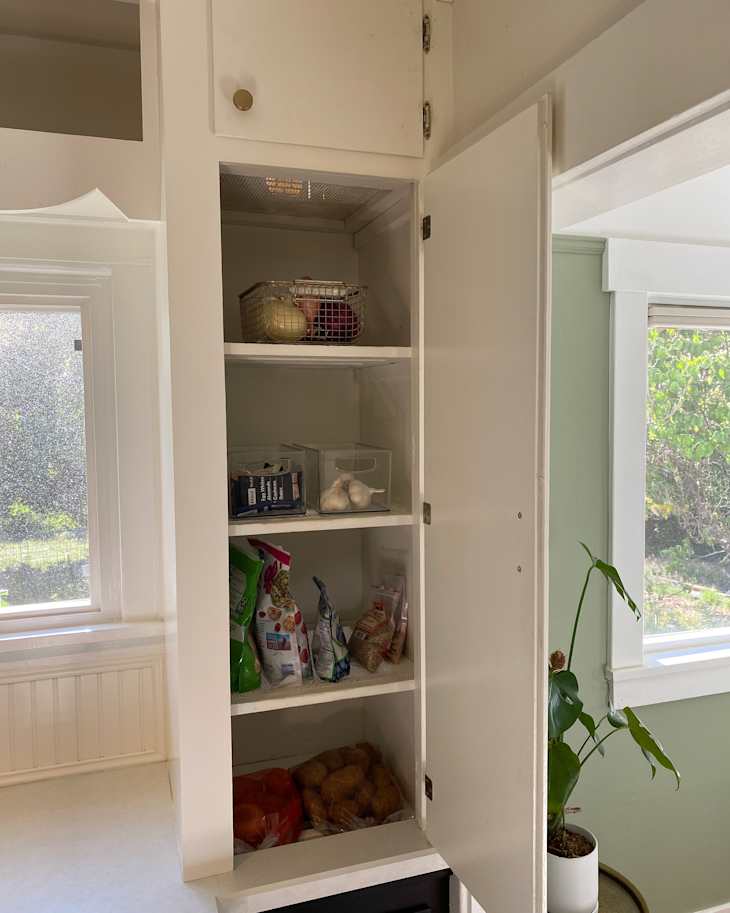
It wasn’t just convenience — food science plays a role here, too. According to the USDA, some fruits and vegetables emit ethylene gas, which accelerates ripening. Storing ethylene-producing foods (like onions, apples, bananas, and avocados) with ethylene-sensitive ones (like potatoes or carrots) causes spoilage. Our cool pantry solves this with a simple method: We store potatoes on the bottom, ethylene producers on top, and a buffer zone in the middle for other kitchen essentials unphased by the ethylene.
When Did California Coolers Fall Out of Style?
With the invention of Freon in 1928 came the era of in-home refrigeration. By the 1940s, refrigerators were common in most American homes, and passive food storage became obsolete. The cool pantry faded into the background — often removed or sealed off in remodels.
Are California Coolers Still Around?
Yes — and they’re making a comeback. You can now find freestanding and built-in vegetable cabinets or cold larders from retailers like Etsy and Wayfair, in everything from farmhouse to minimalist styles. Some are compact countertop models, while others are full-height wall units that can blend in with any kitchen design.
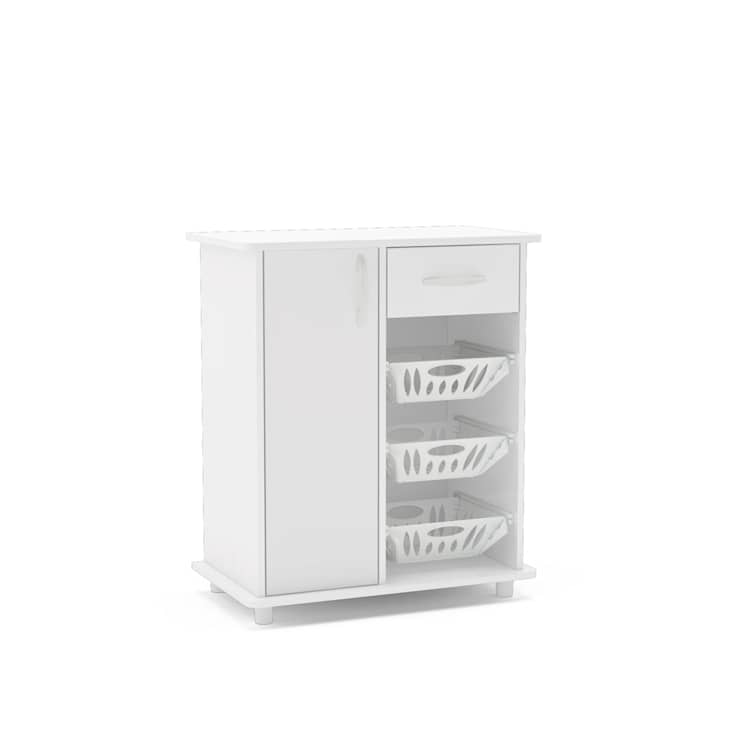
If you’re remodeling, you can incorporate a ventilated pantry or cold larder cabinet into your design, custom-built to blend seamlessly with your cabinetry. It’s a low-tech, energy-free way to store food — and it looks beautiful, too. Plus, it finally deals with that fruit basket on your kitchen counter — and the garlic that inevitably spoils at the bottom of it.
How I Use My Cool Pantry
As a professional organizer, I love when things have defined uses and clear placements. Having a cabinet with such a specific purpose plays right into my happy place — it’s functional, efficient and satisfying to use.
Here’s how I’ve optimized mine:
- Oil goes on the very bottom — away from the stove’s heat and out of direct sunlight.
- Potatoes stay low and cool.
- The middle shelves are my buffer zone for garlic, dried fruits, and nuts.
- Onions and other ethylene producers go up top, where there’s more airflow.