
This ’90s Kitchen Island Trend Is Being Replaced with Something Far More Practical
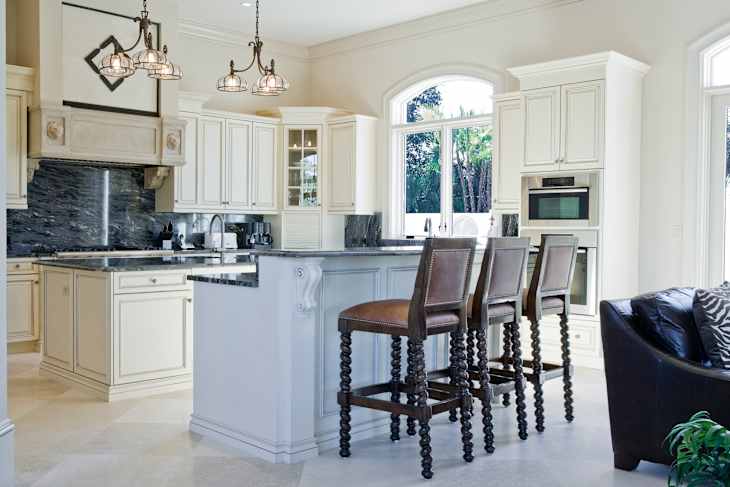
When I bought my starter home in 2011, I loved the two-tiered peninsula counter in my kitchen. I imagined it would allow me to host more people in my small kitchen-dining area, lend extra counter space so I could prepare snacks and serve them at the same time, and provide a nice, casual space to eat. In reality, though, the slim, elevated slab of granite that was raised above my countertop and visually divided my dining room and kitchen ended up being an awkward waste of space.
I found this out pretty quickly: I moved my kitchen table into the dining area and it was apparent that bar stools would crowd the space and wouldn’t be tall enough for the extra-elevated counter. My two-tiered counter was also made for a small space. The width of the higher countertop was too thin to hold a fruit basket or even cookie cooling racks, and looked cluttered no matter how I tried to decorate it. It did work fine enough for holding small condiments and snack dishes when I hosted friends and family, but other than that it was essentially a useless design.

The History of the Two-Tiered Kitchen Island/Countertop
As it turns out, the two-tiered islands and peninsulas that were once popular in various forms in the 1990s and continued through into designs in the early 2000s have fallen completely out of style as a more streamlined kitchen island reigns supreme. In fact, these bi-level spaces are the number-one trend that Ebony Boudreaux, a kitchen and bath designer at NFM in Kansas City, sees leaving homes, either through renovations or no longer appearing in new-build homes. The biggest complaint she hears from her clients is that the bar-height countertop cuts the kitchen off and limits counter space.
Two-Tiered Countertops Helped Break Up Open Floor Plans
The two-tiered bar was the clever workaround for open floor plans, says Levi Schoenfeld, former architect and product manager at Hover, a home improvement tech company. “As homes began blurring traditional boundaries, these split-level counters provided a compromise, giving visual separation without putting up walls,” he says. “They were the perfect solution for the ’90s entertainment boom, when everyone suddenly wanted their kitchen to be part dinner-party venue, part cooking zone. It was all about creating those layered, multifunctional spaces that defined the era’s ‘more is more’ design philosophy.”
But as people discovered, these spaces created a choppy layout and actually made kitchens feel smaller.
As people tried to create zones with these types of bi-level countertops, they found that the extra slabs of stone and laminate created unnecessary edges and elevation changes that sacrificed the flow and function of the kitchen, says Alecia Taylor, designer with CabinetNow.com.
What’s Replacing Two-Tiered Islands and Peninsulas?
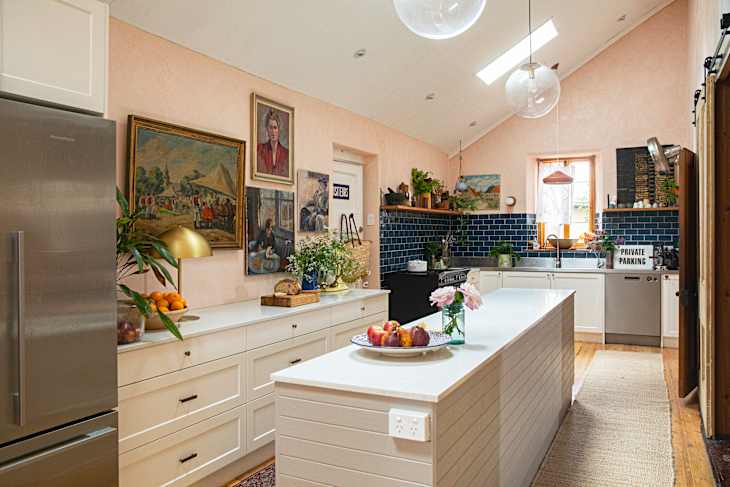
The short answer is a simple one. Homebuyers, builders, and designers are all in on the return to the single-level kitchen island, which can be creatively implemented in smaller kitchens, as well as the free-standing islands in larger kitchens.
From a functional standpoint, homeowners and renters tend to want versatile prep, dining, and work-from-home space in one zone, and a flat island provides exactly that, Taylor says.
But designers tend to prefer some kitchen island trends over others. Oversized islands and waterfall countertop edges, which extend past the sides and drop to the floor, have become particularly popular because they offer more prep space and a sleeker aesthetic, says Sabrina Phillips, a general contractor, interior designer, and owner of the Designing Women of Orange County.
Single-level islands also have clean lines and better visual flow, Schoenfeld says. “The modern kitchen is all about simplicity and uninterrupted surfaces.”