
Here Are 12 Types of Apartments and How to Identify Them
An apartment, by definition, is a room or set of rooms fitted with housekeeping facilities and usually leased as a dwelling. But under this all-encompassing definition lies a dizzying range of apartment options and styles. If you’re on the hunt for an apartment, finding one that meets your needs starts with understanding what types of apartments are out there and then narrowing your search from there. Do you want a basement apartment? A railroad unit? A loft?
No matter your needs or dreams, there is likely an apartment that can fulfill them. Typically, apartments that offer fewer conveniences, like walk-ups and basement apartments, or less space, like studios and efficiencies, will fall on the lower end of the rent spectrum, while penthouses and townhouses that offer more room and sometimes more amenities will fall on the higher end. The cost of rent will also depend on the amenities that the apartment building itself offers. Taking stock of the space you need, the amenities you want, and the budget you have will help you decide on the best type of apartment for you. Here are 12 different types of apartments that you can consider when it’s time to search for a new place to live and how to tell them apart.

1. Railroad Apartment
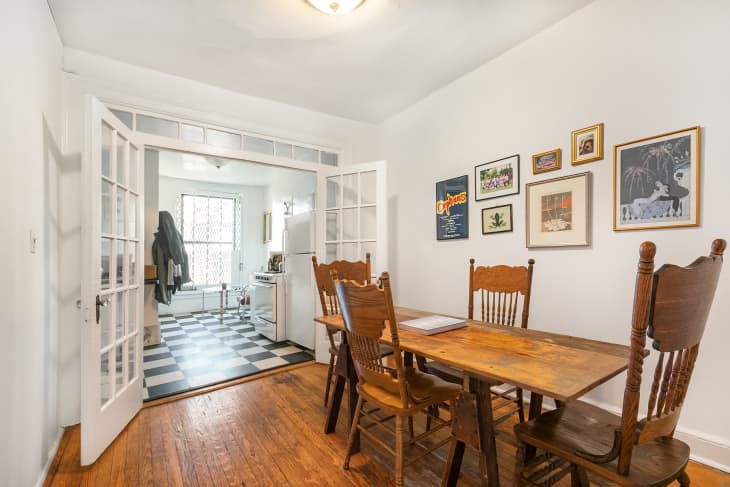
Railroad apartments feature a long, narrow layout where one room leads directly into the next. There is no hallway, so the space resembles a line of train cars, hence the name. This style of apartment can inspire purposeful and minimal living to make its unconventional layout work. But because windows are usually located at both ends, with none in between, the space can be dark and create privacy issues if you’re living with roommates.
2. Studio Apartment
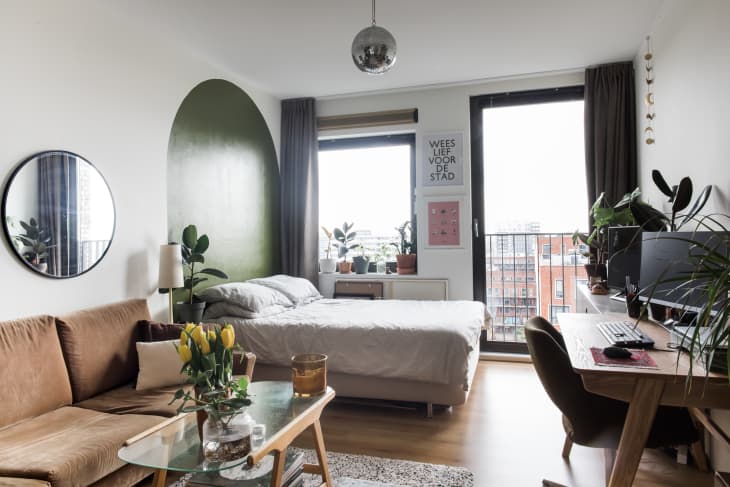
Typically under 600 square feet, a studio apartment brings the living, dining, kitchen, and sleeping areas into one room. It’s a good option if you’re looking to save money because it’s usually more affordable than traditional apartments. Even though everything is found in one large space, studio apartment layouts can vary, with some incorporating half-walls or built-in storage.
3. Alcove Studio Apartment
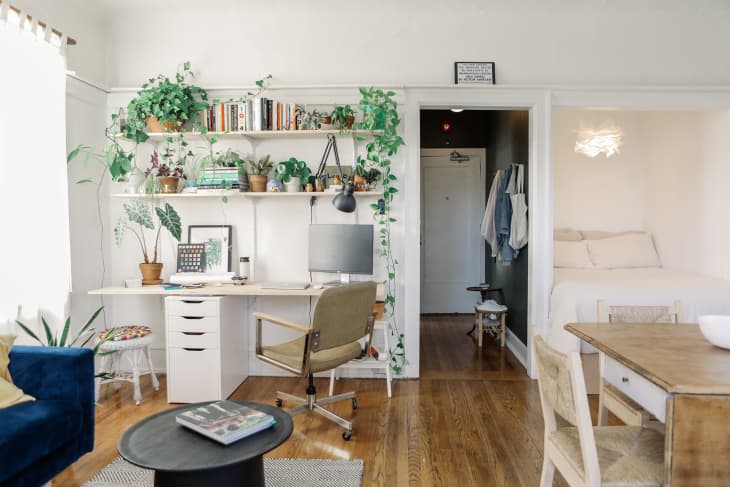
An alcove studio apartment has a similar feel to a studio, with the kitchen, living, and dining area all in one large space. But an alcove apartment creates a separate area for the bed. While it’s not a true one-bedroom, an alcove studio features a nook or L-shaped area where the bed can be positioned. This layout can also allow for a curtain or other partition to give the sleeping area more privacy.
4. Convertible Apartment
In a bigger city where rent is high and space is limited, a convertible apartment affords the opportunity to get creative with your living space while saving a little bit of money. A convertible apartment is essentially an alcove studio where most of the living spaces are in one room, but with a designated space for a sleeping area.
This space can be separated with an alcove, partial wall, a small hallway, or a separate room with a sliding door or curtain. A one-bedroom convertible apartment means the apartment is a studio with the option of adding a bedroom, and a two-bedroom convertible means it’s a one bedroom with the option of adding a second, and so on.
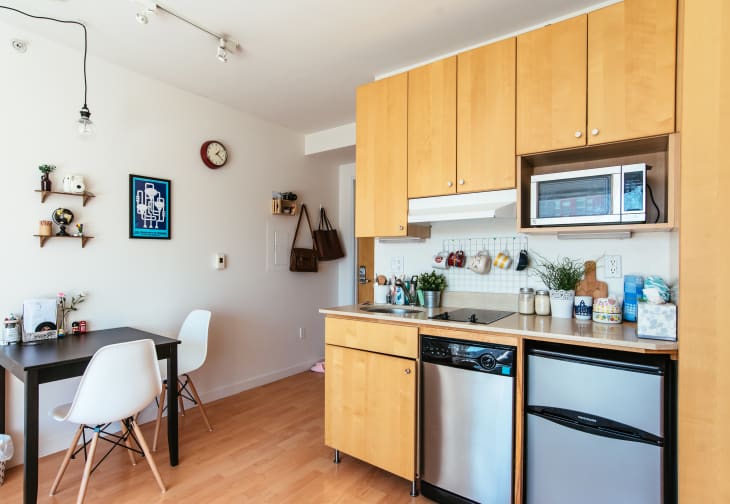
5. Efficiency Apartment
An efficiency apartment is essentially the same as a studio — with living, sleeping, kitchen, and dining areas in one room. But the key difference is that an efficiency apartment is smaller, usually under 400 square feet. Appliances may even be smaller to accommodate the available space. Mini-fridges and cooktops instead of ovens are common.
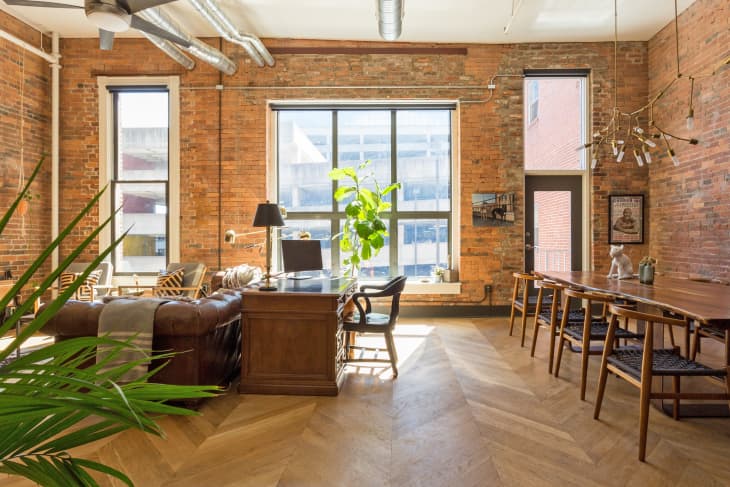
6. Loft Apartment
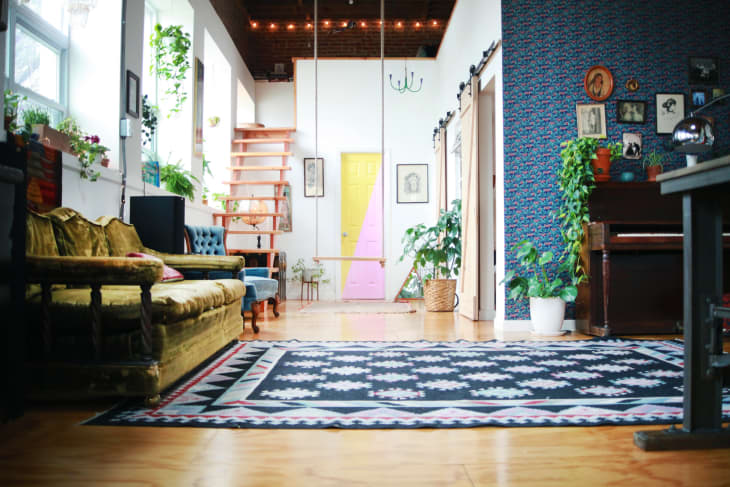
Open and airy, loft apartments come in a variety of shapes and sizes, featuring different numbers of bedrooms and ranges of square footage. Loft apartments are often found in converted commercial buildings, like factories, and are defined by their open-concept architectural style in which some dividing walls don’t go all the way to the ceiling. They typically feature exposed brick, metal or wood beams, or ductwork.
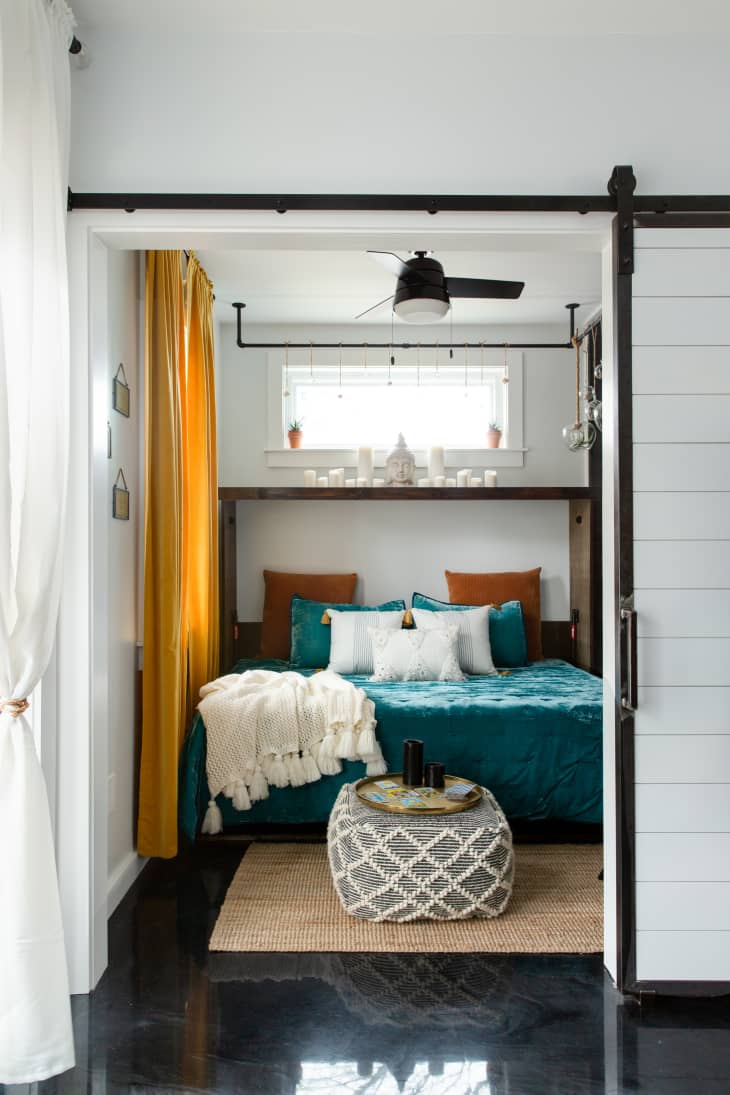
7. Flex Apartment
Similar to a convertible apartment, a flex apartment allows you to add bedrooms if needed, but the terminology is a little different. A one-bedroom flex means that the apartment has one bedroom with the option to add a second. A two-bedroom flex means there are two bedrooms with the option to add a third, and so on.
8. Townhouse
Townhouses are often found lining the streets of large cities, but they can also be found in smaller suburbs. This type of apartment has multiple floors and shares at least one wall with its neighboring units. In some cases, the bottom floor will be a separate apartment — sometimes a garden apartment.
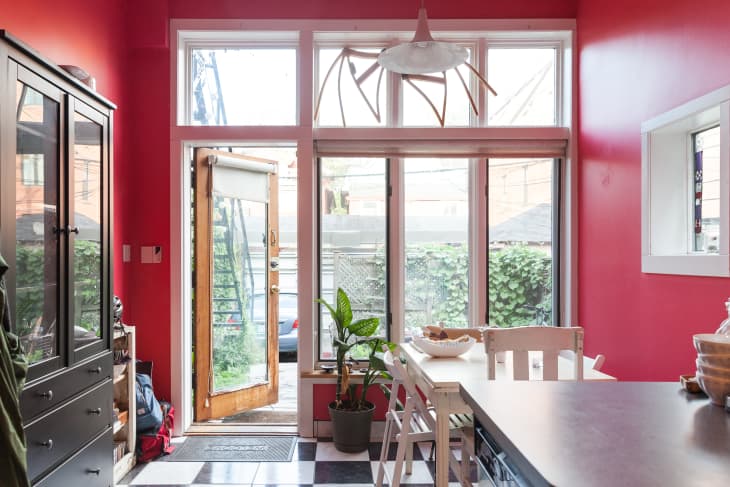
9. Garden Apartment
The aptly named garden apartment is an apartment that is at ground level or partially below and opens into a garden or courtyard area. Typically found in older apartment buildings, like the classic Brooklyn brownstones, these units are often slightly below ground level and may feature a private patio along the front sidewalk. Another definition of garden apartment refers to low-rise apartment buildings built around shared green spaces that were popular in the post-WWII era. Ultimately, the definition varies, so it’s important to check the listings to know exactly what you’re getting.
10. Walk-Up Apartment
A walk-up refers to an apartment that’s only accessible by stairs — you must walk up to it. These can be found throughout the United States but are particularly popular in large cities. Many of these apartments were built prior to the integration of elevators in multistory buildings. Because of their age and the inconvenience of hiking up stairs each time you come and go, these apartments are typically more affordable than others, particularly those with elevator access.
11. Basement
A basement apartment is, not shockingly, located in the basement of the apartment building. But there are some additional requirements that make it acceptable (and legal) for habitation. Ceilings must be at least 7 feet high, and every room is required to have a window that is large enough for an emergency escape. And among other requirements, the apartment is also required to have a separate entrance. If you’re in the market for a basement apartment, make sure you check that the unit meets all of the requirements to ensure your safety.
12. Penthouse
A penthouse, by definition, is the top floor of an apartment building. Today, the name connotes luxury, but the penthouse wasn’t always the most desirable space in the building. According to the U.S. Census Bureau, the population of New York City swelled by over 1.3 million people in the 1920s. Up to this point, the top floor was considered undesirable and used to house servants to take advantage of any usable space.
But the rise (pardon the pun) of the elevator made upper floors of buildings more accessible, so developers could build taller buildings and the well-off got a taste of the views from the top. Today, penthouses are one of the most expensive types of apartments.