How Bobbin Decor Became 2025’s Hottest Furniture Trend
Finding new ways to incorporate antique touches into your space feels like a never-ending journey. So imagine how excited antique lovers and die-hard collectors are when antique styles enter the mainstream, creating modern takes on a time-honored style.
What was once a status symbol in the 17th-century homes of England has been popping up in projects of au courant designers and DIY decorators alike. Rooted in rich history and later beloved in the Victorian era, bobbin furniture — a distinct style that loosely resembles “bubbles” carved into intricate woodwork — has exploded in popularity over the last few years.

Apartment Therapy contributors first began to notice bobbin woodwork pop up on everything from chaises to tables back in 2023, but design pros are interpreting the next wave of this time-honored style in some really exciting and fresh ways.
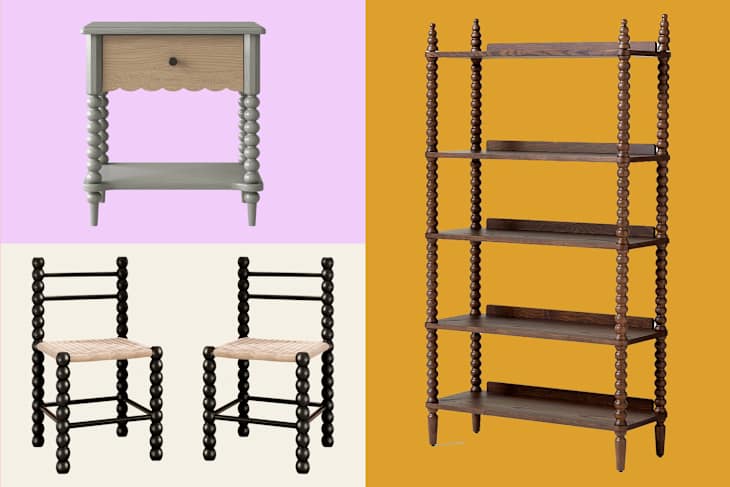
Bobbin accents have leaped from chairs and beds onto frames, mirrors, and zany light fixtures. And, what’s more, they’re showing up in colors that the earliest wood carvers wouldn’t have fathomed. Below, design pros are sharing more on how bobbin woodwork evolved into the trendy, colorful interpretations design obsessives are coveting today. Plus, a look at some of our favorite market items to bring the style into your space.
Our insider’s guide to trends and more, Design Defined is the easiest way to keep up on style you just can’t miss.

What is bobbin furniture, exactly?
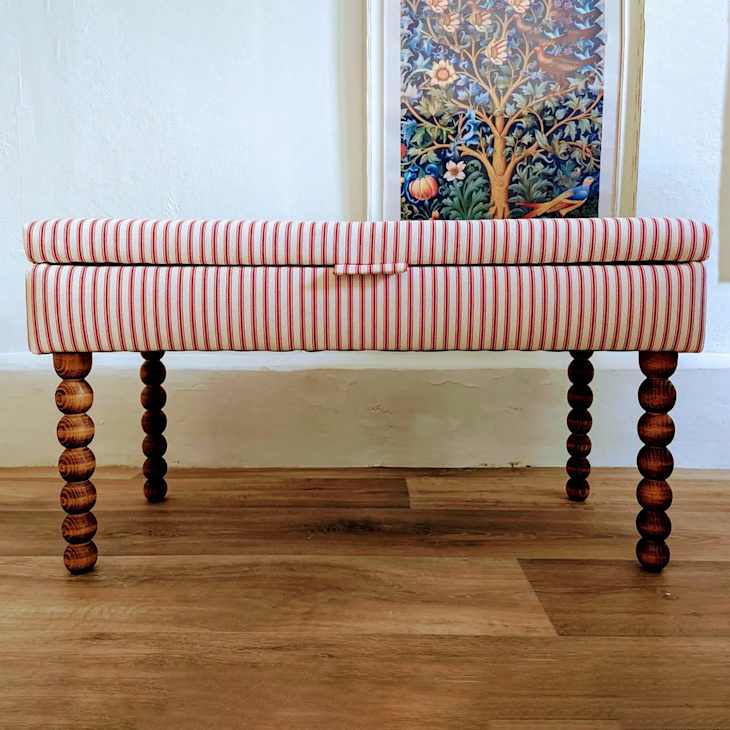
Think of bobbins as baubles for wooden furniture. The rounded shapes cut into straight wood by a lathe — a rotating tool with a cutting edge — are what give bobbin furniture its geometric, artisanal detail. You can find pieces with this signature ball detail in antique shops all over the country, but lately, retailers such as Pottery Barn (like this Chris Loves Julia collab) and Etsy have also leaned into modern reproductions all their own.
“My favorite ‘trends’ are the ones rooted in history, which actually makes them timeless, not trends at all,” says Drew Michael Scott, founder of Lone Fox. “I’m especially drawn to bobbin frames, whether on mirrors or art, as they bring a bit of quirk to a space. Choosing a bobbin frame over a plain one shows attention to detail, which is key to any successful design project.”

How bobbin furniture evolved in history.
According to Sheila Edwards, furniture design professor at Savannah College of Art and Design, artisans began creating intricate shapes in woodwork centuries ago. The turning technique goes back as far as Plato’s Ancient Greek times, appearing in fourth-century B.C.E. Ancient Roman furniture as daybeds and footstools. Though the style was nowhere to be found during the Dark Ages, by the 1400s innovations in lathe turning (thanks hydro-powered mills!) brought the technique back into the spotlight.
“It was a superfast way to transform lumber or a branch into a usable furniture element and introduce this idea of geometric pattern,” Edwards explains. “In the Middle Ages [and into the Renaissance], you see lathe everywhere. They went bananas with it.”
The first deviation from traditional bobbin construction came from innovator George Hunzinger. The artist took classic 17th-century turning construction and maximized the effect with a nod to 19th-century Victorian aesthetics, Edwards tells us. The result? His Lollipop chair, which has a fanned-out back of spheres.
In the 1860s, British architect Philip Webb designed a reclining chair with bobbin detail on its frame for Morris & Co. The cushions consist of the iconic William Morris-designed floral upholstery, of course. The spherical silhouette soon punctuated what’s known as the Arts and Crafts Movement that originated in Britain, with more attention paid to skillful woodwork.
Fast-forward to the early 1900s, renowned architect and designer Josef Hoffmann added his take on bobbin in a modernist way that pioneered the signature Art Deco geometry. But how did bobbin furniture begin to influence retail trends today, you may wonder?
“It’s such a perfect blend of historical reference that is also very modern, especially if you use consistent and repeated size and shape,” Edwards shares. Scott echoes the sentiment, noting that whether you opt for a corner chair with a rush seat or a red, lacquered Swedish candelabra, “it’s sure to add a touch of unique charm to your home.”