
This Designer’s Paint Trick Is the Easiest Way to Fake Architectural Charm
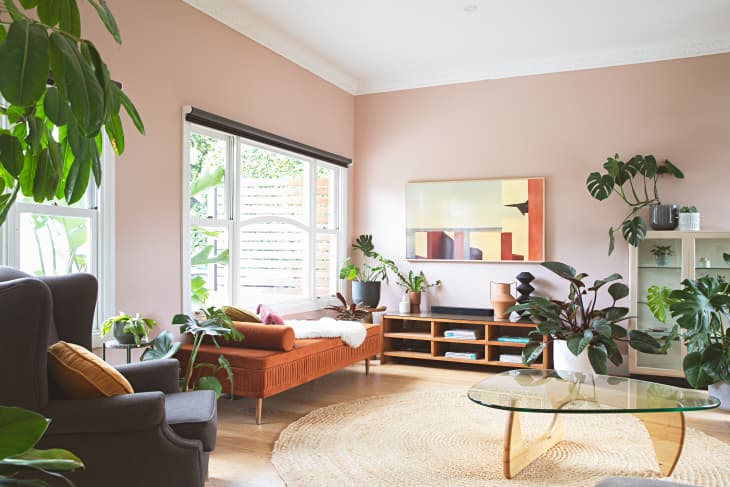
There’s a reason a fresh paint job is so often recommended by designers as a first step in transforming a space: Painting a room can change not just the color, but also the whole vibe of the space. And if you use your paint right, it can even minimize flaws and call attention to assets.
Take this clever paint trick recently posted by designer Orlando Soria on Instagram. Soria notes that the biggest problem when painting a ceiling and walls that aren’t separated by crown molding is that you’ll likely end up with noticeable lines between them. Even the steadiest hands can cause a messy seam — especially when the paints for walls and ceilings are high-contrast.

One way to hide that often messy line is to use crown molding (a Parisian favorite!), but that’s not exactly a standard-issue feature. And when you’re on a budget, installing crown molding is an additional cost that often doesn’t make the cut — even the cheapest types will cost about $20 per eight linear feet. So that’s where Soria’s brilliant trick comes in: Use paint to fake crown molding.
How to Fake Crown Molding with Paint
Instead of ignoring the jagged edges at the tops of your walls, which will be there no matter how crisp your tape lines are, Soria says you can create the illusion of crown molding by stopping your wall paint a few inches below the ceiling. Then, paint that gap the same shade as the rest of the ceiling (usually white).
“My go-to proportion for this technique is five inches,” Soria wrote in his Instagram post. “Just measure five inches from the ceiling every 24 inches or so, [and] then tape it off before painting. The result is very satisfying!”
Soria has used this paint trick in living rooms, bedrooms, and bathrooms, and has also made the most of it to compensate for trimless windows and “dinky” baseboards. In fact, if you’re painting a boxy room or aim to highlight a custom feature, Soria suggests adding curves using the same concept to soften edges and imitate architectural details.
“It’s a small edit, but it makes a huge difference in terms of adding structure and visual strength to a room,” he notes. Even better? It’s a project that you can do in just about any room in the span of an afternoon.