
My Father-in-Law’s Kind-of-Gross Gardening Secret Has Worked for Decades
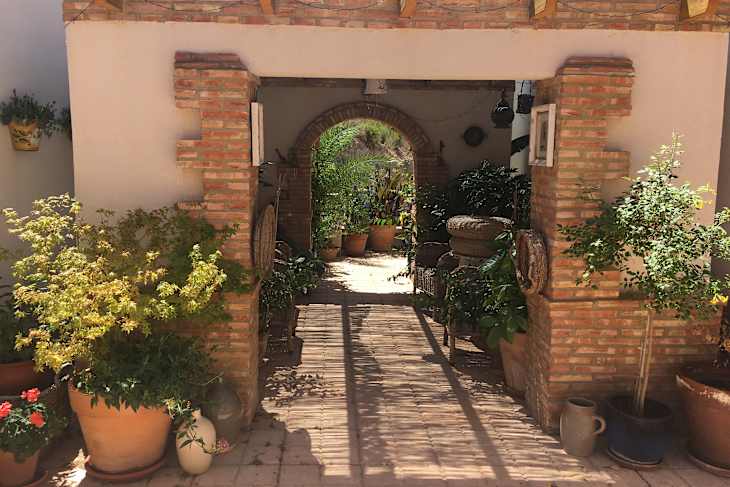
I confess — I’m a lazy gardener. I want minimum effort, maximum reward products, like synthetic fertilizers that claim to dramatically transform plants as if by magic. However, after gaining a little more environmental awareness, the quick-and-easy appeal of chemical fertilizers has waned for me (though I’m still partial to a card trick!) And yet, I still want a lush garden.
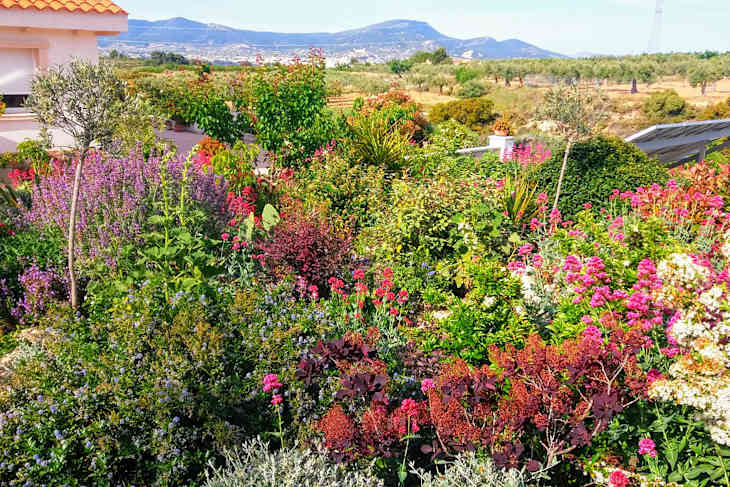
Enter my father-in-law, John Matthews, whose sprawling Mediterranean yard is teeming with stunning flowers and foliage. From the blue blooms of his California lilacs to the star-like blossoms of his abelia, John’s abundant garden is, understandably, a point of local envy. (You can tell from the photos!)
He spends hours nurturing his yard, but John relies on one surprisingly easy — albeit stinky — addition to keep his plants thriving: chicken manure. Here’s why you might want to use it in your garden.
Using chicken manure has an environmental benefit.
Chicken pellets release nutrients slowly to improve the quality of the soil. Because pellets are an organic byproduct of chickens, they’re sustainable and environmentally friendly.
Fertilizers come with an NPK number (nitrogen, phosphorus, and potassium ratio) on the bag, and with a typical NPK of 4-2-1, chicken manure is a good source of nitrogen, which can boost plant growth and help give plants their vibrant green color.
All fertilizers come with different ratios of NPK, and nitrogen-heavy fertilizers might work well for any of your regular crops that are looking a little puny or yellowish. John (located in USDA hardiness zones 8 to 10) successfully uses chicken pellets — in other words, lots of nitrogen — on his fruit trees: almond, olive, plum, apricot, peach, cherry, and pomegranate.
Here’s where you can buy chicken pellets.
Chicken manure can be bought in easy-to-use dried pellets online or from local nurseries. Although you can sterilize your own chicken’s pellets (if you keep chickens) by composting them at high heat, this year, the safest bet is to buy prepackaged organic fertilizer, sterilized during the manufacturing process. Consult with your garden center and check your state department’s bird flu guidance.
Definitely don’t use fresh manure on plants since it can contain health-harming nasties like E. coli, Salmonella, and bird flu.

How, when, (and when not) to use poultry poop as fertilizer:
Apply a handful of chicken pellets around the base of plants, working them into the topsoil. Crops, trees, and shrubs benefit most when pellets are applied in spring, though flowers can be treated monthly through the growing season.
John learned the hard way that using chicken pellets as fertilizer is not well-suited to delicate species after it destroyed a spider plant. Avoid using it on acidic-loving plants, like rhododendrons, since it has a neutral to alkaline pH.

Take extra precautions to prevent bird flu.
Because the spread of bird flu is top of mind for many Americans in 2025, you may opt to use an alternative fertilizer this year. However, when working with dehydrated chicken pellets, it’s always best to keep these safety measures in mind, especially if you also work or live in close proximity with poultry or birds: Clean your gardening tools after each time you work with chicken pellets, thoroughly wash your hands, and wear a mask to protect yourself.
Just how bad is the smell?
I won’t sugarcoat it; it’s rotten. The first time I gifted poultry poop to my father-in-law, I made the error of bringing it inside the house. The offensive smell emanated through the packaging and clung to the inside of my nostrils for days. Be sure to store it in the garage or shed to avoid this mishap. However, if you can put up with the putrid odor, this waste ingredient works wonders in the yard, as you can see from my FIL’s beautiful garden photos throughout this post.