
“Cinderella Tubs” Are the Vintage Feature Every Bathroom Needs (They’re so Whimsical!)
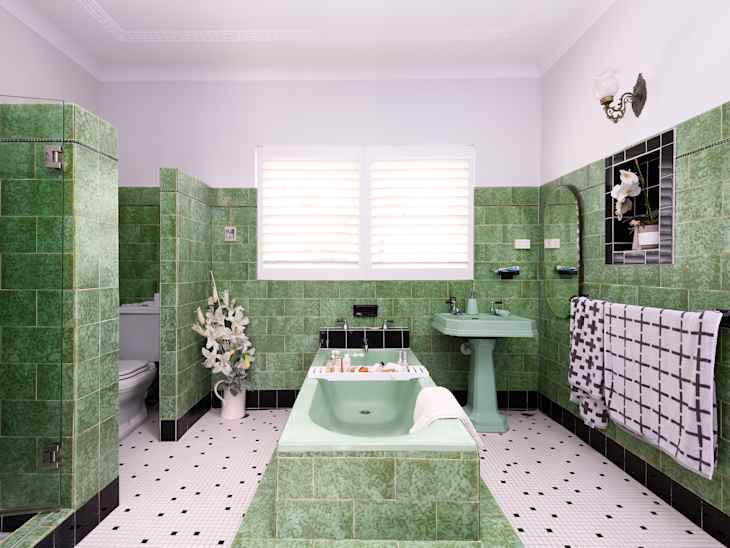
A few weeks ago, I was chatting with a friend about her upcoming bathroom facelift. She mentioned that they were replacing tile and giving the bathroom a fresh look with paint and fixtures, but they weren’t going so far as to get rid of the Cinderella tub. Cinderella tub? I asked. I had never heard of such a thing in my life.
I thought I knew a decent amount about bathroom, home, and architecture terminology, but this was a term that I had never come across. A quick Google search pulled up pages of candy-colored images of this retro tub, and immediately I recognized the style from vintage bathrooms I’ve seen while indulging my open house habit.

At first glance, the Cinderella bathtub appears luxurious. I mean, there are ledges to set your candles and favorite spa accoutrements! But, as I dug into the history of these charming old school tubs, I found out that they were actually designed for practicality rather than looking pretty. And, spoiler alert, lots of people are ripping them out today.
What Are Cinderella Tubs?
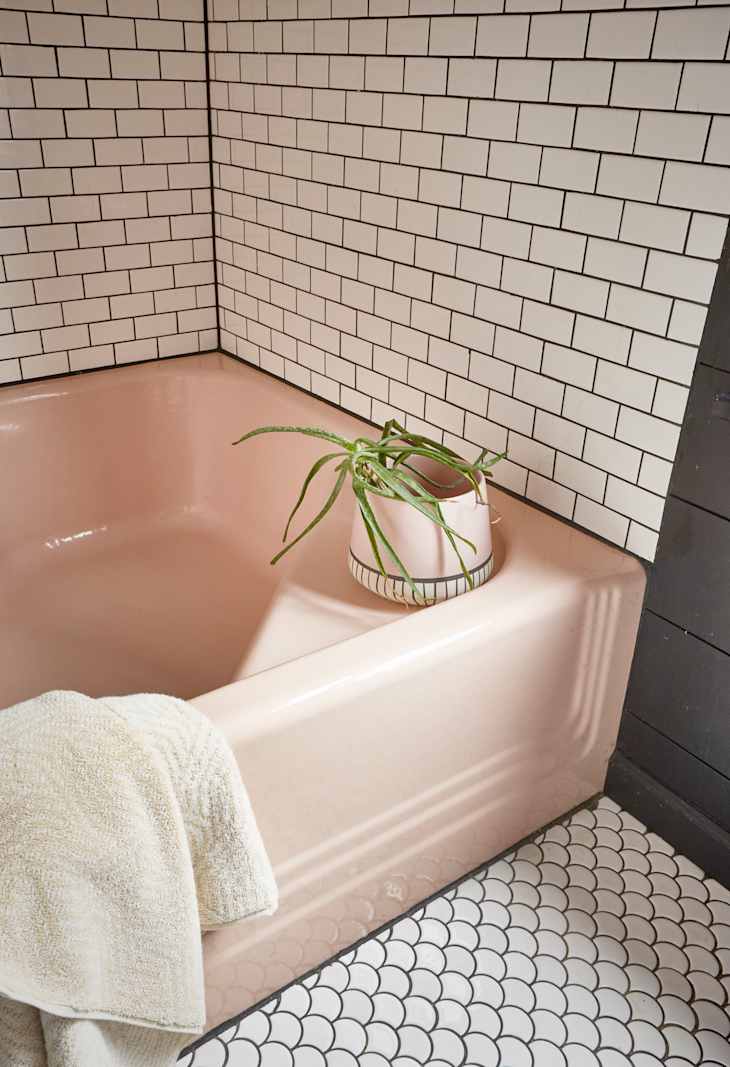
Cinderella tubs were created to make the most of a small bathroom footprint, yet they also are perfectly situated for a relaxing bathing experience. Lauren Saab, founder of Saab Studios, explains, “Instead of being a perfect rectangle, a Cinderella tub is cut on a diagonal to fit into a corner, which creates a wide, rounded front for sitting and soaking.”
Often, one end would be more shallow than the other, creating just the right incline for bathing comfortably. The sides of the tub allowed the bather to either set items within arm’s reach, or, for parents, it provided a place to perch while the children took their evening bath. “They were usually made of cast iron with an enamel finish and were designed as a space-saving solution in mid-century homes,” Saab explains.
Showering in a Cinderella tub could prove to be a difficult task, especially if you didn’t have a shower curtain that fully wrapped around it, but there were shower curtains created that accommodated the dips and levels of the tub. They’d often come in two pieces and snap together in the middle.

The Mid-Century History of Cinderella Tubs
Cinderella tubs were most often seen between the 1930s and 1950s, when bathrooms were still primarily seen as a utilitarian room rather than somewhere to add extra square footage. This clever style of tub made the most of a corner tub location by squeezing a tub and storage into a small footprint. While the space might have been too narrow for a tub to be laid out straight across, the diagonal orientation turned a tiny alcove into an intentional design decision.
Pair the unique look of a Cinderella tub with the glamor of mid-century advertising, and something that was more functional than frivolous all of a sudden had a fun, stylish appeal. But as houses — and bathrooms — grew in square footage, there was less need for the efficiency of a Cinderella tub, and the style fell out of favor.
What Type of Houses Most Often Had Cinderella Tubs?
While the name Cinderella tub might conjure up images of luxuriously bathing while getting ready for a hypothetical ball, the reality of these tubs is much different. They were often used in more modest mid-century homes, like ranch houses and small cottages. Despite their larger-than-normal footprint, they were actually intended to maximize every square inch.
“These tubs appear in post-war ranches, Cape Cod-style homes, and other compact mid-century houses built for young families,” explains Saab. “They were never considered luxury fixtures and were meant to be practical solutions for small bathrooms.”
Do People Still Want Cinderella Tubs Today?
While a Cinderella tub actually seems like it might offer some advantages — who wouldn’t want a place to prop a wine glass and a book while taking a soak? — Saab explains that many buyers don’t want this retro style in their own home. Often, these tubs are replaced with something modern — like a deeper soaking tub or a walk-in shower.
“Occasionally a vintage purist will restore one, but that is the exception rather than the rule,” Saab says. I’d love to be part of the exception!