
A Shocking Study Will Make You Think Twice About Closing Your Toilet Lid
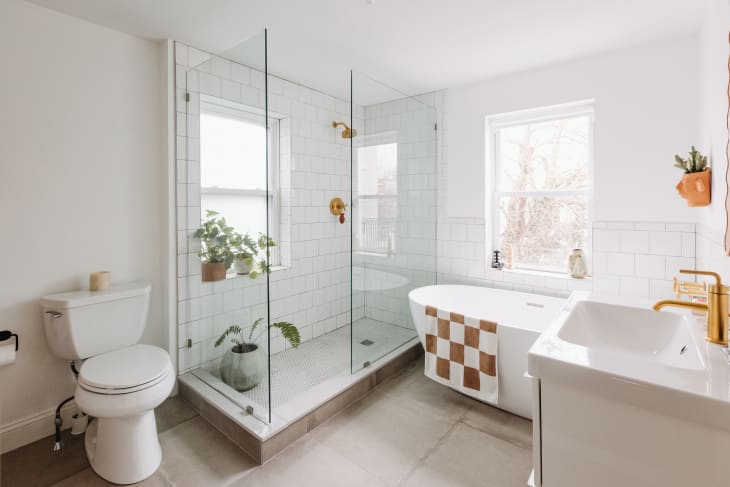
My family always keeps the toilet lids closed whenever they’re not in use for two main reasons: so that our dogs don’t drink toilet water, and so nothing gets sprayed throughout the bathroom when we flush. But in a surprising turn of events (and much to my disgust), I just learned that closing the lid doesn’t actually accomplish that second goal — and the ramifications are pretty serious.
While it’s been widely believed for a long time that closing the toilet lid before flushing prevents the spread of airborne bacteria and germs, also known as “toilet plume,” it turns out that keeping it shut doesn’t actually have as much of an effect on overall bathroom cleanliness as you may think.
A 2024 study published by the American Journal of Infection Control (AJIC) looked into this impact and completed tests in which a surrogate for human enteric viruses (bacteriophage MS2) — which is transmitted through bodily waste — was added to toilet bowls. They flushed the toilets with some open and some closed and discovered that regardless of if the lid was left up or down, the viral contamination was about the same.
So what does this all mean? Lid closure (whether left open or closed) had no significant effect on the spread of the virus. Keeping the lid shut, which was once believed to prevent this cross-contamination, did not lessen the spread compared to keeping it open.
And that cross-contamination is just as gross as you would guess. While the bacteria in bodily waste is bad enough, viruses can also be transmitted through toilet flushing. According to the National Library of Medicine, “Toilet flushing generates infectious bioaerosols from urine, feces, or vomit shed into a toilet bowl. These bioaerosols either settle on surfaces in the washroom or remain airborne, presenting an increased risk of fomite-mediated or aerosol disease transmission.”
This is what’s flying around your bathroom and landing on any and every surface inside them — including any toothbrushes that might be out. Cue the horror and the urge to go toss the toothbrushes and clean your bathroom now.
While lid closure doesn’t prevent any cross-contamination, disinfecting can help reduce it. The AJIC states that “elimination or inactivation of viruses in the bowl water is necessary to prevent continued contamination of the restroom, as not all of the viruses in the bowl are removed to the drain after a flush.” So if someone in your family is sick and you want to do everything you can to prevent spreading the illness, you need to disinfect the toilet bowl after flushing, and then thoroughly clean and disinfect your bathroom.
Additionally, even when no one is sick, it’s important to know that aerosols from the toilet bowl spread throughout the bathroom and settle on surfaces after you flush. Because of this, you may need to disinfect your bathroom more than you currently do — and you definitely need to find a place to stash toothbrushes that isn’t out in the open (or get a good cover).
How to Clean and Disinfect a Bathroom
Want to get your bathroom thoroughly clean and disinfected? Using a disinfecting cleaner, like Seventh Generation Disinfecting Multi-Surface Cleaner or Clorox Disinfecting All-Purpose Cleaner, throughout the bathroom is the most efficient way to make sure your bathroom is disinfected. You can also use a regular all-purpose cleaner first then follow it with a disinfectant spray, such as Clorox Disinfecting Mist or Lysol Disinfectant Spray.
You could also make your own disinfecting cleaner by mixing four teaspoons of bleach per quart of room-temperature water. This is the ratio you need, according to the Centers for Disease Control, to make an effective disinfectant.
When it comes to cleaning the toilet itself, flush the toilet and then disinfect. You could use a commercial toilet bowl cleaner with bleach or you could simply pour half a cup of straight liquid bleach into the toilet. Scrub with a toilet brush, making sure to clean under the toilet rim.
Important reminders for cleaning with bleach are as follows:
- Always ensure adequate ventilation when cleaning with bleach.
- Make sure that your bleach hasn’t expired.
- Never mix bleach with any other cleaning chemicals, especially anything containing ammonia or vinegar.
- Always use gloves.
- Make sure your ratio of bleach to water is strong enough for the bleach to disinfect effectively.
- If you mix your own bleach spray, make a fresh batch every time you clean to ensure it’s potent enough to disinfect.
- Dwell time is crucial for disinfecting to occur.
Follow these nine steps to get your bathroom clean.
- Use a glass cleaner to clean the mirror.
- Use an all-purpose cleaner to wipe down the faucets and countertop.
- Wipe down the light switch, making sure that your rag isn’t too wet.
- Dust and wipe down the outside of the toilet.
- Add a disinfectant to the inside of the toilet and scrub the bowl with a toilet brush. Make sure to let the disinfectant sit in the bowl according to product instructions.
- Sweep or vacuum the floor.
- Use a spray mop to clean the bathroom floor.
- If you use a regular all-purpose cleaner, follow your cleaning with a disinfecting mist or spray on all surfaces.
- Disinfect every surface, especially high-touch areas like the toilet handle, faucet, and light switches.
Bathroom Break dives into the depths of your bathroom — from the history of toilets to how to make it smell like a spa. Check out all the stories here.