
4 Signs You May Be Struggling with “Clutter Blindness” — And How to Fix It for Good
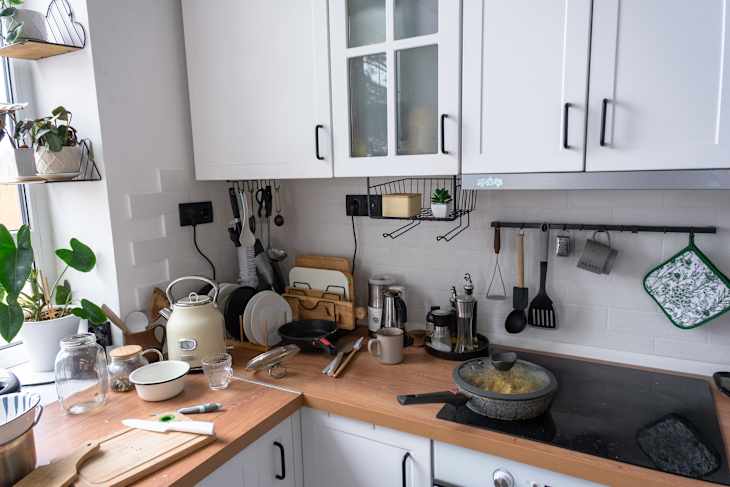
Clutter can be many things: stressful, time-consuming, annoying, and in-the-way. But what isn’t discussed so much is the nature of “clutter” as a cycle — when a home becomes cluttered and left in that state for a while, decluttering becomes increasingly unapproachable, which leads to more clutter and, potentially, “clutter blindness.”
What Is Clutter Blindness?
According to Linda Samuels, certified professional organizer and owner of Oh, So Organized!, “Clutter blindness is the experience of having clutter in your life that you no longer see. Imagine a literal example of a horse wearing blinders, which blocks out everything in their peripheral vision. Clutter blindness is similar — except that clutter goes unnoticed in all directions.”
As much as you may become desensitized to the visual clutter in your home, it can still have a huge impact on your mental health. If you’re wondering whether clutter blindness is something that applies to you, here are four key signs to look out for, according to experts, plus ways to remedy it for good.

Four Signs You’re Struggling with Clutter Blindness
Here are the four signs that you’re currently struggling with clutter blindness in your home.
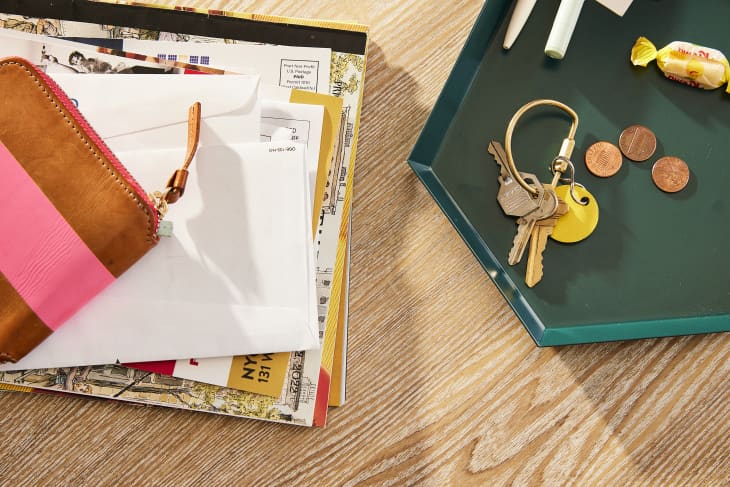
You have a pile of papers in your entryway that keeps growing.
One of the most simple signs of clutter blindness to look out for is whether regular decluttering tasks, such as removing papers and mail from your entryway, go unaddressed. “If the stack just gets bigger and you never tackle it, it may be a sign that you’ve stopped noticing it. Over time, it blends into the background, but it’s still affecting your mental load,” shares Di Ter Avest, professional organizer, owner of Di Is Organized, and author of Organize Yourself Healthy.
You clean up when guests come over, but not for yourself.
“If you suddenly see the mess and declutter your home when company is coming, but it felt invisible before, you might be experiencing clutter blindness,” says Ter Avest. Take a moment to reflect on this: If company were suddenly at your door, how would you feel about letting them into your home? If you experience a sudden wave of panic due to clutter that can’t quickly be tackled, it might be a sign of clutter blindness.
You avoid certain areas of your home.
Clutter can definitely be overwhelming, but if you find yourself repelled from certain areas of your home, it could be because the clutter in that space remains unaddressed: a zone your mind has become “blind” to and too overwhelmed to tackle. “If certain areas of your home just make you feel ‘blah’ and make you want to shut the door and walk away, it’s a sign clutter is weighing you down,” says Ter Avest.
You’re experiencing more conflict in your primary relationships.
People have differing levels of tolerance when it comes to clutter, so if someone struggling with clutter blindness shares a home with someone else who finds clutter triggering, it can lead to tension. Kimberly Corey, certified professional organizer and owner of Finely Sorted Organizing, says that this conflict in a relationship is a sure sign. “For instance, a partner might be uncomfortable with the lack of visual peace in a place meant for rejuvenation and they become increasingly frustrated when surrounded by things you don’t need.”
How to Address Clutter Blindness in Your Home
Combating clutter blindness isn’t something that can be achieved overnight, but if you take steps in the right direction (such as the ones below!) and spend time evaluating your relationship towards “stuff,” you’ll create a positive change not only in the present, but also in the long term.
Put a reminder in your calendar.
Putting a reminder in your calendar to tackle some of the clutter around your home can be an incredibly beneficial way to help combat clutter blindness, as it will remind you of the clutter you have been ignoring. Corey recommends scheduling in a small decluttering session as a part of a weekly reset (a period during the week chosen to spend some time resetting the home before the week ahead).
Habit stack.
“Habit stacking can become a trusted system that’s effective in helping a person to declutter and regain control over their environment,” says Corey. “Take a recurring task in your calendar or daily life and incorporate working on your clutter as a part of the same routine.”
For example, let’s say a person who enjoys running frequently tidies up the shoe rack in their entryway to keep everything neat and easy to find. They could work on making it a habit to remove mail from their entryway every time they walk into the space to tidy up their shoes. It isn’t a giant additional step, but it will make a difference and stop mail from piling up throughout the week.
Cultivate clutter curiosity.
Becoming curious about your clutter means asking questions and figuring out your “whys.” Why do you want to declutter now? How is the clutter making you feel? What do you envision your future clutter-free life being like?
Samuels calls this “falling awake” and describes it as a mindful form of self-awareness. “Notice the presence of the clutter around you, purposefully. What do you see? Can you remember what your rooms looked like with less in them? Engaging in these conversations can heighten awareness and help shift your internal perspective as well as your actual view of the physical clutter.”
View your home through the eyes of a guest.
Especially if you’re someone who cleans up clutter just before guests arrive, trying to get into the mindset of viewing your house from the eyes of a guest can be a real game-changer. If you were visiting your home, how would it make you feel? How would you want your home to make a person feel (including yourself)?
“Walk in as if you’re seeing your home for the first time — what mess would stand out? What would you want to tidy up before someone came over? This can help you identify clutter that has blended into the background of your day-to-day living,” says Ter Avest.