
Designers Say This Classic Detail Is the New Picture Frame Molding
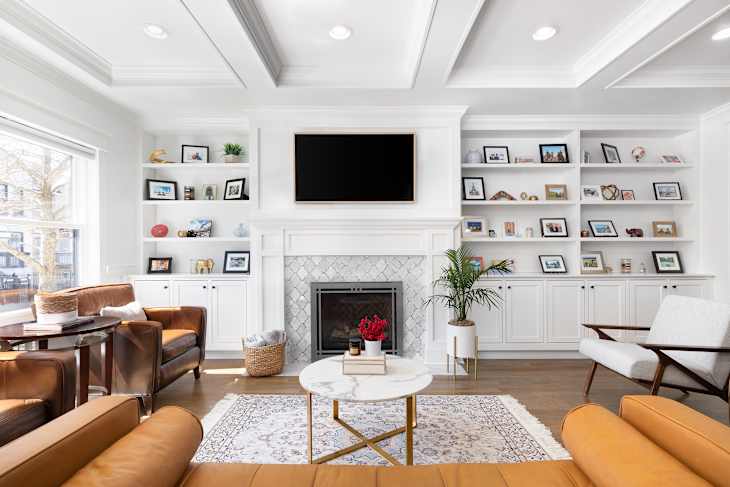
In design speak, ceilings are often referred to as “the fifth wall.” That’s because these room-toppers are usually untapped real estate, save maybe a ceiling medallion. But whenever ceilings are brought into the equation, they tend to make a bold statement. There are plenty of ways big and small to integrate the fifth wall, but lately, it seems as though one look in particular is trending: the coffered ceiling. It’s getting so much interest that picture frame molding may want to watch its back.
If you’re unfamiliar with this architectural detail, a coffered ceiling uses beams to create a dynamic grid overhead. It’s a historic feature that’s in the midst of a resurgence, promising architectural personality that doesn’t feel too overwhelming. “Coffered ceilings are a timeless design trend that can be used in a modern or traditional home,” says Danielle Davis, founder and principal designer of 56th Street Design Studio. “They instantly add visual interest.”

If you’ve seen this trend take off on your feed, these three tips are what a pro wants you to know before trying it out for yourself.

You Need to Have Height
While this shouldn’t come as much of a surprise, a coffered ceiling is best suited for spaces that have height to spare. “The rule of thumb is to ensure the homeowner has at least 9-foot ceilings, so this trend is not easy to replicate,” Davis says.
Any lower, and the room will likely end up feeling too claustrophobic.
You Can Play with Shapes
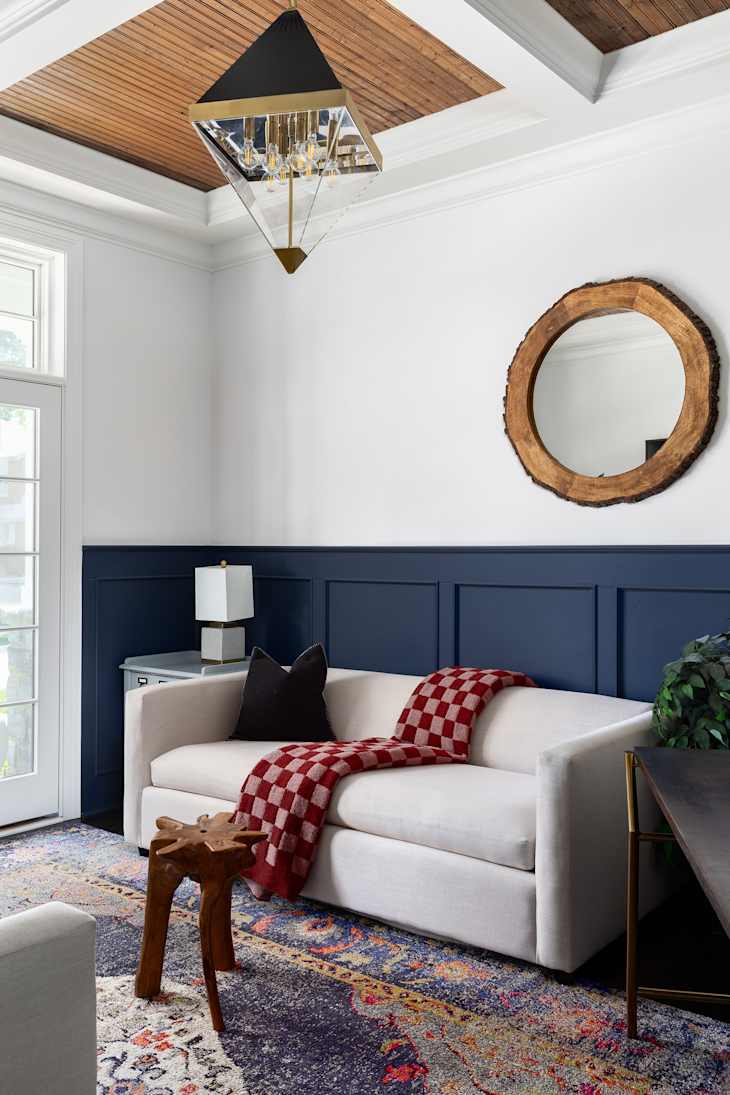
The pattern of a coffered ceiling can be as simple as a rectangle or square, although other polygons can make an appearance. The “coffers” can either be recessed or sunken into the ceiling.
The finished appearance can be just as flexible. “You can paint them all one color, or they could be two-toned, adding a greater depth to the ceiling,” Davis says. “The beams can even be wood, which gives the coffered ceiling trend a more modern touch.” It’s also possible to clad the recesses in beadboard or a contrast colored wood. Just make sure any wood accents you choose overhead complement what’s on the floors to create cohesion.

You Can Design Around It
If you’re going to invest in a coffered ceiling, make sure that the rest of your room’s design highlights it. “When designing around a coffered ceiling, you can play into the geometric pattern by using a square coffee table or a rectangular dining room table,” Davis says. “Don’t be afraid to add elements to the room that draw your eye to the ceiling, such as oversized artwork or floor-to-ceiling drapery.” Since the coffered ceiling will become the room’s focal point, it deserves to be celebrated.
Design Defined
Never miss the style inspo and recommendations you crave with Design Defined. Follow along each week as our Home Director Danielle shares the best style advice, latest trends, and popular decor finds you just can't miss.