
The Interior Design Trend That’s Turning Homes and Apartments into Total Rainbow Rooms
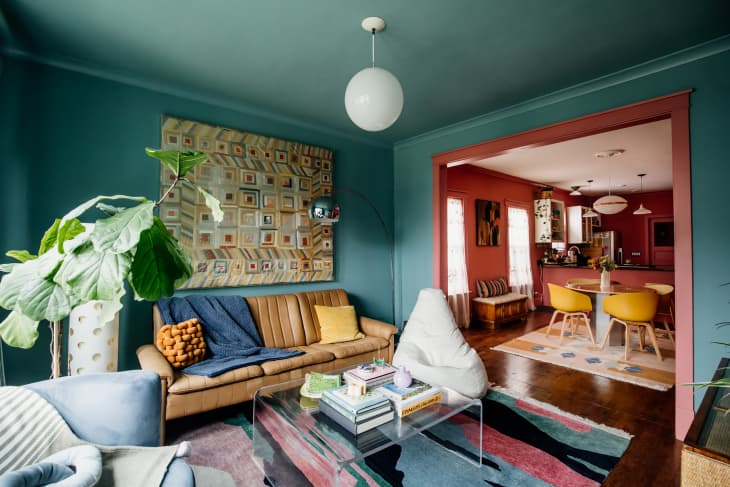
Colorful interior design is having a moment — and not in a fleeting, biggest-home-trend-of-the-year kind of way. Many homeowners and renters alike are turning to color not just to decorate, but also to feel something in their four walls.
As a designer and color consultant I help people choose color for their homes for a living, so I’ve seen it all: the fear, the excitement, the total overthinking of every last hue. Lately, I’ve noticed the reasons for embracing color vary. Some people are chasing joy, while others are just plain over all-beige everything. But no matter what sparks this turn to more colorful shades, the urge to make home feel more personal — more a reflection of who lives there — is stronger than ever.

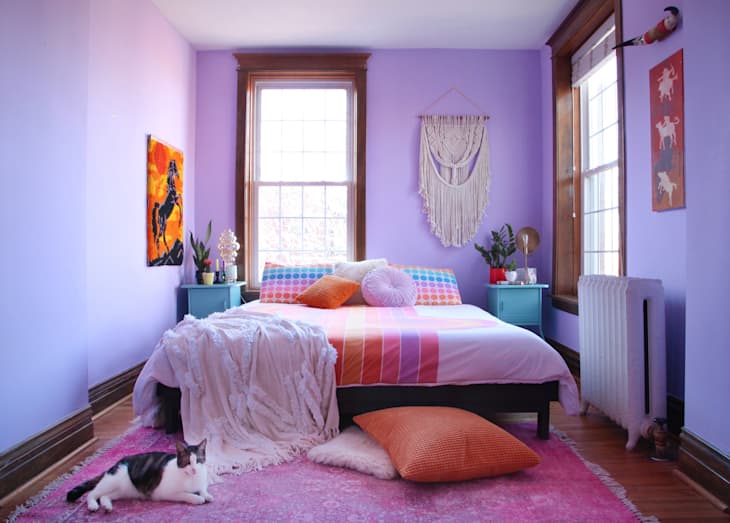
Decorating with color definitely has a way of making a space feel more personal and alive. Sometimes it’s about energy or coziness, but often color selection can be tied to memories: a light blue that reminds you of a childhood bedroom, or a bold red that fires something up in you. I’ve had clients practically light up after seeing a swatch that takes them back to a specific place or time. That’s the power of colorful interior design — and, frankly, why I’m so fascinated by my profession!
If you aren’t sure where to start with colorful interior design, you’re certainly not alone. I asked a few other designers who know their way around a color wheel to share how they home in on certain hues — and put together entire palettes and room design schemes in the process. Here, I’m sharing my own tips, as well as my colleagues’, so you can embrace more colorful interior design in your home starting today.

What Is Colorful Interior Design?
Colorful interior design is less about cramming a rainbow of bold hues into a single room and more about using color intentionally across your spaces. The best part about this style of design is that color can show up anywhere.
For some people, like designer Isabel Ladd, colorful interiors are second nature. “Color has always been a way of life for me,” she says. “It’s something I’ve always gravitated towards because it’s always brought me immense joy.” But even if color doesn’t come naturally, that doesn’t mean it’s off-limits. If you focus on the feeling you want your home to give you — cozy, calm, energetic, joyful, etc. — you can use basic color psychology (and some good old-fashioned experimentation) to help you create that vision and feeling in a space.
For the simplest ever crash course in color psychology, use this list of common colors and the feelings they’re said to evoke here.
- Blue: Relaxation and peace
- Yellow: Focus and creativity, joy, energy
- Green: Restful and nourishing
- Red: Alert and energetic/excitable
It’s important to remember, though, that your reaction to color can be very visceral and personal, too. Even though color psychology says a shade should make you feel a certain way, it could be the opposite for you. That’s why trial and error can play a role in the selection of your power shades for embracing colorful interior design.
Why Is Colorful Interior Design So Popular Right Now?
After years of all-neutral everything, people are craving more personality in their spaces, and color is one of the most joyful, immediate ways to get there. Ladd sees this movement as part of a larger shift in design right now. “Like most things — interiors, fashion, music — trends are cyclical,” she says. “After at least two decades of muted tones dominating the market, people have had more visibility into colorful interiors done well and are welcoming the freshness and joyfulness that color brings to a space.”
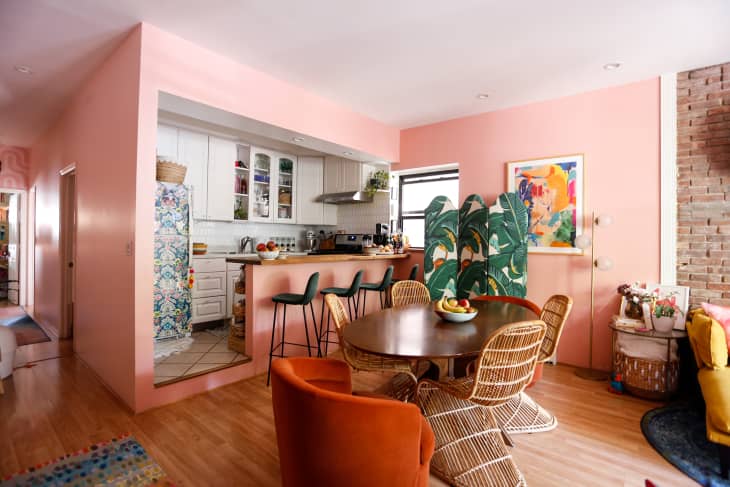
There’s also something deeply freeing about using color in a way that feels personal. Designer and content creator Megan Zietz, whose own small, colorful New York City home Apartment Therapy toured a few years back, loves the individuality colorful interior design brings to a space. “Colorful design is special because it encourages creativity and self-expression,” she says. “That’s the wonderful thing about color — it doesn’t have to live in just one box. The sky’s the limit for how and where you use it.”

What Are the Hallmarks of Colorful Design?
There’s no one formula for designing with color, and that’s part of what makes it fun. But there are a few elements that tend to show up in truly memorable colorful spaces.
Ladd puts it this way: “When used effectively, color will enhance the atmosphere. The balance of color proportions, unique color combinations, and a sense of when to go big and when to show restraint are hallmarks of a truly great colorful space.”
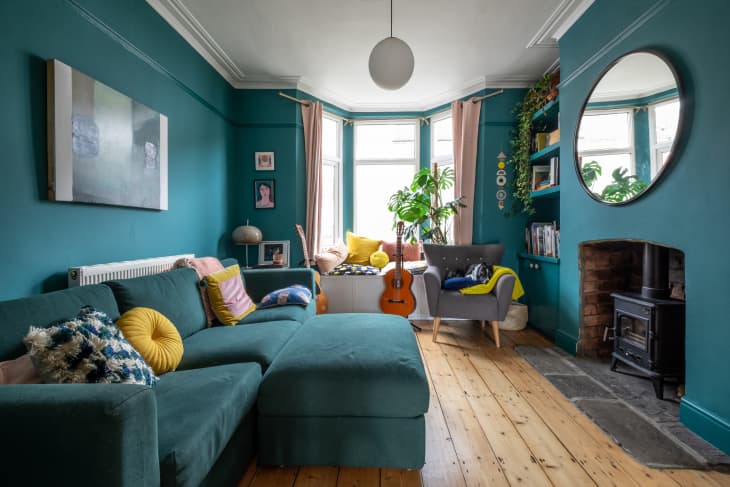
Here’s what you’ll often see in colorful interior design.
- Bold palettes: High-impact color choices anchor a room and instantly set its tone.
- Pattern mixing: From florals to stripes to checkers, pattern becomes part of the color story.
- Color-drenched rooms: Walls, ceilings, and trim are sometimes all painted in the same rich hue, which creates an enveloping, cocoon-like effect in a given room.
- Unexpected color combinations: Think cherry red with lilac, plum with sky blue — you’ll often see shade pairings that feel surprising and very intentional.
- Emotional anchors: Color palettes can be based on memory, mood, or personal symbolism — not just aesthetics.
- Restraint as a design element: Not every inch of a room has to scream “colorful.” Sometimes a single bold piece in an otherwise quiet design scheme makes an impactful focal point.
- Plants as color: Greenery is a natural way to introduce color and bring life into a space.
6 Designer Tips for Using Color with Confidence
You don’t need to be a maximalist to make colorful interior design work for you. Whether you’re tip-toeing in with a single shade or going full-on technicolor in a room, the key is intention — and a few designer-approved tricks that take the guesswork out of going bold.

Start with a jumping-off point.
When my clients feel overwhelmed by choices, I always tell them to find their jumping-off point: one piece that sets the tone and helps everything else fall into place.
In my own kitchen, the colorful interior design scheme all started with a bold checkered backsplash. The colors I used in the tile influenced the palette for the rest of the kitchen and dining space, including a largely neutral backdrop to let those other colors shine.
When in doubt, reach for paint.
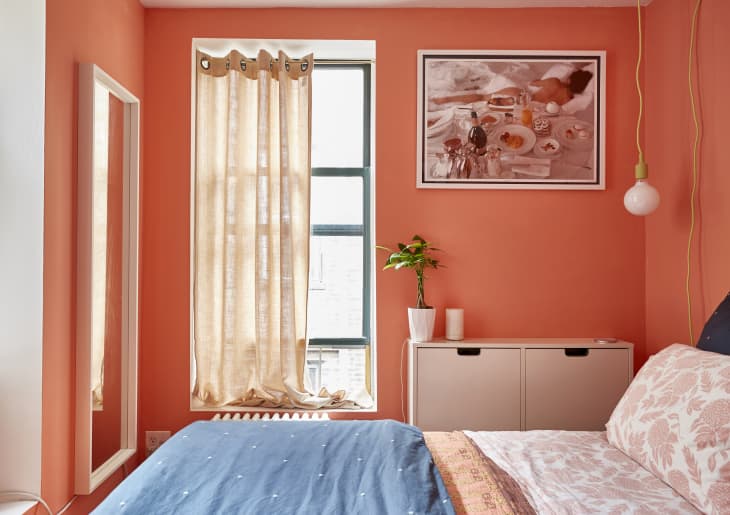
It might sound obvious, but there’s a reason why paint remains one of the easiest ways to shift the entire mood of a room. It’s fairly inexpensive, DIYable (and easily reversible), and high-impact in terms of how it can truly transform a space.
Surrounded by Color, a Baltimore-based design duo that consists of Robin Heller and Jen Levy, agrees. “We’re huge proponents of paint,” the designers say. “We realize it can feel scary, but walls drenched in color can completely transform a room as well as your emotions inside that room.”
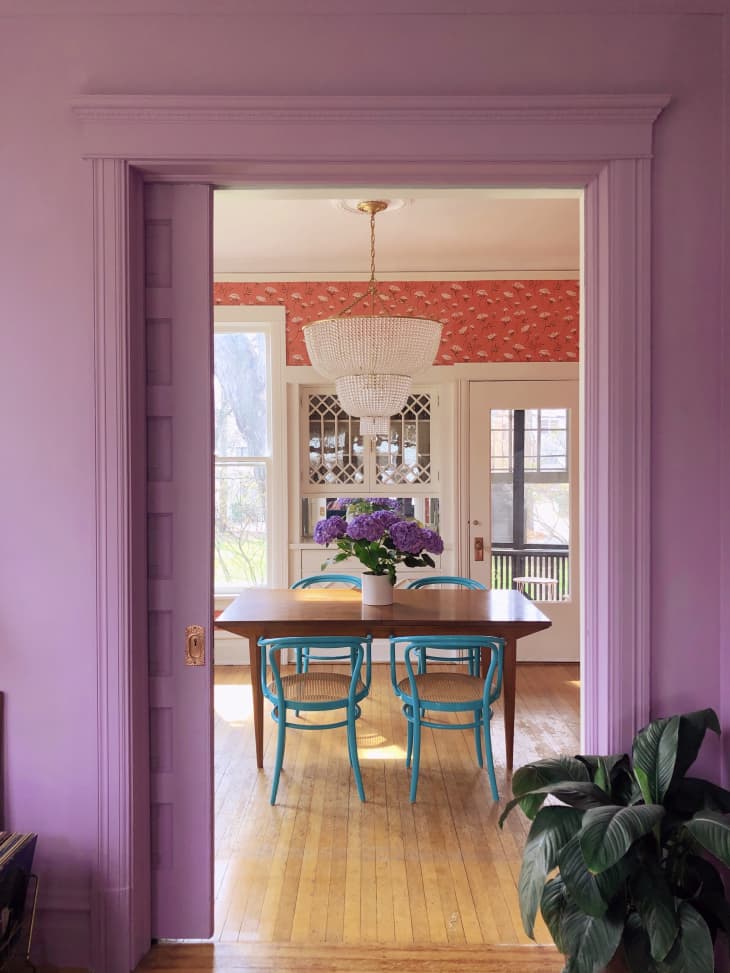
Go with big textiles — not just tiny pops of color.
Instead of starting with throw pillows or small accents, go bigger. Ladd encourages her clients to embrace color in a way that actually makes a statement. “Go bold!” she says. “Tune into what brings you joy, not what you think the ‘house rules’ are. Pops of color through accessories won’t lead to a fabulous glow-up. Start with colorful textiles that add instant aesthetic value in a big way — like a sofa, window treatments, wallpaper, or even enveloping a whole room in color.”

Try a large, solid-colored rug.
Not ready to commit to a painted wall? Heller suggests an extra-large rug in a solid hue. “We’ve been really into solid-colored rugs lately, which can act as an alternative to painting a wall,” she says.
Heller jokes that solid rugs act almost like a “sixth wall.” The upshot here? A rug in your favorite color underfoot can ground a space and deliver a major hit of color without even lifting a paintbrush.

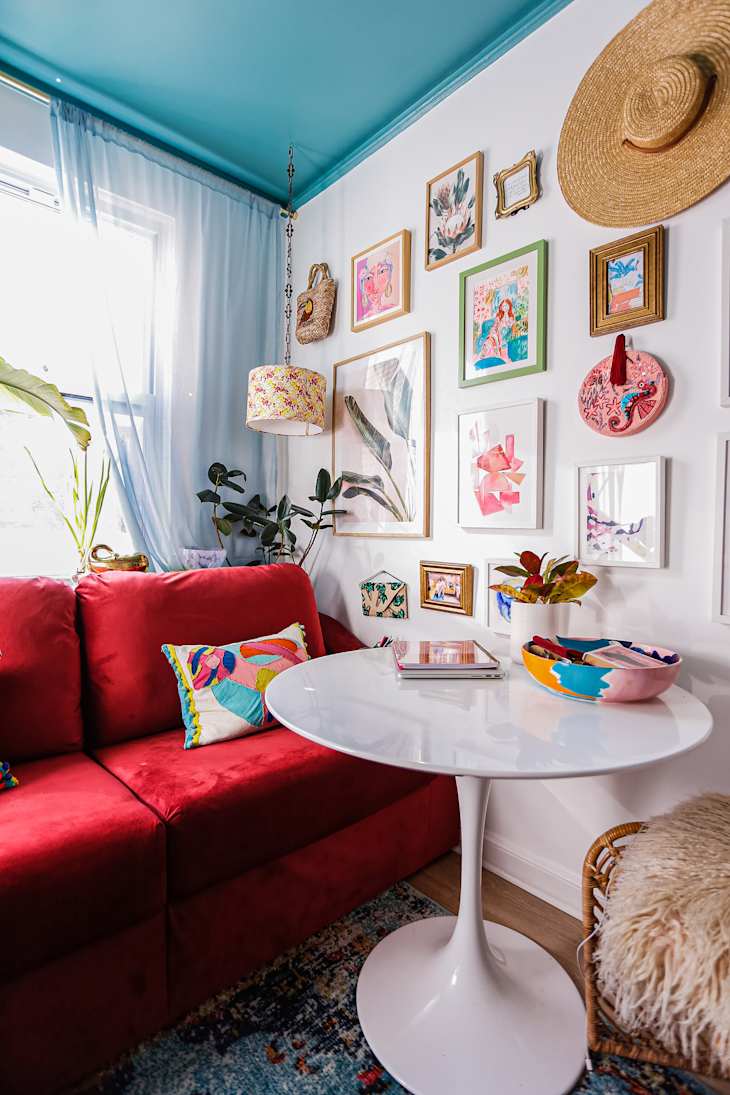
Paint (or wallpaper) your ceiling.
If you’re still working up the courage to go all-in, Zietz recommends looking up. “I love a painted ceiling if I want more color in a room but don’t want to commit to the whole space,” she says. “It’s my version of an accent wall.”
Whether it’s wallpaper or paint, ceilings are often overlooked spots. But as someone who has tried both painting and wallpapering the “fifth wall” before, I can confirm something other than white here adds a delightful design surprise in a room.
Add color in unexpected places.
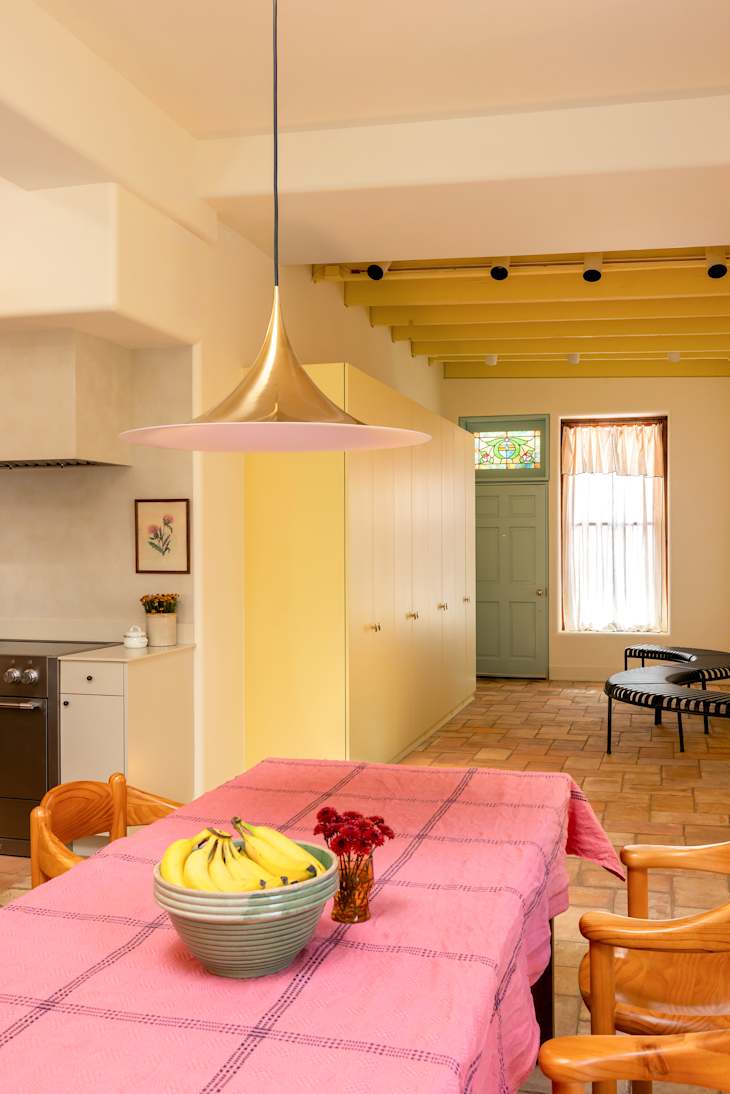
Color doesn’t always have to hit you over the head. I actually think it’s a big color misconception that your space has to be drenched from head to toe to make an impact (although you can go that route if you want). Sometimes the most expressive moments come from restraint.
Heller recalls a recent project where they kept the palette mostly neutral, layering in white and black with intention, but then drenched the ceiling in butter yellow. “It added so much richness and warmth to the home,” she says. Shown in the photo above, you can see how smaller touches, like the bold pink tablecloth and cheery florals, helped pull the whole look together without overwhelming the space.
Design Defined
Never miss the style inspo and recommendations you crave with Design Defined. Follow along each week as our Home Director Danielle shares the best style advice, latest trends, and popular decor finds you just can't miss.