
I Re-created a ’90s “Computer Room” in My Home — And Cut My Screen Time by 80%
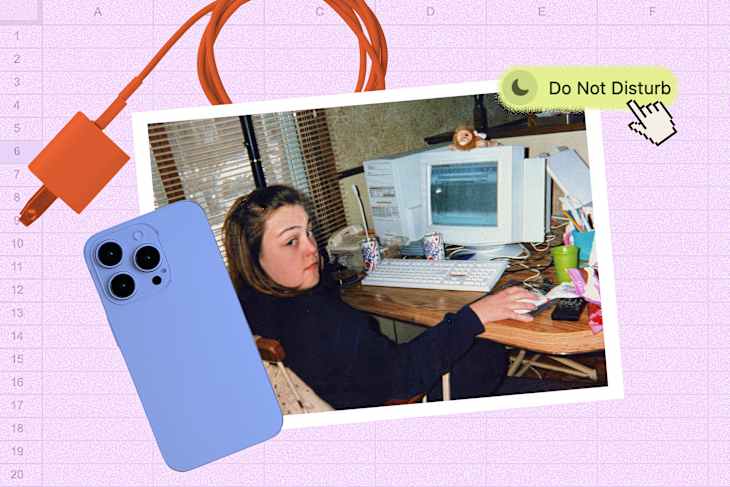
As an elder millennial who was in middle and high school in the 1990s, I have strong core memories of the space formerly known as the “computer room.” It was where massive desktop towers ruled the desks, and patience was a prerequisite for surfing the world wide web. First, you’d endure the screeches, static, and pings of AOL dial-up — I recall a comedian describing the sound as “two fax machines in a screaming match.” Then, you’d cross your fingers and hope no one picked up the phone and knocked you offline.
Today, that computer room lives on in memes, Reels, and even museum exhibits. At History Colorado, I recently wandered past an installation titled “The ’90s: Last Decade Before the Future,” and was greeted by the iconic yellow AOL running man, with dial-up tones jingling in the background.
Now, between pocket-sized smartphones and ultra-portable laptops, the internet follows you everywhere. But back then, it was tethered to a single room. The computer room was the hub for homework, weird chat room conversations, and early online games — the first time my generation saw tech truly take root in our homes. Before that, I was booking 30-minute slots at the library to research school papers or check my Hotmail inbox.
Was I better off when tech had these types of physical boundaries? To find out, I resurrected the computer room in my own home for a week. Here’s how that digital rewind played out, and what experts in design and digital wellness have to say about the merits of a computer room.
What Is the Computer Room, and Why Did It Disappear?
In the 1990s, the “computer room” was typically a modest-sized room on the main floor, often near the kitchen or front hall, says designer Rachel Blindauer. “It was a quiet, utilitarian space with just enough room for a bulky monitor, tower, and dot matrix printer. Design-wise, these rooms weren’t gorgeous, but they were functional — and they came with a door.” That door, she argues, is what made the biggest difference.
As devices shrank and WiFi spread, the need for technology to be anchored to a single place ceased, Blindauer says. The open-concept boom of the early 2000s sealed the deal: Walls came down, and so did spatial boundaries. Those old computer rooms were absorbed into larger living spaces and turned into pantries, guest rooms, or (if the square footage allowed) home offices. In many of Blindauer’s projects, she’s seen them repurposed as closets, laundry rooms, or even yoga studios.
Brett Johnson, a Denver-based real estate agent with New Era Homebuyers, says the computer room’s reign continued through the early 2000s, but as technology progressed, and the shared “family computer” faded out of fashion, they became dinosaurs.
“With smart TVs that have excellent picture quality and surround sound in every room, homeowners no longer want a room with one single purpose,” Johnson says. “Buyers now want open-concept homes where entertainment becomes an integral part of daily life and is not confined to a one-purpose space.”
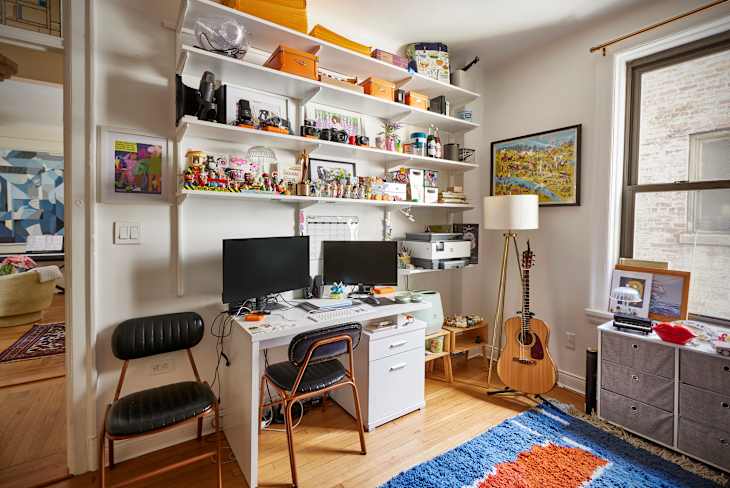
Interestingly, Blindauer says she’s starting to see a return to something akin to the computer room, but with a more intentional design philosophy. “These aren’t nostalgia pieces,” she says. ”They’re strategic sanctuaries. Call them offices, focus rooms, digital dens — whatever the name, the function is the same: containment.”
The Unsung Benefits of the Bygone Computer Room
When I asked Blindauer what’s driving the comeback of a modern-day computer room, she explained that, from a productivity and wellness standpoint, having a designated space for tech helps reintroduce psychological boundaries. This makes sense: American adults are averaging more than seven hours a day online.
“It’s easier to disconnect when the devices live in a room that can be physically exited,” she says. “A tech zone becomes a container for screen time, rather than a thread running through every part of home life.”
That really got me reflecting on how blurry my own tech boundaries have become. Most mornings, I reach for my phone before I’ve even gotten out of bed — first to play Wordle, then to doomscroll through headlines. In the evenings, I perch my laptop on the kitchen island and catch up on emails while cooking. Even my daily afternoon walk, meant to be a mental reset, turns into a loop of refreshing my inbox.
Unlike in the ’90s when computers were relegated to a specific space in a home, tech is often in our pockets or on our wrists for most of our days, explains Joanna Rajendran, a mindset and meditation expert and the author of Best. Life. Ever.
“The result is that we are over-stimulated, constantly distracted, and hardly ever bored,” Rajendran says. “Boredom is necessary, as that is often where our inspired ideas and creative downloads occur.”
What Is the “Computer Room” Method?
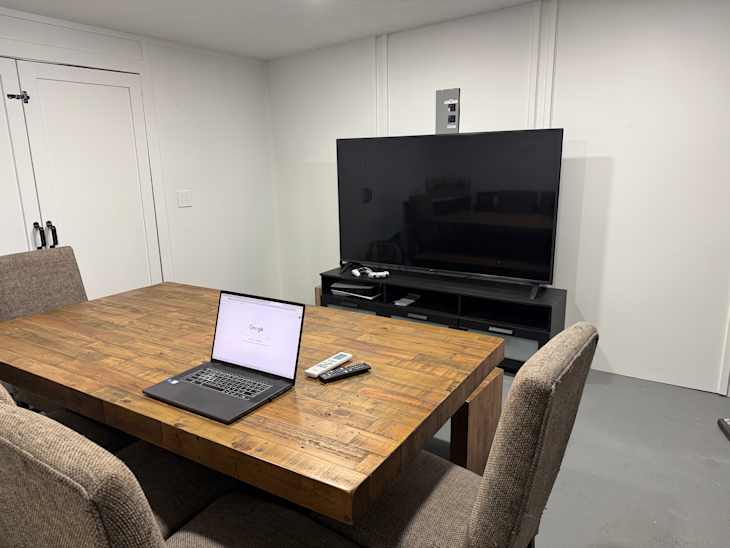
So, this brings me to what I call the “computer room method”: I’d limit my tech use to a single, dedicated space for an entire week. My home office was off the table — it’s too convenient and, in our open floor plan, too easy to dip in and out of. However, we converted the original garage on our property into a backyard bar, and its back room is basically a blank canvas. So, I designated it as my computer room for the week. It was perfect, because I have to leave my house to access the room, which made the experiment feel more intentional.
Over the course of seven days, I set out to limit my tech use to this single space. I set up these parameters: The “computer room” would be the only place I’d scroll social media and headlines, watch TV, and use my computer. However, I still allowed myself to text and talk on the phone outside of the computer, as well as listen to podcasts.
By having this separation, according to Rajendran, I could expect to experience some much-needed boredom that I hoped would help stir my creativity.
What I Learned from My “Computer Room” Week
I’d estimate that 90% of my time in the computer room was spent working. I’ve been self-employed for nearly a decade, so maintaining a healthy work-life balance is a constant challenge — especially when your home doubles as your office. But having a separate space dedicated to work for a week made a bigger impact than I expected. It helped me stay focused during the day, and gave me the mental cue that work was done when I left the room in the evening.
Because it wasn’t convenient to refresh my email or check in “just one more time,” before bed, I found it easier to disconnect. I was more present while cooking, going for walks, and spending time with family and friends — less glued to my feeds, more grounded in real life. I’d occasionally pop in for entertainment purposes, like to catch a Denver Nuggets game, but I found that I didn’t go to the room just to mindlessly scroll TikTok. That meant I mostly restricted my social media scrolling to work hours. and because I keep a pretty tight schedule that alone cut my non-work-related screen time by about 80%.
Early on, I noticed how often I instinctively reached for my phone during downtime to open up TikTok or Instagram without even thinking. I hadn’t fully realized how automatic that behavior had become until I interrupted it.
By the end of the week I felt noticeably more relaxed. It reminded me of how I feel when I travel internationally and don’t have WiFi until I’m back at the hotel: more present, less reactive. The experiment gave me a much-needed tech reset.
Looking ahead, I might keep working occasionally from the bar’s back room because I loved the feeling of “going into the office.” But I’m also thinking about setting firmer boundaries, like leaving my laptop in the office after hours and resisting the urge to reach for my phone anytime there’s a lull.
Want to give the computer room method a try for yourself? If the notion of having a room dedicated to technology seems too far-fetched or you don’t have the extra space, you can start small by keeping your phone outside of your bedroom when you sleep, or making it a tech-free zone entirely, Rajendran says.
“Just because technology exists everywhere in the world, doesn’t mean we have to use it and keep it everywhere in our own personal home,” says Rajendran. “It is up to us to find the balance that preserves the peace and sanctity of our minds.”