
I Showed a Photo of My Cramped Dining Room to 2 Designers, and Now It Feels So Spacious
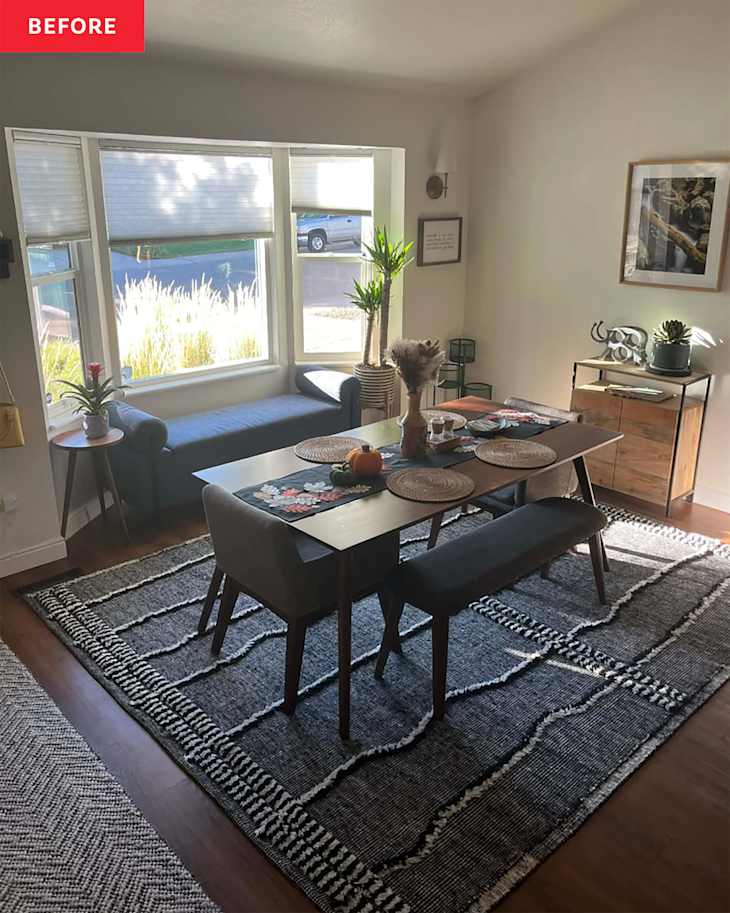
While I genuinely love my dining room, it’s always felt a bit cramped, darker than I’d like, and not quite as airy or elevated as it could be. Rather than jumping into a costly renovation, I turned to two interior designers for their expert advice on how to make the space feel lighter, calmer, and more intentional — without breaking the bank.
I spoke with Victoria Holly, a Los Angeles-based interior designer, and Cathy Hobbs, an interior designer, home staging expert, and author of Home Design Recipes, to get their takes on what’s working, what’s not, and how to transform the room with thoughtful, budget-conscious updates. Here’s what they had to say — read on to see how I put their tips to work.
8 Tips Interior Designers Gave Me to Update My Dark, Cramped Dining Room
1. Focus on Larger Furniture
Hobbs praises the foundation of the space, particularly the wood dining table that echoes the tone of the existing floors. “That same finish is picked up in the chair legs and benches, which creates a strong sense of cohesion,” she says. However, Hobbs notes that excess furniture — such as pieces below the window and the side table next to it — distracts from what should be the stars of the room: the dining table, chairs, and benches.
“Right now, the room has several smaller furniture pieces competing for attention, which makes it feel busier than it is,” Holly explains. She suggests swapping the current sideboard for a larger credenza along the long wall. “A piece with more visual weight will anchor the room and instantly make it feel calmer and more intentional.”
2. Scale Up the Art
The artwork above the credenza is another area where scale matters. “It’s currently too small and hung a bit too high, which makes it feel disconnected,” Holly says. Her recommendation: Opt for one larger piece — or a mirror — that spans about 70% of the credenza’s width, or create a simple, cohesive gallery wall. “Once that wall is anchored, you won’t need the smaller artwork near the sconce.”
3. Beware of Visual Clutter
Holly says, “The sconce and the artwork are competing for the same visual space.” Letting the sconce stand alone will give the wall more breathing room and help the overall layout feel more balanced.
Hobbs also zeroed in on what she calls one of the most common design pitfalls: an abundance of small items. “At the top of my list is an excess of what I call ‘small things,’” Hobbs says, which includes too many accessories, small tables, and even undersized artwork. “Too many small elements can be just as detrimental to a space as oversized furniture.” Her guiding principle? “Start big and then go small.” Evaluate the room as a whole before focusing on the details.
Once you’ve gotten the room figured out, Hobbs advises a thoughtful edit of every smaller thing in the room. “I love the idea of taking a giant sieve, shaking it, and keeping only your most beautiful nuggets,” she says. “It’s about appreciating that less truly is more.”
4. Be Precious with Tablescape Decor
Similarly, when it comes to tabletop decor in the dining room specifically, less truly is more. “I’d recommend one sculptural centerpiece at a larger scale,” Holly says. “A single impactful object will instantly reduce visual noise and feel more elevated.”
5. Simplify the Bench Area
While Holly loves the bench in the bay window nook, she suggests editing what surrounds it. “The extra table and plant add unnecessary clutter,” she says. Instead, she recommends adding two to three pillows on the bench to make the seating feel intentional and cohesive with the windowsill.
Additionally, Holly says I should try to soften my windows. To counteract the straight lines in the space, she suggests relaxed Roman shades. “They’ll add softness without overwhelming the room,” she explains.
6. Go Tall with Greenery
“With the vaulted ceiling, this is the perfect opportunity for a very tall, sculptural plant — think 10 feet,” Holly says. The height will draw the eye upward and better balance the vertical space.
7. Add a Statement Light Fixture
Holly recommends grounding the dining area with a light fixture above the table. “If hardwiring isn’t an option, a swag pendant works beautifully,” she says. “It helps anchor the dining zone and softens the large expanse of white ceiling.”
8. Rethink the Rug
Although the current area rug is pretty, the experts add that it may be working against the space. “A slightly smaller, cream-colored rug would help the room feel lighter, brighter, and more open,” Hobbs suggests.

How the Designers’ Small Changes Brightened Up My Dining Room
I took all of the pros’ suggestions and asked ChatGPT to render my dining room with all of these smart changes. I love how it looks, and can’t wait to get started! Both designers agree: The key to transforming this dining room isn’t adding more — it’s editing, scaling up strategically, and letting fewer, larger elements shine. With a larger credenza, bolder art, simplified styling, and intentional lighting, the room can feel more open, elevated, and inviting — without a major overhaul.
What do you think of these designers’ tips? Let us know in the comments below!
This post originally appeared on The Kitchn. See it there: I Showed a Photo of My Cramped Dining Room to 2 Designers, and Now It Feels So Spacious