
Decade-by-Decade: A Look at the Typical American Household by Decade
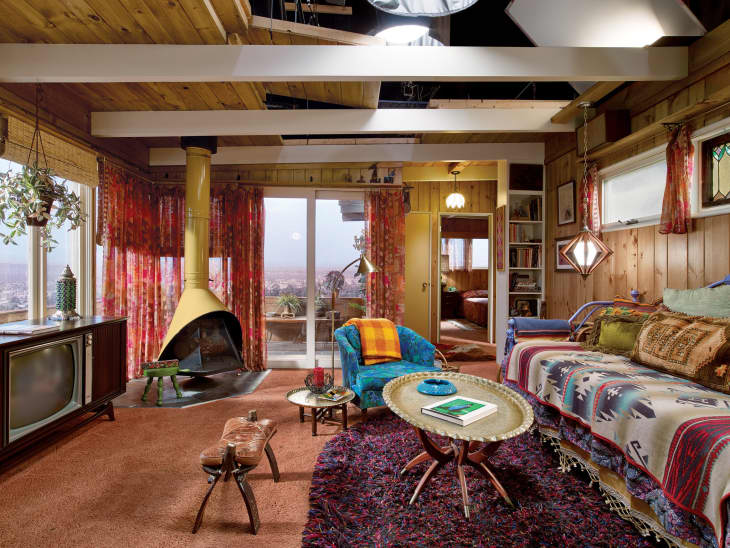
Popular design trends are hard to pinpoint when you’re in the midst of them, but painfully easy to spot once you’re a decade or two removed (the groovy pad of Megan Draper on AMC’s Mad Men screams of the swinging ’70s). Post WWII, decor trends seem to have had about a 10-year lifespan, and we’ve chronicled the nostalgic bullet points for each period. Whether it’s watching TGIF on your plaid couch, or running your fingers over your aunt’s plush velvet Elvis painting, get ready for some sensory memory overload.

1950s
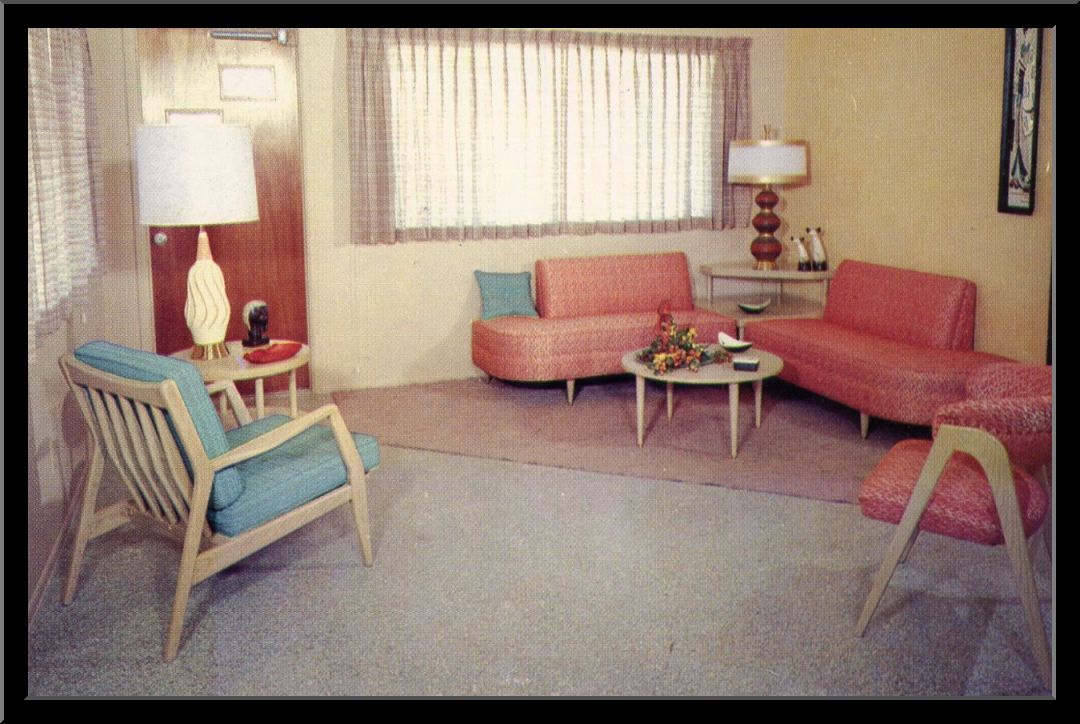
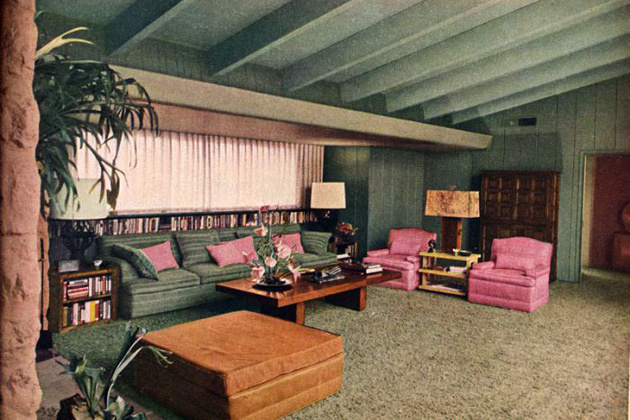
Long and low profile sofas were the only way to go, and preserving them in vinyl meant maximum longevity. Pastels were the reigning color palette (as seen in Best Design Idea‘s cotton-candy living room), often in poppy, contrasting hues like pinks and greens (a la Tropics of Meta’s sitting area, shown third). Carpet was a luxury, and if the dough was burning a hole through your Victorian-era wood floors, this is where you splurged. Advances in molecular technology also inspired atomic shapes and space-age decor.
1960s
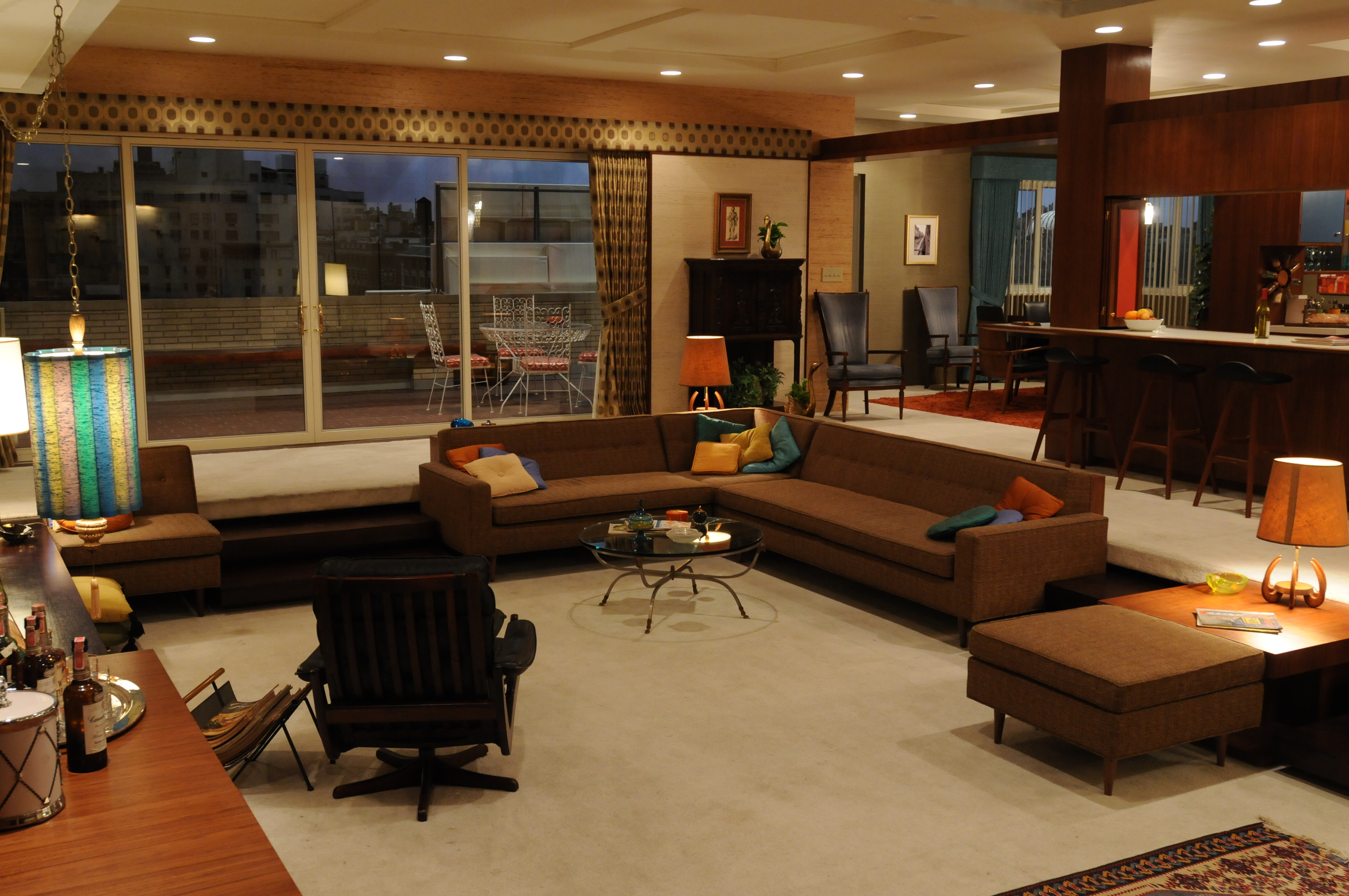
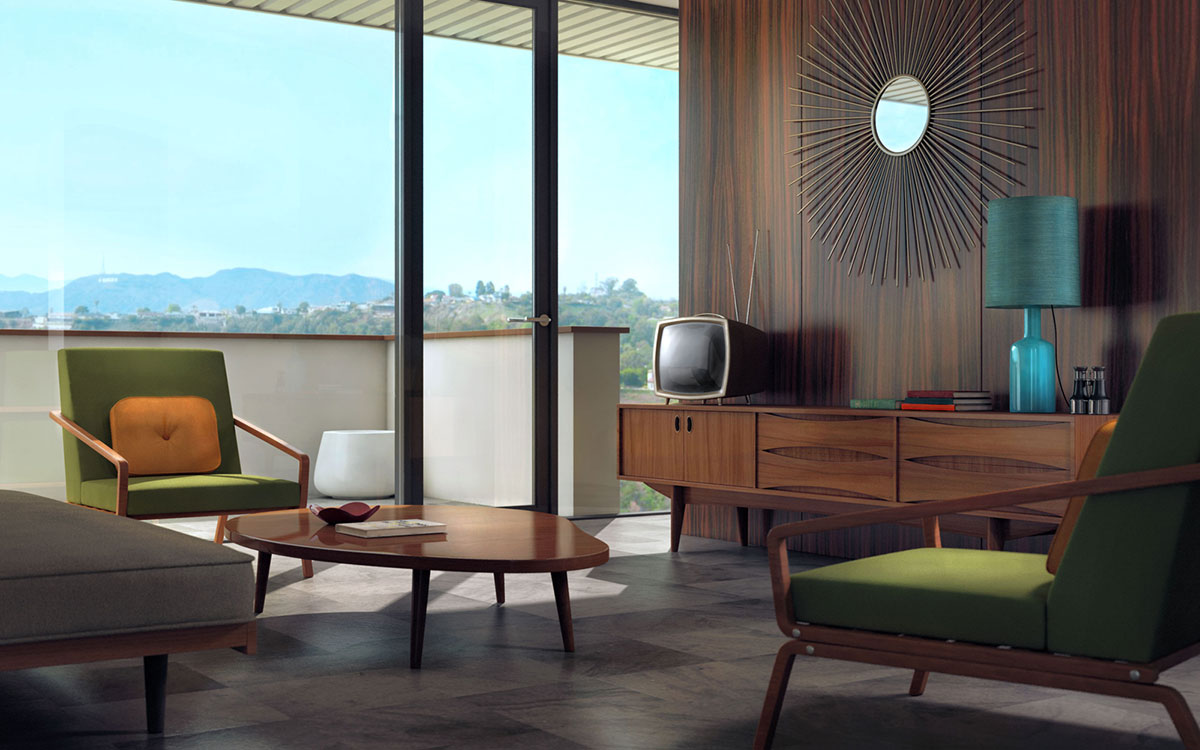
If you didn’t grow up during this era, thank your lucky strikes for the perfection that is Mad Men (peep Don Draper’s perfectly dapper sunken living room above, left). Herman Miller was the go-to furniture source, and Eames was (and still is) everything. Low, sleek profiles continued throughout this era, but the color palette began to shift into more natural territory—with the exception of plenty of orange and turquoise pops. Open shelving with lots of styling (think owls and curvy vases) also became popular at this time. Basically, the typical 1960s home could be the typical 2016 home (I could totally see the above, right image, a rendering from architect Jason Lee, as a modern-day living room, can’t you?)

Megan Draper’s Bohemian LA house from Mad Men (Image credit: AMC) 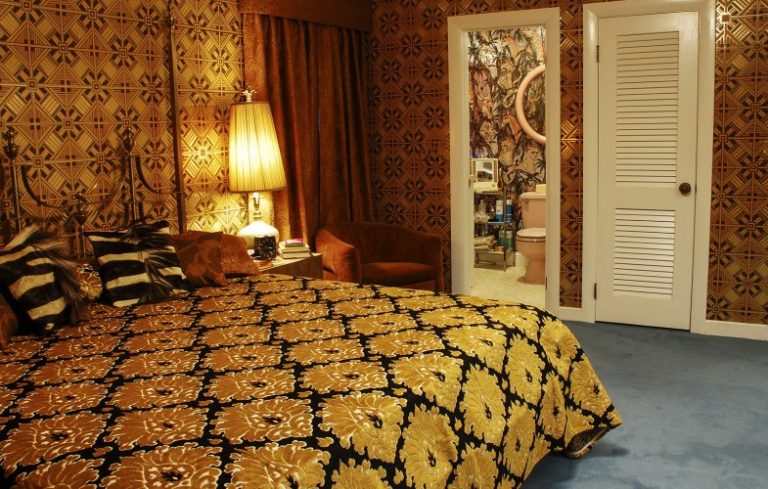
Bedroom from American Hustle (Image credit: HGTV) 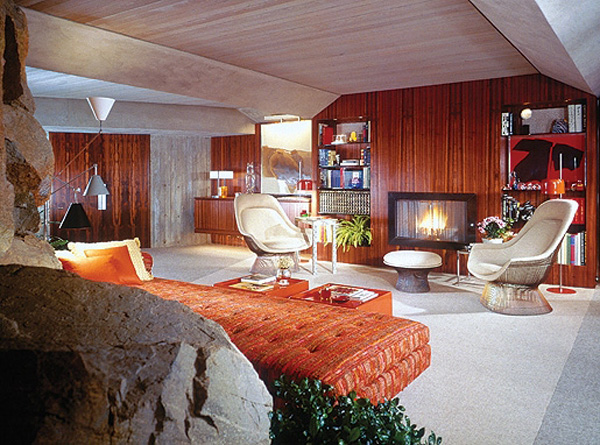
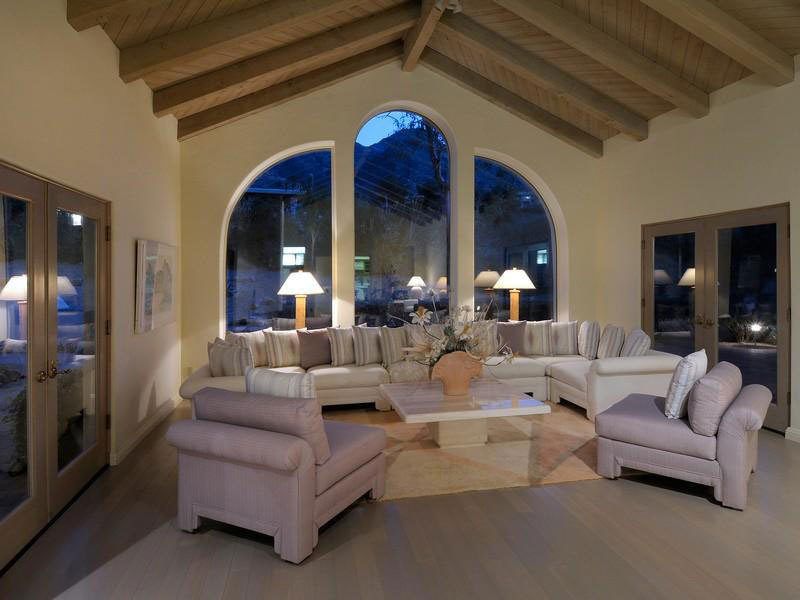
The Elrod House used in James Bond film Diamonds are Forever. (Image credit: John Lautner’s Elrod house)
1970s
This era is a bit of a contradiction, where modern materials such as plastic and vinyl collided with the natural materials favored in the hippie movement. The first photo above is Megan Draper’s apartment from Mad Men, whose shag carpet and natural elements represent the latter. Earth mother meets Stanley Kubric, the typical ’70s home probably had a mixture of natural elements, like avocado-colored walls and wood-paneling, and groovy psychedelic shapes and colors. Also, key parties and Jane Fonda paved the way for more dark, intimate home vibes, meaning partitioned rooms and plush materials. Other prime examples of the era? American Hustle (a bedroom from the movie is shown via HGTV), followed by an interior from the James Bond film, Diamonds are Forever (via Palm Springs Life).
Like an Arizona sunset (Image credit: Curbed)
1980s
The ’80s are (interestingly!) currently one of the most throwback-trendy- while-simultaneously-problematic decades for interior decor. This complicated relationship with 80s style is likely due to its bold, yet admirable, approach to design. A few of the more “offensive” styles include the clashing geometric Memphis Milano look, as well as the floral everything look, and the all-pastel Arizona/Southwest vibe (seen in the image above spotted on Curbed). Also, if you didn’t have a mostly carpeted house, you should probably never invite anyone over ever. Of course, what’s old is new and most of these trends, like the basic shapes found in deco-revival design, are shaping up to be the next new normal (maybe?).

Monica and Rachel’s “eclectic” house on friends (Image credit: Warner Bros.)
1990s
Thanks to a slew of ’90s family programming and the increased use of the television as a living room focal point, I’m extremely nostalgic for this era. Before Google, ABC and FOX showed us what a “normal” family home looked like. Everyone you knew had a plaid couch and, depending on how fancy they were, a formal room filled with floral Victorian Revival furniture. Depending on how fancy your fancy friends were, their formal room was furnished by Laura Ashley. Also, if you were young and hip, your eclectic, spiral-shaped furniture legs let everyone know you were artistic. (Image above: Friends set via Warner Bros.)
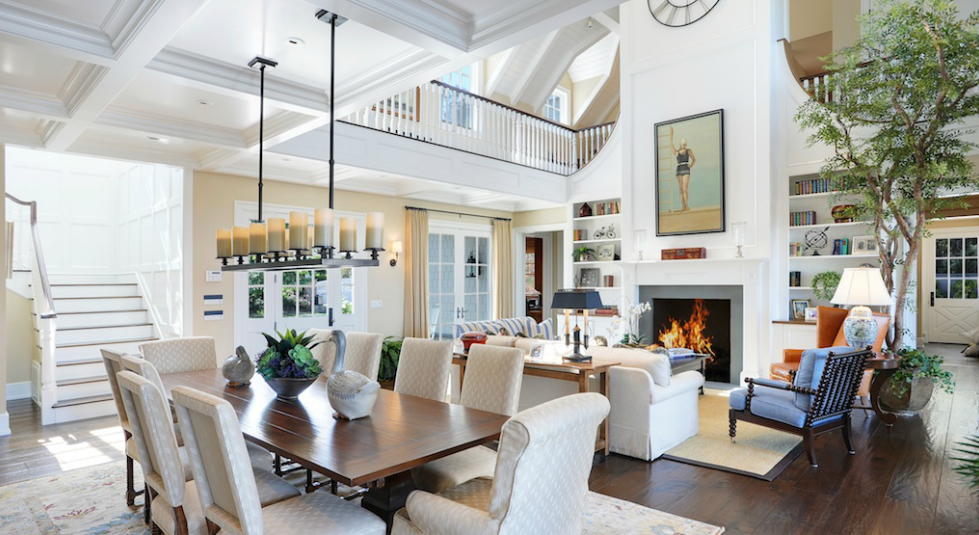
From Nancy Meyers’ It’s Complicated (Image credit: MLS)
Early 2000s
Ok, we’re not really far enough removed from this decade to nail down its eccentricities (or make fun of them). What we do know is all of the homes from Nancy Meyers best films (Something’s Gotta Give, image via Hooked on Houses) seem to perfectly represent all of our most Martha Stewartest ideas of what good interior design means. That equates to open-concept layouts, New England nautical, clean, neutral color palettes, and lots of comfy throws and pillows.
Convinced you belong in a different decor era, but not quite sure which one? Take our quiz to find out:
→ Quiz: Are You Living in the Wrong Design Decade?