
I Followed This Popular Decorating Rule, and It Totally Backfired
When I first moved into my studio apartment, I approached decorating with the same energy some people bring to planning a wedding. With no walls to hide behind and everything on display at once, every inch of space had to work hard and look good. I felt this pressure to make each design decision intentional, efficient, and, most importantly, aesthetically sound.
So I did what so many renters do — I turned to the internet. I spent nights scrolling through TikTok and conducting deep dives on Pinterest. I would read anything and everything that promised stylish ideas for small spaces. And again and again, one decorating rule came up: “Do it in threes.”


Designers, bloggers, and influencers all seemed to agree that grouping things in odd numbers (especially threes) created balance and visual interest. According to virtually everyone, it was a foolproof way to make your space feel curated rather than chaotic. I took that advice as gospel. And at first I thought it was working, but the more “threes” I added, the more I felt something was still off.
What Is the “Decorate in Threes” Rule?
The decorate-in-threes rule is a go-to design principle that’s rooted in visual balance. The idea is that odd numbers (especially threes) feel more natural and dynamic to the eye. Designers say it adds the perfect amount of asymmetry to make a space feel curated but not too perfect.

When you see the rule of threes executed well, it does look great. A trio of vases on a console, three framed prints in a row, a set of candles at varying heights — it creates a sense of cohesion without being matchy-matchy. So when I moved into my studio apartment, I figured this rule would help me tie everything together.
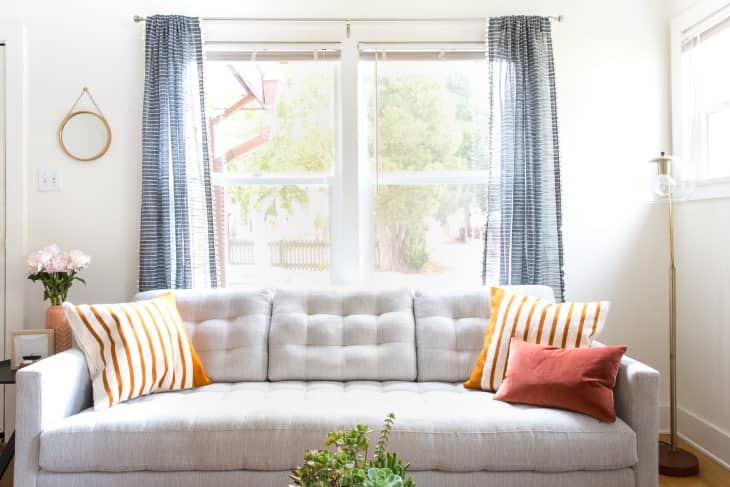
So I fully committed. Three throw pillows on my tiny couch, three candles on the window ledge, three pieces of art above the bed. I even applied it to my kitchen shelving, grouping mugs, cookbooks, and small plants in neat little threes. I was aiming for that effortless-yet-styled feel, but in such a small space it didn’t quite land.

Why the Rule of Threes Didn’t Work in My Studio
Instead of creating harmony, I realized that all those trios were starting to weigh the space down. What looked perfectly balanced in an influencer’s loft suddenly felt overly styled in my 400-square-foot apartment.
Every surface was crowded. My tiny kitchen counter had zero breathing room, thanks to a set of three decorative canisters. The three throw pillows made my already-snug sofa feel like a pillow fort. Even the trio of candles (carefully arranged by height, of course) started to feel more like an altar than a calming vignette.
At first, I thought I just needed to swap things out. Different pillows, smaller candles, lighter frames. But the problem wasn’t what I was decorating with — it was the rule itself.

How I Decorated My Space Instead
Eventually, I ditched the recommendation all together. I kept only what I truly liked and let the rest go — even if that meant a lone candle or a pair of prints. I started layering instead of grouping. I leaned art against walls rather than hanging it in perfect alignment. I mixed tall and short, rough and smooth, styled and spontaneous.

Focusing more on styling what I like, and how I like, made my space feel a lot more balanced in the end. It made the room feel looser, more relaxed. And most importantly, now my space reflects how I actually live.
Decorating rules exist for a reason, but they aren’t gospel. And sometimes, that can be a hard pill to swallow. In small spaces especially, blindly following a formula can make a room feel forced or overly fussy. I learned the hard way that you can still appreciate the power of a good design principle, but at the end of the day they’re merely suggestions.