
I Hated My “Dreary” Outdoor Space — Until I Tried the “W.A.Y.” Method to Fix It
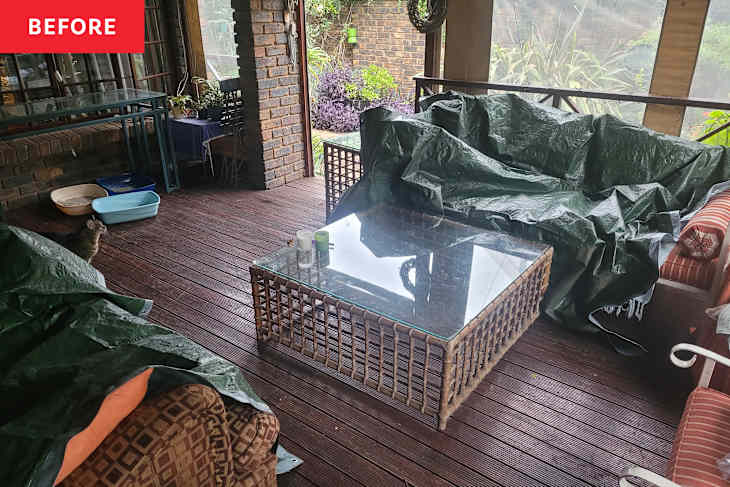
When I first moved into my home, I loved so much about it — from the Tudor style pitched gable roof to the character-filled interior. But there was one feature — an enclosed porch just off of my bedroom — that left me, let’s just say, underwhelmed. At times, I wished it was a patio instead. It felt dreary and cluttered (not just because I treated it like storage while unpacking), but worst of all, I was worried it was cutting off the natural light to my bedroom. I considered removing it entirely by transforming it into more bedroom space. I always liked an open floor plan, and couldn’t help but imagine how huge my primary bedroom would feel with more natural light flowing in.
But if you’ve ever bought a home, you might know (like me) that sometimes things that you don’t like about your space just have to stay as they are while you tackle more pressing renovations or simply recover from the cost of buying your house.

So while I didn’t like my enclosed porch at all, I didn’t touch it for a year — four full seasons passed between the time I moved in and the time I started to think about how to “fix” it.
Waiting a year ended up being such a good idea that I’m convinced that I will make it my rule for cosmetic changes in my home going forward.
Here’s how I took my time transforming the enclosed porch from a once-hated, underutilized area into one of my favorite spots throughout every season with the “wait a year” method — or as I like to call it, the “W.A.Y.” method.
The “Wait-a-Year Method,” Explained
I didn’t exactly come up with this rule in a vacuum. In fact, it’s common real estate pro wisdom.
Johana Williams, regional manager of Utopia Management, a property management company, says that it’s a good idea to wait a bit after you move into your home before you make big changes. “When someone moves into a new home, they’re usually full of grand ideas for what they want the home to look like, and what they envision their living space to be.”
While I was tempted to take a sledgehammer to that entire porch, waiting was the right call, Williams says. If I had renovated it immediately, I could have missed out “on features that already exist in the home that are actually good to begin with,” she says. “It’s better to wait it out and let yourself ‘grow out’ of some of your initial reno ideas. There’s such a thing as reno-remorse, and I think it’s far worse than the feeling of not having every detail of your home fit your preferences.”

Heather Ferris, a real estate salesperson from Coldwell Banker Realty, also believes that new homeowners should wait at least six months to a year before making major renovations. Living in the home first, for a longer period of time, allows you to fully understand its flow and functionality. She says: “Live first, renovate later. The idea is to take time to experience the space before making permanent modifications.”
If you have the renovation itch, Ferris says you should prioritize small or reversible upgrades like paint, lighting, or hardware changes first, while waiting to take the plunge on structural modifications or high-cost renovations like kitchens and bathrooms.
“I tell all of my clients that homeownership is a marathon, not a sprint. You have to play the long game with planning and decision-making,” she says. “Taking time to plan and live in the home first can save money, stress, and regret in the long run.”
How I Used the “Wait-a-Year Method” and Saved My Porch from Demolition
As I settled into my new surroundings, I focused on decorating the main rooms of my home while my dreary porch took a back seat.
About six months or so passed, and in that time, I started venturing out onto my enclosed porch more often — for fresh air, or to slowly but surely get rid of all the moving boxes as I unpacked them. I slowly began to appreciate the porch’s quaintness, and how I could enjoy the outdoors without being pestered by bugs.
By the time I was starting to think about fixing it up or getting rid of it altogether, it was already summer. I decided to host a small housewarming party — and show off just how much work I had done (inside my home).

Before I could have anyone over, though, the porch needed to be decluttered and cleaned. I finally cleared the last boxes out, rearranged the furniture, added a few potted plants, and hung some string lights for a cozy ambience and to bring a lighting option after the sun set. Surprisingly, the process was highly therapeutic — besides slowly decluttering the space by breaking down moving boxes, I hadn’t spent any time on the patio at all, and in just an afternoon, I had transformed it into an eclectic and homey extension of my indoor living space — all, essentially, for free.
The party was a hit, and seeing how much everyone loved the enclosed porch made me realize that it really is a dreamy fixture to have in my house. Plus, by giving myself time before tackling the enclosed porch, I could better understand how I wanted to use it.

Still, even after that smash summer party, I wasn’t fully sold on how I wanted to use the space. So I began enjoying my morning coffee out there. When temperatures dropped, I had to see whether I could still use it — and if it made my bedroom feel even darker. I added cheap roll-up sunshades and a heater to warm the space in the colder months.
Then, I started to make bigger changes. I realized that rain and morning dew created a slip hazard, so I replaced the floors with nonslip grooved wooden boards. I also replaced my furniture with durable seating that could withstand the elements.
Eventually, I realized I still wanted to deal with the main problem of my porch — that it blocked off the natural light into my bedroom. So when I had the money, and felt certain about what I wanted to do, I removed the solid steel louver roof and replaced it with a corrugated polycarbonate roof that allowed more natural sunlight in.
All in all, I’m glad I didn’t go with my gut at first and make that porch a part of my bedroom. Living with the space, figuring out how to make it better without investing a ton of money into it, and seeing how much other people liked it made me realize I needed to look at it in a whole different light.