
7 Brilliant Gardening Tips You’ll Want to Steal from Apartment Therapy Tours
Although many homes featured on Apartment Therapy are based in big cities where private green space is hard to come by, a handful of house and apartment tours do showcase enviable gardens.
I’ve always been overwhelmed by the concept of planning a garden — and keeping that garden alive. Plus, I live in New York City where, as mentioned above, I don’t have a yard of my own. (I only have my fire escape and the park!)
But even when it comes to small potted plants, I’m less overwhelmed when I see examples of how and where someone else has planted something and how they care for it. Here, I’ve compiled some of the best gardening advice from real homeowners and renters featured in Apartment Therapy’s Tours and Before & Afters. The advice spans from philosophical to granular, and from teeny spaces to sprawling ones.
I hope that for you, as it did for me, this advice gives you some new ideas about how you could add a little foliage to your space. You may even improve a garden you’ve already got growing.

Hardscaping can go a long way.
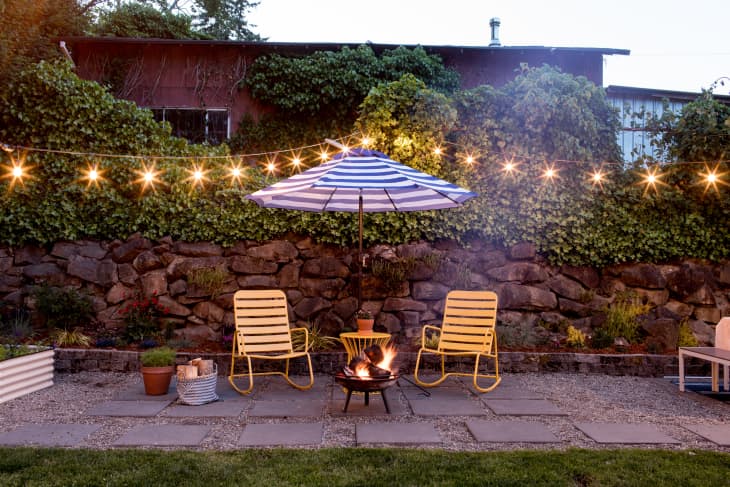
When Lawrence Leung (@brooklyn.apartment) and Mei Bruns (@mei.knits) moved into their Brooklyn apartment, it came with a backyard (yay), but it wasn’t in good condition (boo). “There was old furniture and a rusty charcoal grill from the previous [tenant] that we had to remove as well as a lot of cleanup maintenance needed,” Leung says.
Leung and Bruns used a shovel to level out the ground, a rake to smooth out the surface, and then used pea gravel and stepping stones to help create distinct zones in their outdoor space. They finished off their garden with potted plants. “We like perennial plants that don’t require full sunlight since our outdoor space is mostly shaded,” Leung says. “We love our Boston ferns, hostas, and begonias.”
They also added additional 2x4s to their fence and chicken mesh “to prevent rodents from entering,” Leung explains.
Chicken wire is great for raised garden beds. Mint is bad for them.
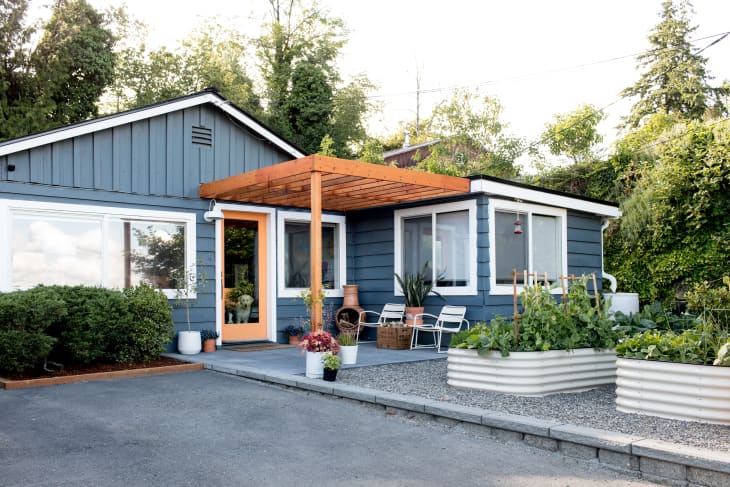
Speaking of chicken wire, Seattle-based homeowner Brooke Fitts’ (@brookefitts.photo) best gardening advice is to always put down chicken wire under a raised garden bed before filling it. “I have moles, and this prevents them from coming up!” she says.
She has five beds for herbs and vegetables and one for flowers — and she keeps perennials and annuals separate. She learned the hard way, though, not to plant mint in a raised bed. “It takes over everything, and you’ll never get it out,” she says. When it comes to mint, “pots only,” she adds.

You can make your own garden bed edging.
Homeowner and DIYer Dina McMahon also has raised garden beds in her yard — plus, a hand-built potting station. One smart tip to steal from her garden is the homemade edging that separates pea gravel and the grass in her yard.
It’s made from leftover pieces of the old fence in her yard. “I kept some of the old fence boards that weren’t rotten and cut them down to 8 inches and pounded them into the ground, overlapping them,” McMahon previously told Apartment Therapy.
Use the off-season to plan.
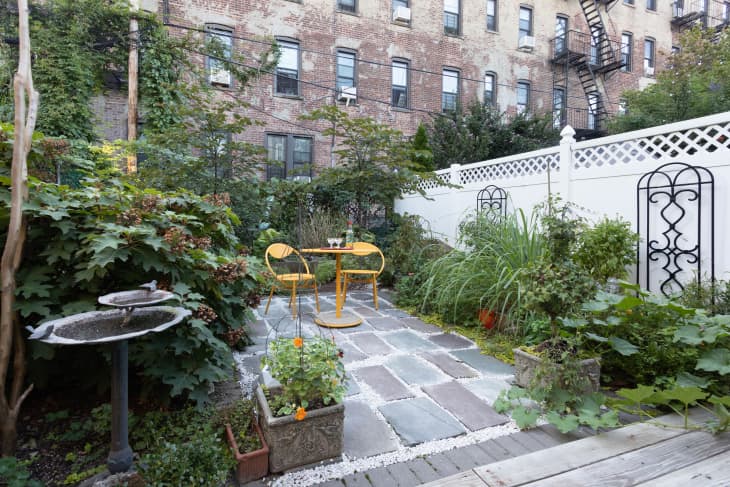
Apartment owner Shelley Worrell told Apartment Therapy in her house tour that she enjoys her garden most months of the year. “During the winter months, I plan out my annual and vegetable gardens while feeding the cardinals, blue jays, and others. I also use this time to plan edits I want to make come spring,” she previously told AT.
“This year with NYC now being designated a tropical climate, I applied a very thick layer of mulch to help retain moisture,” she adds. She also pruned her redbuds to assist with airflow and planted cucumbers and tomatoes, the latter of which are having a spectacular year, she says.
“Last but not least, I spread compost from the bin very early in the season and added more topsoil and organic fertilizer to raised beds [and] pots,” Worrell says.

Don’t be afraid to take outdoor garden materials indoors.
In her one-bedroom apartment, Stephanie Turner uses lots of heavy stone pedestals and urns (even a fountain) you might typically find at a garden center. Some are for potted plants, and others are just for decoration. It’s no surprise, of course, that Turner is a garden designer for a living.
“I love to bring the garden inside for an indoor-outdoor feel,” she told Apartment Therapy in her house tour, adding that her home is “an ode to the outdoors with natural materials, garden elements, shells, plants, and artwork.”

Keep potted plants in terracotta — or the garden center plastic they came in.
Trinity Shi (@cubehousejungle) has over 100 potted plants in her LA house, and she actually doesn’t love putting plants and soil directly in decorative planters. Instead, she likes a no-frills terracotta pot, which helps prevent root rot, she says. She’ll also often keep the plant in the garden center container it came with and adds that to the decorative planter.
Plastic containers from the nursery are lightweight and easy to lift in and out of a larger ceramic planter. “If they feel light, that means it’s time to water,” Shi previously told AT, whereas a well-watered plant will have denser soil and feel heavier.
You can make window or wall boxes out of food or wine crates.
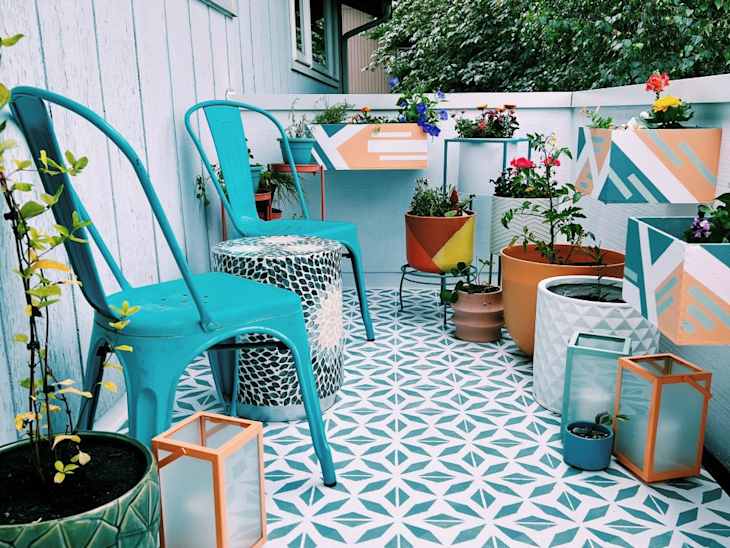
“After I received seven free wooden boxes from a local wine group that we’re a part of, I primed them and painted a fun modern design in four colors with layers of paint and tape,” says DIYer Shannon Bowen (@themodernspeakeasy), who turned those wine crates into hanging wall planters for her balcony.
She drilled drainage holes into the crates and added mesh to keep the dirt from falling out. Afterwards, she nailed them using L-shaped brackets to the inside of her balcony walls, and now they’re filled with herbs and flowers.