
I Swear by the “Grid Method” for Raking Leaves in My Yard (And So Do Pros)
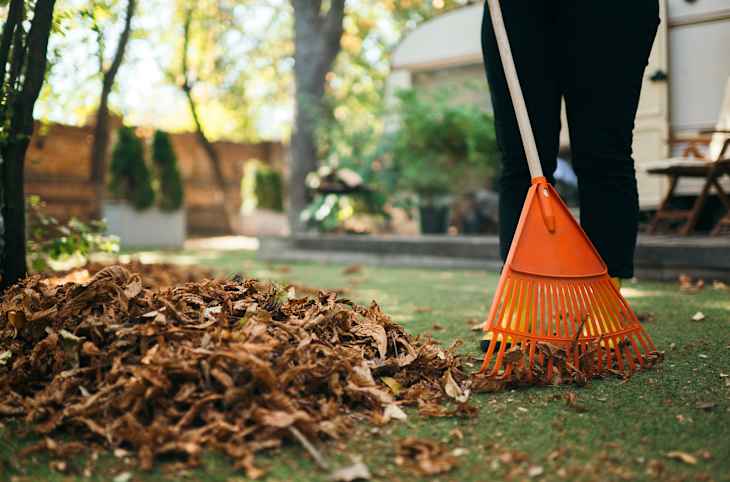
While shoveling snow may be the backbreaking chore of wintertime, leaf raking takes the (pumpkin-flavored) cake for fall. And if your usual method is to push all of the leaves into one massive pile in your yard, I’m sorry to tell you you’ve been doing it all wrong — especially if you have a big yard.
I prefer the grid method, a simple yet surprisingly effective way to tackle fall foliage.

What is the grid method for leaf raking?
The grid method breaks your lawn into smaller, manageable sections. Skye Durrant, cofounder of LawnGuru, a platform that connects homeowners with top-tier landscaping pros, and a lawncare provider himself with nearly 20 years of experience, recommends working in about 8-square-foot sections.
As you rake each section, you gather the leaves into a small pile within that zone. By the time you’re finished, your yard is dotted with neat piles arranged in columns and rows across the grass.
You can bag each pile as you go, but some — myself included — find it easier to rake all the piles first and then bag them at the end, since this requires less stopping and starting. (Just make sure you’re not raking on a windy day if you go this route.)
“I think it works for just about any yard, except for really small ones where a single pile gets the job done without adding unnecessary steps,” Durrant says.
Why is the grid method better for raking leaves?
The idea is to make the work more efficient and less physically demanding. Not only does this method save time and energy, but it also makes raking feel less like an all-day ordeal. “You can knock out a grid or two and then pick up where you left off later,” Durrant says. Because your movements are shorter and more controlled, it’s also easier on your back and legs.
I’ve long used this method myself — both for fall leaves and for the large seed pods the sweetgum tree in my yard drops. It even makes the final step of collecting the piles easier, since working in smaller sections means each load is lighter and quicker to haul to the curb.
How else can I hate raking a little less?
Durrant suggests a few additional tips to make the job even smoother. Rake with the wind whenever possible and opt for a lightweight rake to minimize strain. “I really like the larger plastic headed rakes with wooden handles,” he says. “They’re lightweight, affordable, and easy on the arms for bigger jobs.” (His favorite is Anvil’s Wood Handle Poly Leaf Rake.)

To help conserve even more energy, you might also consider using the mulching feature on your mower on the leaves to make them easier to bag, he adds.