
The Most Realistic HGTV Shows, According to Real Estate Pros
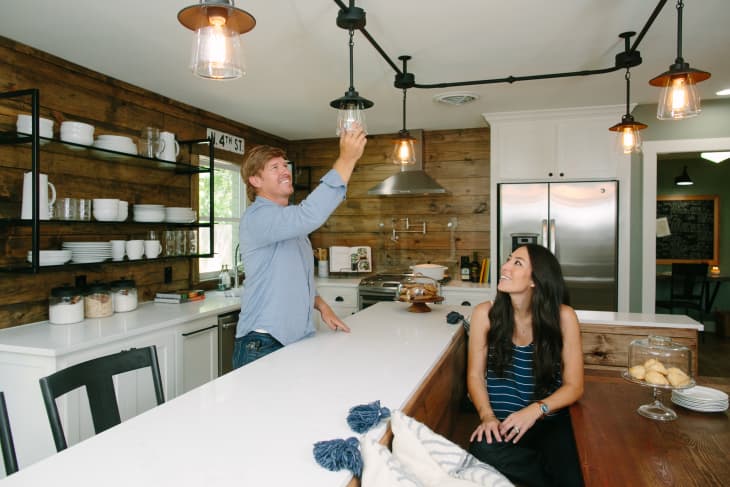
If you’ve ever watched HGTV, you know how easy it is to get sucked into the shows and fantasize about which home you’d choose if you were on an episode of House Hunters. While there’s no shame in binging whatever reno-marathon is on TV, it’s important to remember that these programs are not always accurate.
“Most of these shows do no favors to Realtors because the process of buying a home or fixing one up is much more complicated than they portray it,” says Missy Cleary, a buyer’s agent with The Cleary Group in Sarasota, Florida.
Additionally, timelines on reno-based shows can set unrealistic expectations for homeowners and don’t always reflect the issues that can occur during the process, says Brenda Bradshaw, a buyer’s agent with The Cleary Group in Bradenton, Florida. At the end of the day, experts say that it’s perfectly fine to be a fan of these shows but to remember that they’re made to entertain — not reflect real life.
While none of the shows are totally accurate, some are more lifelike than others. Here, four experts — including Missy Cleary and Brenda Bradshaw with the Cleary Group, Jill Rotta, president of Green Pond Real Estate and veteran expert, and McKenzie Ryan, a top real estate agent and leader of the McKenzie Ryan team in New York, discuss the realism of the most popular HGTV shows based on their professional experience.
“House Hunters”
Clients seeking a new home visit three different places and pick their favorite in this well-known (and often iterated) series.
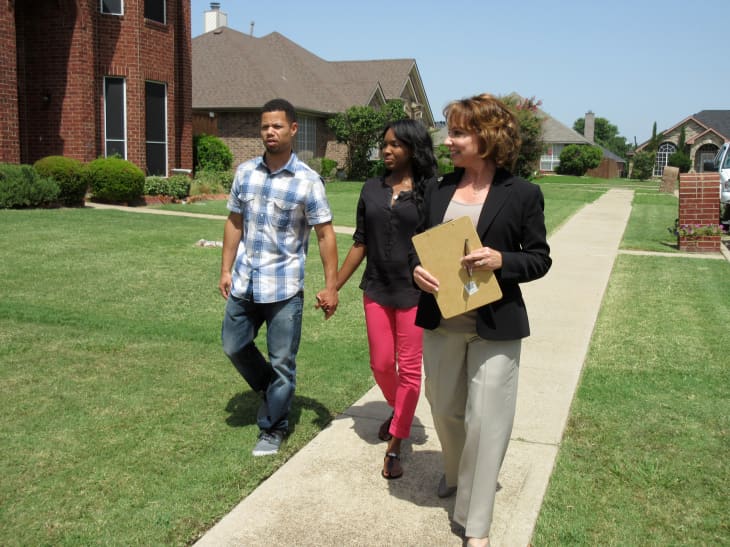
Unsurprisingly, this show is mostly unrealistic to both Bradshaw and Cleary. Cleary notes that only looking at three houses and finding your dream place is completely unrealistic. While some of her clients have genuinely believed that they will find their new home after only a few showings, she’s had to deliver the harsh reality: Real-life house hunting generally requires looking at between 10 and 30 houses at the minimum. Cleary actually had a friend star on an episode, but the friend had already purchased the home prior to filming (this scenario is very common).
“Home Town”
On Home Town, Ben and Erin Napier help folks in their small Mississippi hometown renovate their homes.
For Rotta, who has worked in real estate in the same community for decades, one of the best aspects of the show is how it depicts working on renovating homes in small towns. “You build relationships and your market and your locals, and you have people at your beck and call,” Rotta says. “You certainly do. I have that. I’ve got contractors, like everybody who installs a well to a septic, to decorators and everything in between. I really think to be a good flipper or a good, you have to be entrenched in a community.”
But Rotta casts doubt on the “numbers” of the renovation — from timeline to budget. “The timeline for renos are never on time. Never. I mean, I’ve renovated six houses — you always have to add 20% for time and 20% on costs.”
“Tiny Luxury”
On this show, which aired for three seasons on HGTV and has a fourth season on Amazon, homeowners trade in their regular-size homes for a tiny house (around 220 square feet) to live a low-cost life.
The tiny home trend has been gaining popularity, but both Bradshaw and Cleary say that it’s not a very realistic way of life for most people. Bradshaw says the problem with Tiny Luxury is that it doesn’t show the buyers actually living in their tiny home. “Moving from a larger 1,000+ square-foot house to 220 square feet is crazy ridiculous,” she says. She’s also heard that many tiny homeowners struggle to keep up the lifestyle full-time.
Cleary agrees, saying that the show romanticizes the ideas of living tiny. “I have heard a lot of feedback that most people like the idea of a tiny house but end up deciding it’s not practical at all,” she says. Only a select few are able to maintain a tiny house lifestyle (it’s a lot of sacrifice). Those who want to take part in the trend but aren’t willing to downsize may want to consider buying a tiny house and renting it out as an investment property. Many people would prefer vacationing in a tiny house to living in one full-time, Cleary adds.
“Flip or Flop”
Flip or Flop, which followed now-exes Christina Haack and Tarek El Moussa, a designer and contractor respectively, teamed up to flip houses and to make a massive profit. The show ran from 2013-2022.
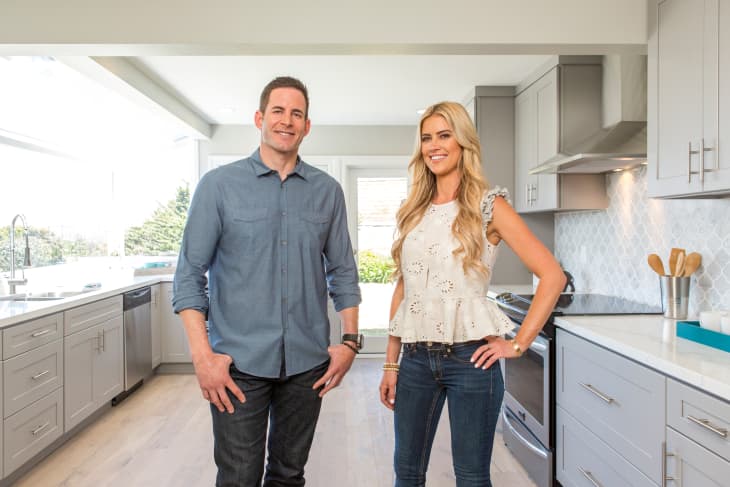
Cleary says that the selling process on this show is pretty unrealistic as well. “My major negative on this show is that they usually show an open house at the end of the show, and the house almost always sells for above the asking price on the first day of the open house.”
Bradshaw agrees that this show is inaccurate, saying that the profit the team makes is misleading and messes with the community’s housing market.
“On many flipping shows, people are making a reasonable $20,000 to $30,000,” Bradshaw says. “[The hosts] usually make over $100,000 on the transaction. I always feel bad for buyers in the area because [these renovations] inflate the prices.”
“Beachfront Bargain Hunt”
This show features homebuyers coming to popular vacation destinations to find a beautiful beach home at a reasonable price.

Cleary says a positive aspect is that it shows that most people have to compromise on location when it comes to getting a beach house.
“You can’t always get everything you want, meaning you may have to be a few blocks from the beach to stay within your budget,” she says.
But Bradshaw says she’s mainly not a fan of this show because it has set unrealistic expectations for some of her clients looking for a beach house in the Sarasota, Florida, area.
“Buyers can’t seem to notice the show is usually in beach areas that are not as desirable,” she says.
She adds that some show locations aren’t warm year-round, in which case the new owners won’t be able to rent out the house to recoup costs — a large part of what makes a home a “bargain.” Bradshaw says she’d like the show to more realistically depict buying and owning a beach house.
“Love It or List It”
On this show, homeowners must choose between their newly renovated home (headed by a designer) or a brand-new home (found by a real estate agent).

Bradshaw says this show is actually pretty accurate when it comes to getting your dream home. “There are always trade-offs for the homeowner or buyer, and in many cases, money is being spent on items that cannot be seen,” she says. “The designer does a great job thinking out of the box and coming up with design features and compromises that utilize the budget and answer the owners’ needs list.”
Despite the competition between the designer and the real estate agent being a little over the top, Bradshaw thinks the show does a good job of setting expectations: “It showcases the point that location matters,” she says, adding that in most cases for a homeowner to get all their needs addressed, they will likely need to move out of their desired area or learn to be happy with their home’s new updates.
“Fixer Upper”
The now-famous duo, Chip and Joanna Gaines, took on a massive renovation projects in Waco, Texas, to give their clients a beautiful house. The show ran on HGTV from 2013 to 2018 — and then was revived in 2021 to air on the Magnolia Network.

Both Bradshaw and Cleary are fans of this show — but who can blame them? Bradshaw especially likes that the Gaines usually run into a few hiccups with the house — either plumbing problems, electricity snafus, or foundation issues — and have to problem solve and take concessions for the sake of the budget. But Bradshaw says that other aspects of the show are not as realistic. In most cases, buyers on the show must already own a property, so the look-at-three-and-purchase setup isn’t accurate. Cleary adds that the reno timeline isn’t particularly lifelike, either.
“Property Brothers”
Twin brothers — one real estate agent and one contractor — come together to renovate a fixer upper and create a new home for their clients.
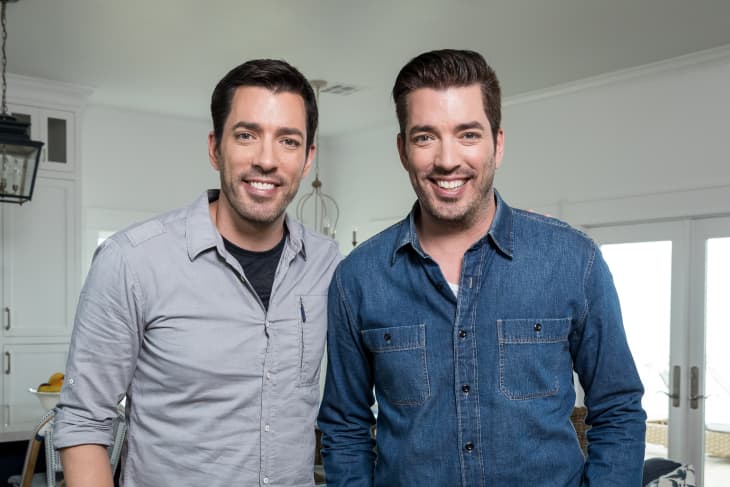
This show ranks high to Bradshaw because she likes the idea of looking at a home’s potential over its face value. “The idea of taking a home that shows poorly and going through the trouble of getting exactly what you want by waiting a few months is great for homebuyers or homeowners to see,” she says. “The clients on the show end up with a home that is worth much more than they paid and is pretty close to perfect for them.”
What she doesn’t like as much? The timeline.
“Remodeling an entire house takes a while with permitting, planning, and execution,” she says. “I find it hard to believe they are getting it done that quickly.” Cleary agrees, saying that both the home-buying and remodeling processes are given unrealistic timelines on the show.
“House Hunters International”
House Hunters goes international as couples search for an international property to buy.
What’s fun for Ryan about this show is that you really get to see “how far the dollar goes across different regions — sometimes they’re in the Bahamas, sometimes they’re in Mexico, sometimes they’re in New Zealand. You get to see what life looks like and costs across the world. And I find that aspect to be not only exciting, but also eye-opening.”
But the show does gloss over how much paperwork it takes to move abroad. “Logistically speaking, I think there’s a little more that goes into international ownership than picking the house. There has to be some sort of tax. Are you going to be a full-time resident of this new place? Is this your secondary home? Are you getting a mortgage? International mortgages? Some countries don’t really work on the mortgage system at all. The actual logistics of purchasing the home and setting up the financial stature of your property is completely glossed over.”
“My First Place”
In this series, which ran from 2005 to 2013, first-time homebuyers try to get the house of their dreams, but end up facing many obstacles throughout the process.
This program shows first-time homebuyers facing every obstacle in the book — issues with inspection, bidding wars, hidden expenses, etc. — which is why Bradshaw believes it to be the most realistic. “All the issues on this show do occur in real life,” she says.
Her one hang-up? That these problems can arise with any home purchase, not just the first one. But Bradshaw says that, overall, the show does the best job out of the eight shows in setting expectations for real-life homeownership. “I think it’s a great idea to let buyers know what can happen during a transaction so they’re not thrown off if something goes wrong.”