
All About Grass Cloth — How a 1,900-Year-Old (Yes, Really!) Minimalist Wallpaper Got a Maximalist Makeover
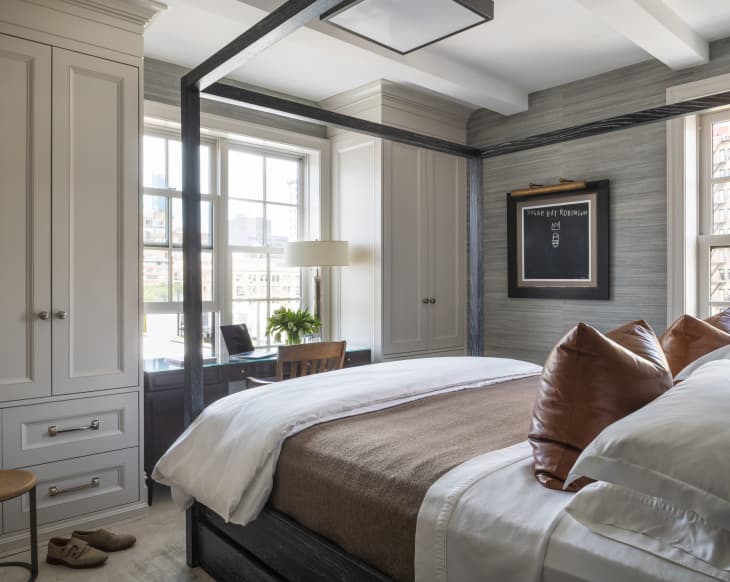
One component of a well-designed room that’s just as important as a color palette or apartment layout — but perhaps not as obvious — is texture. Texture provides coziness and a welcoming feeling in a space. And there’s maybe no example of a textural element that’s more historic than grass cloth.
“People have been using grasses for enclosure for as long as people have needed enclosure,” says architect and designer Nicholas Potts. “It became inextricably tied to a distinct recent period in interior design — the 1960s — although its past is quite interesting in terms of globalism and the exchange of design ideas across cultures.”

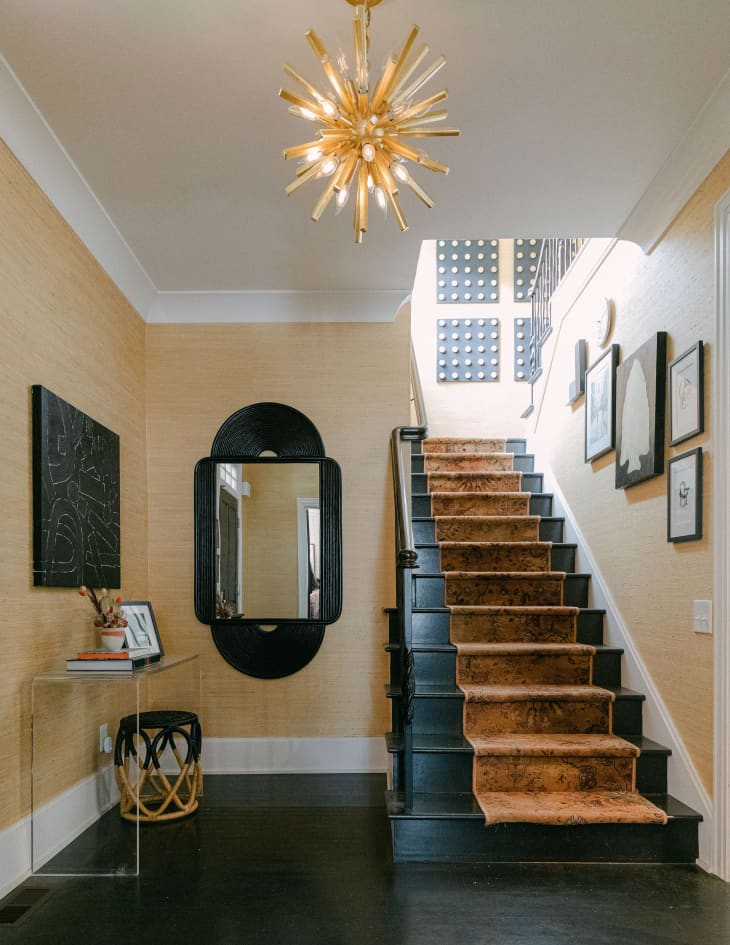
Grass cloth is perhaps best known for its modern use as wallpaper, which creates a noticeably natural backdrop for a variety of design styles. It’s a relatively easy way to add texture in a space, and it comes in a variety of finishes and colors, meaning it can run the gamut from being a minimalist design feature to maximalist one depending on what you choose (and what you surround it with). For example, an undyed or natural-looking cream colorway quietly makes a room instantly more visually interesting, while a bold hue, like teal or blue, can be even more glamorous and striking to take in.
Regardless of color, “It’s a subtle but great way to create depth, variation, and a natural quality that evokes warmth,” says Rachel Robinson, architect and founding partner at Dunham Robinson. And grass cloth isn’t just for wall coverings, either; you can often find this material on the front of furniture pieces like consoles or as shelf backs in bookcases, for example. But if you’re curious about the history of this material — or you’d like to know the best ways to use it — read on to learn more about grass cloth.
Where Did Grass Cloth Come From?
Without getting too far into the weeds (just a teeny grass cloth joke!), the history of this material goes back. Like, way back — close to 1,900 years even. “Grass cloth has been around for centuries,” Robinson says. “It’s traditionally made with fibrous plant materials like jute and bamboo, which have the advantage of growing quickly and abundantly.” Nowadays, you can also see grass cloths made of sisal, seagrass, raffia, and even hemp.
Grass cloth likely originated in Asia, Robinson says, where jute and bamboo are native to the environment. “People would weave strands of them and apply the resulting cloth to interior walls, both for the visual appeal of the material’s natural texture and possibly also for insulating and acoustic properties,” she says. “Generally, backing material is applied to one side of the material to help it adhere to the wall surface.”
Potts notes that 19th-century German architect and art critic Gottfried Semper famously said that woven grasses were one of the four elements of architecture, and the popularity of grass cloth tends to pop up wherever there’s an overlap between Western and Eastern styles. It saw a resurgence in the 20th century when the natural fibers could be reproduced with vinyl, and these days it’s often cited for its sustainability.
“Grass cloth wallpapers available on the market today often merge handmade processes with mechanical weaving techniques for large-scale production,” Robinson says. “Some of them also incorporate dyeing to create variations in color, and often have a pre-pasted backing for wall application. I prefer to work with natural grass cloth made from plants that are harvested, dried, and woven to retain the organic appearance of the raw material.”

What Are Some Benefits of Grass Cloth?
If you’re interested in using grass cloth in your design, know that it comes with a few benefits. “It’s much better-wearing than paper, and because a natural grass cloth also has some imperfections it can hide a lot of sins,” Potts says.
One of those so-called sins could be the old plaster walls in a historic home, Potts notes. “It’s really great as a counterpoint to spaces that are otherwise very ‘finished,’ too,” he adds. Grass cloth can make a space with a lot of moldings feel slightly more casual, as another example. Robinson suggests using it because of how versatile the material can be.

“My team and I have applied it differently each time we’ve incorporated it into a project,” she says. “It’s fantastic for bedrooms, either on all the walls as an enveloping wash of texture or on a single wall for a subtle accent. We’ve also used grass cloth in foyers and corridors as a wainscot material, below a chair rail. This tends to have a grounding effect, bringing a calm, luxurious texture to these spaces.”
Grass cloth also tends to be used in bathrooms from time to time, and you’ve maybe spied it in a dining room as well. It’s a design chameleon and can hang in eclectic bohemian and traditional spaces alike. It all comes down to what kind of grass cloth you use and how you style the rest of a room around it.

What Should You Know About the Grass Cloth Application?
While grass cloth is considered a wallpaper, it doesn’t necessarily have all the same attributes. “You have to embrace the limited panel widths — there is no such thing as panel-to-panel matching — and some amount of fraying at the edges is inevitable,” Potts says. “There is a spirit of imperfection to it, and if you are a die-hard minimalist or have a tendency to want to micromanage nature or color, it might not be for you.”

Robinson also advises maintaining it differently than other wall coverings. “It should be brushed, rather than scrubbed, to prevent disturbing the woven texture,” she says. “Because of the natural material and the woven texture, sometimes the seams between grass cloth panels are more prominent than with standard wallpapers. I say, embrace it! It’s part of the organic look and lends textural softness and visual interest.”
What’s New in Grass Cloth Design?
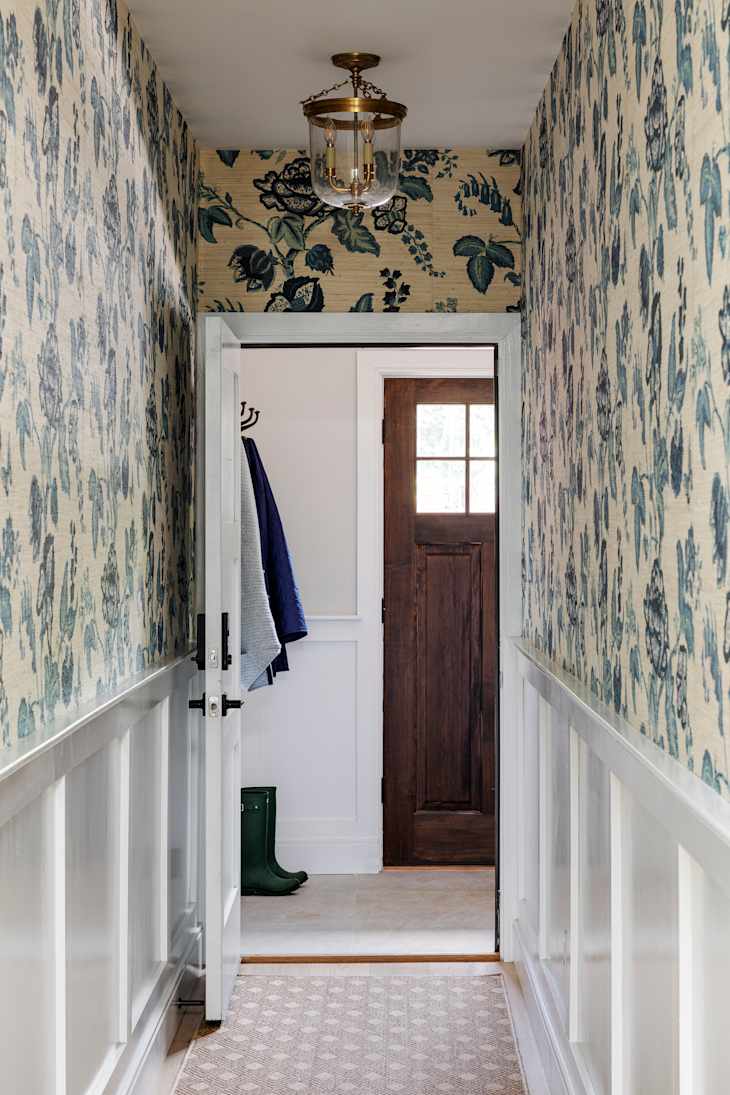
You’ve already seen grasscloth in various colors and different applications, but as of late this material has been taking on a new patterned look. That’s right: Printed grass cloths are entering the chat, and they make this typically minimalist material choice a little more maximalist. Just take a look at this entry by designer Alexandra Aquadro of AGA Interior Design. It’s the best of both worlds: the charm of a floral wallcovering meets the warmth of grass cloth.
Maybe these latest grass cloths illustrate just how far this centuries-old material can be pushed. Solid or patterned, subdued in shade or bold, grass cloth can provide a warm texture to your home that will seemingly always be in style. So if this material speaks to you, go for it. You won’t regret it.