
5 Home Decor Trends That Are a Waste of Money, According to Designers
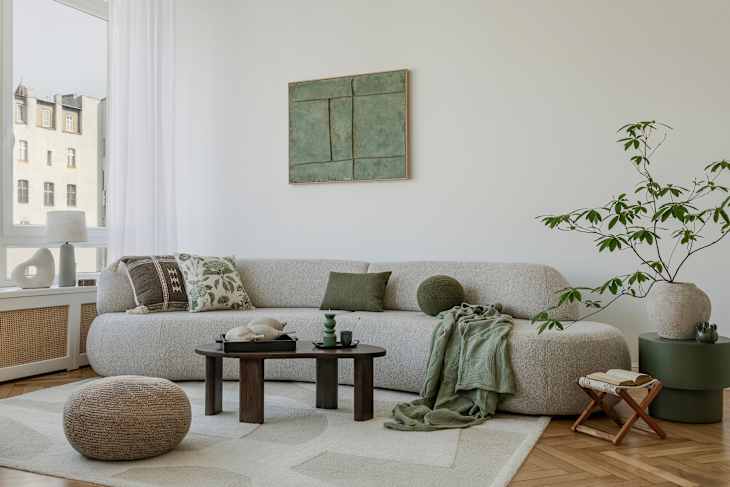
Decorating, whether it’s your first apartment or a forever home, doesn’t come cheap. But decor doesn’t have to cost a fortune either, if you can avoid sinking your dollars into certain items that won’t add anything valuable to your interior design style. What’s on that list? I’m glad you asked.
I reached out to a handful of pro designers to see what decor they think is a total waste of money. Here, they’re sharing five specific design trends to avoid — for the sake of your home and your wallet.


Mass-Produced Decor
It’s tempting to buy mass-produced decor because it’s so easy to find and can be pretty inexpensive. But pros suggest passing over these dime-a-dozen items to instead save up your money to spend on meaningful pieces.
Designer Kelley Gable is a major proponent of saying “no” to mass-produced artwork and coffee-table books, specifically. “I like to encourage my clients to find pieces of art that speak to them; for example, artwork found along their travels that holds a special memory, or a local artist’s piece that reflects the home’s surroundings,” says the founder of Gable Interiors.
Designer Brit Nelson also feels passionately about the artwork people choose to display in their homes. “If you are going to use pictures of animals or places, they should preferably be your own animals or places that you have been and taken pictures of,” she says. “Your home should tell the story of your life!”
When it comes to books, think beyond titles you’re spotting everywhere and seek out those that speak to your family’s interests or location specifically. “I love to find destination-specific books that are meaningful to the home, the client, or the region,” Gable says.
Designer Becca Meyer of BB Meyer Design agrees mass-produced items simply aren’t as special as those with stories behind them. While it can take longer to curate a home filled with unique furnishings and one-of-a-kind treasures, she thinks investing in things “that have soul and speak to you is so worth it!” Her solution for finding trendy pieces or other things you’re seeing in your go-to big box store? “I recommend if you feel particularly drawn to something that is on trend, find a vintage version,” she says.

Low-Quality Faux Florals
Gable isn’t a fan of faux plants and flowers that look fake. “While I always prefer fresh greenery and florals in the home, there are beautiful high-quality faux options that mimic the real thing and bring warmth to the home,” she says.
If a faux plant’s price at a craft store or online seems too good to be true — especially for an oversized, treelike piece — it probably is. Chances are it’ll look overly plastic-y in person or fall apart shortly after you buy it. It’s best to skip low-quality faux greenery and flowers all together. And if you want to go the fresh route, remember you can buy inexpensive blooms and greens at grocery stores like Trader Joe’s.

Synthetic Decor That Isn’t Fool-the-Eye Fabulous
In addition to steering clear of fake florals, you might also want to avoid decorating with faux materials in favor of real marble, brass, and the like, Nelson says. “The knockoffs can be spotted a mile away, and nothing beats the real deal,” she adds. “A fluted marble candy dish is going to be more impactful than a plastic one.” If you’re looking to score legit luxe pieces for less, vintage and thrift stores are your BFF.

Word Art
Word art seemed to have its time in the design spotlight, but all of the designers I spoke to agree that these pieces feel a little passé now. “No one needs to ‘gather’ or ‘believe in love,’ and it doesn’t need to be in anyone’s house — ever,” Nelson says.
Skip these cheeky signs if you’re considering them, and save your pennies to scoop up something figural or more abstract. And if you truly still love word art, commission something that resonates with you — a special phrase, a song lyric, a line from a poem you love — versus a generic piece.

Quick Fix Furniture and Decor
You might think you’re making a wise financial solution by ordering the $150 dresser instead of the $300 one, but how long is the cheaper option actually going to last? As designer Shaolin Low says, “Anything that falls apart within a year of purchase is a waste of money, like curtains, throw pillows, outdoor furniture, decorative furniture pieces, or even kitchen decor items.”
The founder of Studio Shaolin adds: “Like anything, you get what you pay for, and usually when it comes to home stuff, it’s best to invest, since you typically don’t change these items out often.” The TD;LR here? Spending a little bit more up front can pay major dividends in the long run. Buy the best that you can afford at any given time and consider going the vintage route if you want something that’ll last for less.