
See How a Stager Transformed This “Dated” NYC Co-Op Apartment
New York City is infamous for its pricey and compact real estate. One might assume that a spacious two-bedroom co-op apartment with tons of natural light would get snapped up quickly, especially in a market capable of attracting buyers with equally roomy budgets. But aside from having those deep pockets to afford a home on Central Park West, there’s another thing that buyers apparently needed more of when it came to the unit: imagination.
If there’s one thing that home staging has taught me, it’s that many homebuyers (including yours truly) have a tough time seeing the potential within four walls. And despite the numerous windows — there’s even one in the kitchen! — that filled the co-op with sunlight, the mostly empty space wasn’t doing much to woo buyers.
“The space was not necessarily designed in a way that really showcased the space or made it feel roomy,” says Jeremy Kamm, agent at Coldwell Banker Warburg & founder of RubriK Staging Co, who was tapped to stage the listing by Svetlana Choi, an associate real estate broker at the same firm.
The former owners had already moved on, leaving behind a few pieces of furniture, but it wasn’t enough for buyers to envision its full potential. “Being able to imagine yourself in this space is critical, so I furnished it in a way that I thought would speak to your Upper West Side buyer,” Kamm says.
How This NYC Co-Op Apartment Was Transformed
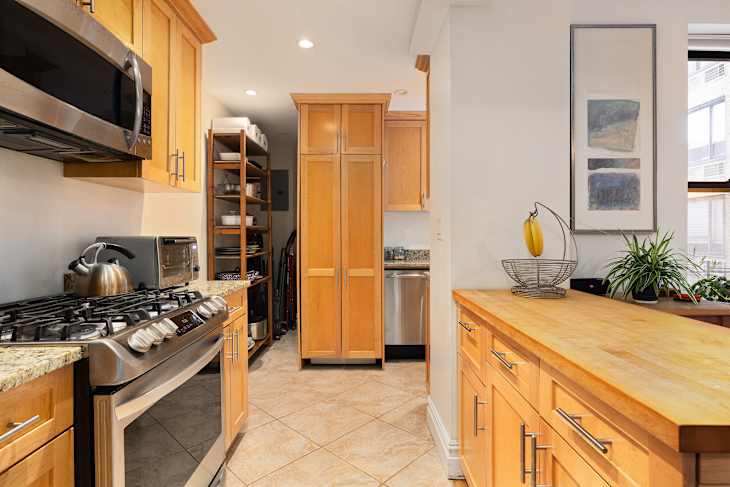
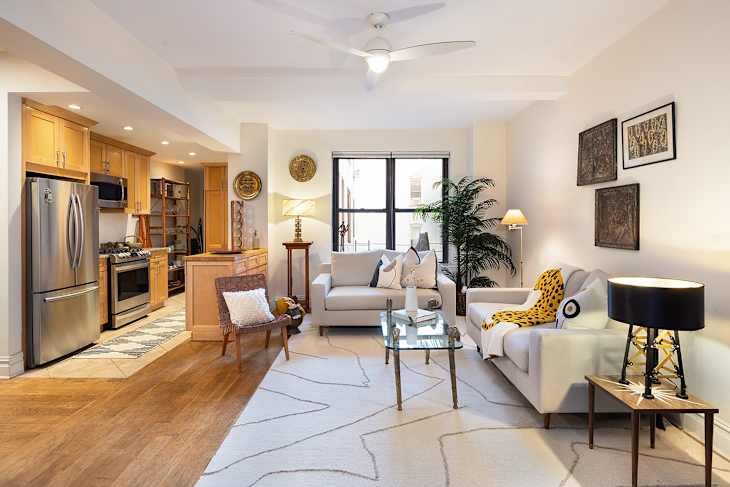
While the co-op was in good condition, it hadn’t been updated in years, so it wasn’t exactly turnkey in terms of new finishes. “It was dated but digestible,” Kamm says. His goal was to create a casual yet sophisticated space. “This is not like some over-the-top, prewar, elegant kind of thing,” he adds. “It had a cozy, warm, very relatable, and approachable kind of feel. So I really leaned into that.”
Stage the Second Bedroom as a Children’s Room
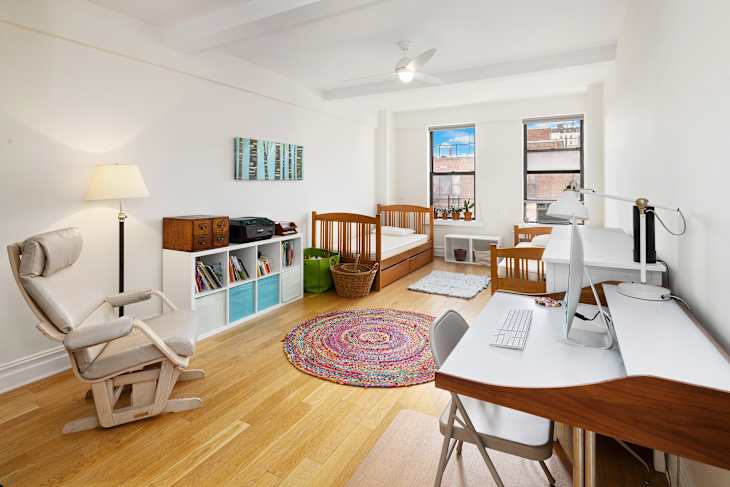
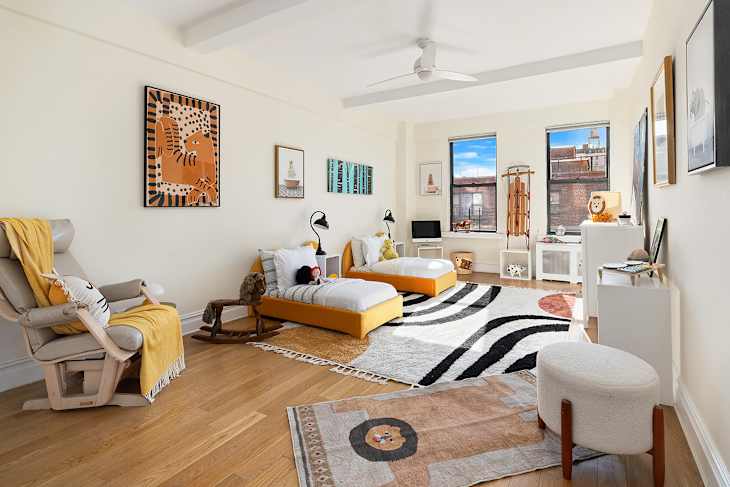
Not all stagers are also licensed real estate agents, but it’s a dual setup that works well for Kamm. “I am very much dialed into the likely buyer pools for different neighborhoods,” he says. “Taking that into consideration as a home stager, I think, is critical.” It’s why he then staged the second bedroom as a children’s room; though there are certainly many professionals in the area who could use the second bedroom as, say, an office, he knew that there were families with children in the potential buyer pool. He also placed the two beds on the longer wall, making the room seem even more expansive.
Rearrange the Layout of the Dining Area
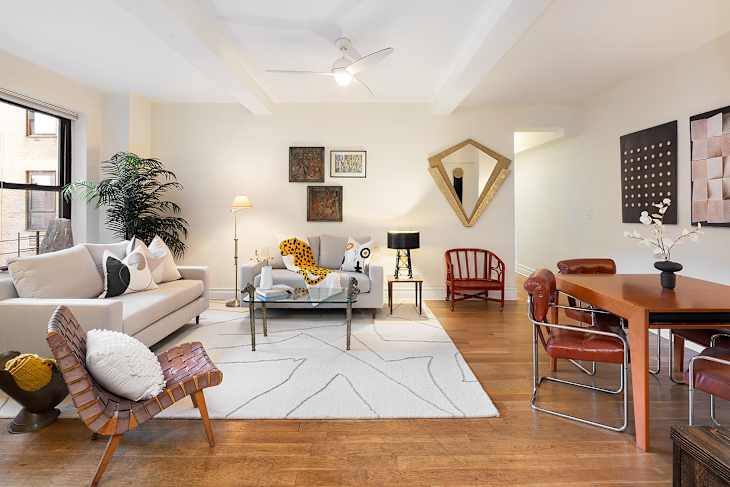
The challenge Kamm had wasn’t the size of the space but the layout of it. He typically loves working with horizontal rooms because they offer more options for furniture layout. However, with this property, the middle entry posed a challenge, as did the need to maintain access to the corridor leading to the bedrooms.
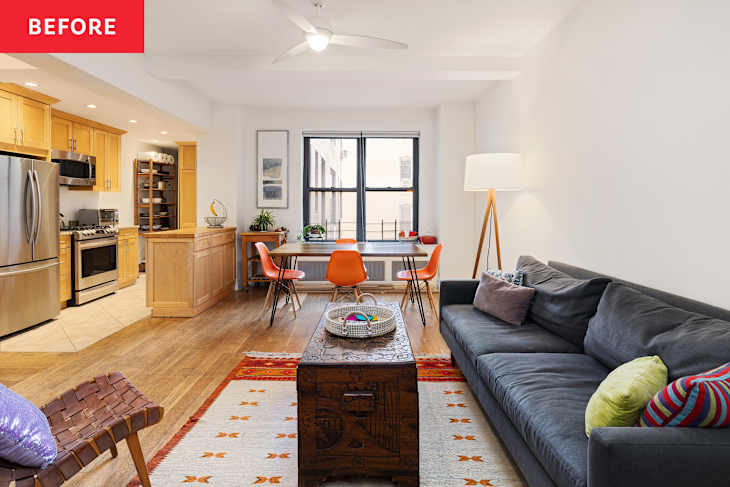
The solution? Move the dining area to a new spot to make even better use of the expansive living area. Prior to staging, a six-seat dining table was placed in front of the window, which shifted the living area away from the view. “It wasn’t a poorly lit apartment, but you are looking at something entirely interior,” Kamm explains. “I do think flipping the arrangement helped alleviate that.” By switching up the layout of the dining area, he portrayed a new story to potential buyers: “More meaningful living space that permitted conversation and gathering — not so much for eating but more for multiple people living in the home — was more important,” he says.
Bring in a Warm Color Palette
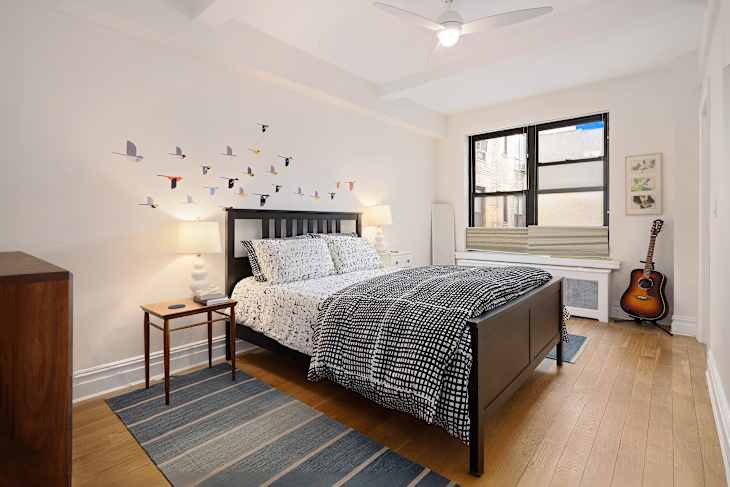
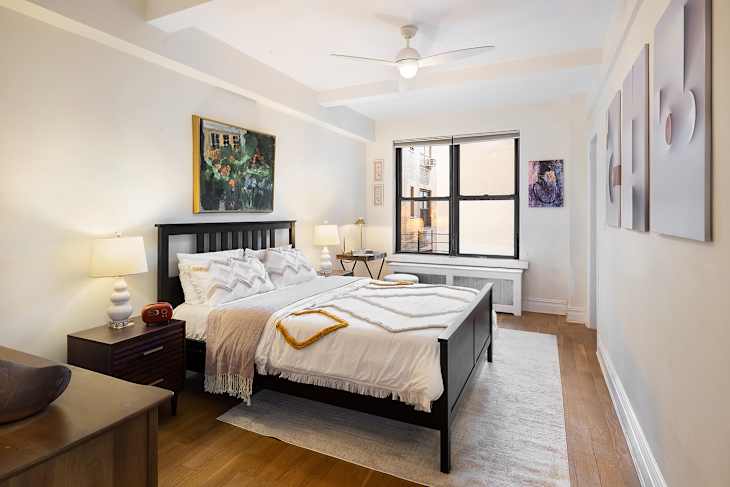
For the rest of the home, he brought in more furniture, new linens, and tasteful decor in a warm color palette featuring browns, grays, and yellows that created a cohesive design flow from the living room to both of the bedrooms.
How Staging Helped This Listing Get Sold
Kamm’s staging essentially revived the listing that had been lingering for more than six months on the market. Once the listing photos were updated, the co-op went into contract 45 days later, and the deal was closed.