
This ’90s Kitchen Trend Is Officially Back — And It’s Surprisingly Warm
Trends tend to cycle back every 20 to 30 years or so, and the trends currently ruling the scene hail from the 1990s. From celestial details to colors that dominated the decade, like maroon and forest green, these nostalgic accents are making their way back into modern-day homes.
Case in point? Honey oak-tone cabinets. Yes, that’s right — the cabinetry with the warm, golden hue “with amber undertones,” as Victoria Fioravanti, partner and creative director at Showcase Kitchens/Showcase Tile & Stone, describes it, has come back after spending many years as a dated kitchen feature that was painted over or completely replaced. These cabinets were a ’90s phenomenon to the point that they made it into the kitchens of Full House and Home Improvement — and people (and homebuyers) are loving them again today. Here’s why.

Why ’90s Honey Oak Cabinets Are Popular Again
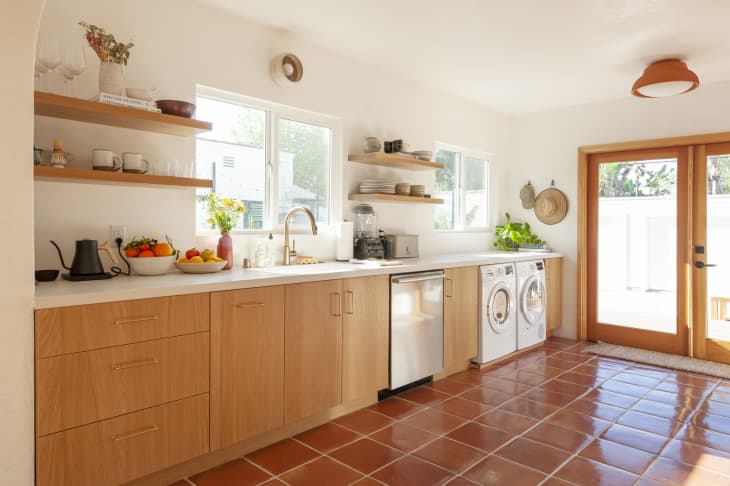
“Honey oak-tone cabinets have a wonderful color and texture,” says Laurie Coton, real estate broker and principal designer at Coton House. “They aren’t too yellow and not too brown. The in-between neutrality works beautifully with so many of the backsplash and countertop options found today.” Coton loves how these tones are refined, “bridge the gap between modern and transitional,” and feel “natural, grounded, and timeless.” Fioravanti says that since the pandemic, people have been gravitating toward warmer, more natural materials that evoke a nesting quality. But they look a little different than their bygone counterparts.
“The honey-toned cabinets of today are lighter, more matte with less orange overtones,” she says, pointing out that they are relatively easy to maintain because the warm grain hides smudges and minor wear better than painted finishes. “They feel more Scandinavian-inspired than the heavy ’90s look.”
Coton says that these cabinets were once considered to be tacky, but nowadays warm tones in general are seen as stylish. “We’re seeing them throughout the house, but especially in cabinets and flooring,” she shares. “We’re using our homes differently — entertaining more and enjoying the comforts of home more than ever. We want to feel comfortable and welcome, and warm tones definitely help fill that need.”
How Honey Oak Cabinets Are Impacting Sales
Believe it or not, this “once tacky” cabinet hue is a draw for prospective homebuyers, according to experts. “People love the look,” Fioravanti shares. “It is clean, like the white cabinets that have been popular, yet homey. Our customers are choosing it because they know it will stand up to a positive resale.”
But let’s say that you have real-deal honey oak cabinets from the 1990s, and they came with your current abode. If you were once considering taking them out and remodeling before you sell your home, you may want to think again — because, as mentioned, buyers will likely be interested in them.
“If the cabinets are in good condition and the wood grain is attractive, there is nothing wrong with keeping existing honey oak cabinets,” Fioravanti says, adding that if you like, you can bring them up to date even more with a bit of work.
“If they have that overly orange hue or are heavily lacquered, they can be stripped and refinished with a more modern stain,” she recommends. “Swap out the dated hardware, and the kitchen will read more 2020s and less 1995.”
In general, when it comes to real estate and interior design trends, Coton is seeing popularity swaying from “cold gray and white” toward natural textures, organic products, and warmer feels. That’s why she advises even installing honey oak cabinets in your current kitchen — something that could add to your resale value, especially if you plan to sell soon.