
Elephant Ears Are the Showstopping Houseplant I Still Love After 20 Years as a Gardening Expert
Some plant-lovers prefer blooms on their houseplants, like you might find with the Thanksgiving cactus or African violet. But others would rather have plants that feature showstopping foliage. When I first started learning about gardening a couple of decades ago, I was a blossom girl: a shrub or houseplant wouldn’t make my “it” list if the flowers weren’t the big thing. But then I got an elephant ear plant as a gift, and I completely fell in love.
There’s so much to appreciate about elephant ear plants. The elegance of those huge leaves! The bold colors of the foliage! The drama of the contrasting veins! And the serendipity of the fact that, somehow, this houseplant Houdini manages to “escape” from a dried tuber to transform into the mammoth leaves and tall stems.
Yes, elephant ears are bulb plants! Even today, after two decades as a plant expert and a docent at San Francisco Botanical Gardens, I remain amazed by the magic of elephant ears. Take my word for it: One healthy elephant ear plant will transform your living room into a tropical haven. Here’s everything you need to know.
How to Care for Elephant Ears
- Elephant ears like bright, indirect sunlight.
- Plant elephant ears in well-draining soil.
- Water elephant ears often enough to keep soil moist but not soggy.
Quick Facts About Elephant Ears
Common name: Elephant ears, elephant ear plants, elephant’s ear
Botanical name: Alocasia spp.
Botanical family: Araceae
Typical height: Up to 6 feet tall
Light needs: Bright, indirect light
Soil needs: Well-draining, acidic soil
Native area: Tropical areas of Asia, Africa, Australia, South America, and Central America
Toxicity: Toxic to cats and dogs
What kind of light does an elephant ear plant need?
Elephant ears are hardy outdoors in USDA plant hardiness zones 7 to 10, but can be grown as houseplants anywhere. If you are planting outdoors, pick a spot with some direct sun. Inside, the plant does best in a location that gets bright, indirect light.
What kind of soil is right for an elephant ear plant?
These tuber-plants require soil that drains well yet remains moist. To achieve this, add organic compost to potting soil and blend well. The organic compost allows the soil to hold onto the moisture without getting soggy.

How much should you water your elephant ear plant?
Adding compost will allow your elephant ear’s soil to hold onto moisture, but you’ll need to water regularly and well to get that moisture into the soil — especially for container plants. Whenever the top inch of soil feels dry, it’s time to water.
Plan on giving your elephant ear plant up to 4 inches of water a week during the growing season, never allowing the soil to dry out completely. Reduce this significantly when the plant goes dormant in winter.
How much humidity does an indoor elephant ear plant need?
Like most tropical plants, elephant ears do best in high humidity. Just because elephant ears like it warm doesn’t mean they like it dry! Use any of the standard means to up humidity around elephant ear houseplants, like setting the plant on a pebble saucer, misting the foliage regularly, or getting a small humidifier and placing it near the plant.
Can you grow an elephant ear plant from a cutting?
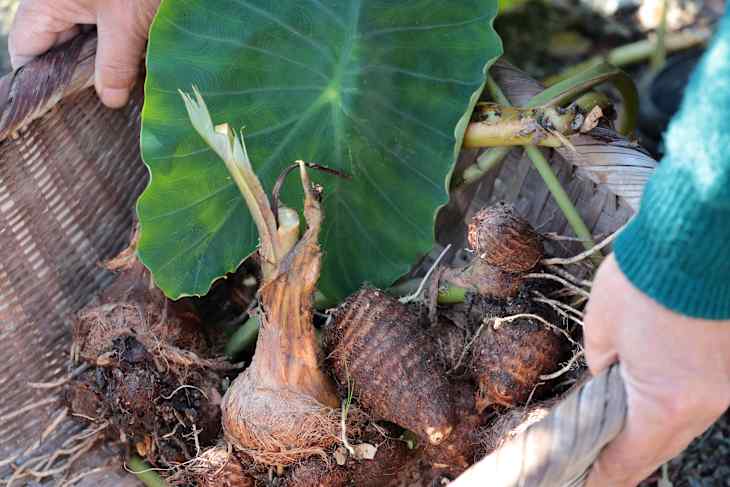
Don’t bother trying. Elephant ears are bulb plants, growing from a type of bulb called a corm or a tuber. Cutting off a stem or leaf to propagate and sticking it in water will not produce roots.
How To Propagate Elephant Ear Plants
Seeds may be the first thing you think of when it comes to propagating elephant ears. Elephant ears outdoors do produce flowers and seeds, but it is pretty rare for indoor elephant ear plants to blossom. In addition, many of the popular varieties of elephant ears are cultivars which means a seedling won’t look like the parent.
Instead, think division. That is, you need to divide the tubers that expand as the plant ages.
Dig up the tuber as the growing season ends, then divide the tuber into clumps. Make sure each separate section has at least one growth node. Allow the cut edges to dry out (like you might do with succulents), then wrap each one in paper and store it in a cool area. It will be ready to plant the following spring.
Where to Place an Elephant Ear Plant in Your Home
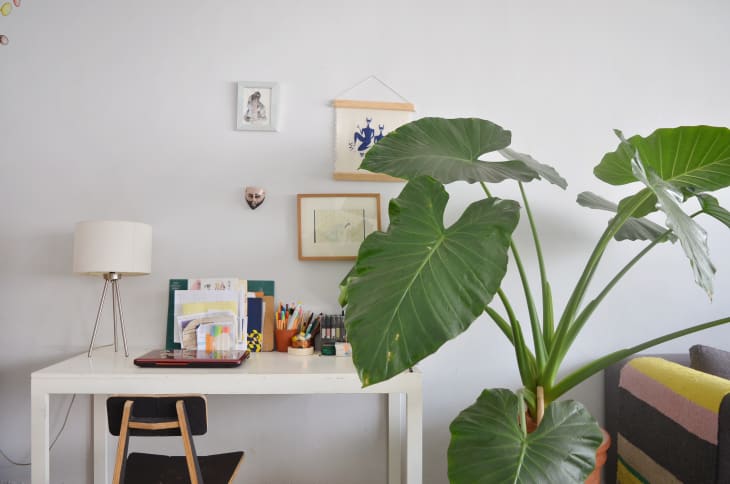
The ideal indoor spot for an elephant ear plant is near a window, but not too near.
Pick a window that gets bright light and has southern or western exposure. But position the plant back from the window so the direct rays do not hit the plant’s mammoth leaves.

Indoor Elephant Ear Plant Varieties
The common name “elephant ear” is used for large-leafed plants in both the Alocasia and the Colocasia genera, but you’ll want to be sure that you’re buying an Alocasia.
Alocasias are sturdy, upright plants that thrive indoors in indirect light, while Colocasias are best outdoors in a full sun location. But pick your cultivar with your site in mind, as some elephant ears grow taller than you are! Here are a couple of shorter cultivars I love.
- Alocasia “Frydek” starts out with green leaves, but they mature to almost black. The white veins are dramatic. This cultivar tops out at 3 feet tall. You can buy one here.
- Alocasia “Hilo Beauty” offers incredibly lovely leaves — forest green with cream or yellow camouflage patterning. The stems are dark blue and offer great contrast, but top out at 2 to 3 feet. You can buy one here.
How to Repot an Elephant Ear Plant
Elephant ear tubers or corms grow bigger each year, resulting in more stems and foliage during the growing season.
If you don’t divide the tubers or corms, you may need to switch your elephant ear to a different pot. Select a heavy pot a few inches larger than the current pot, add a mix of compost and potting soil, then transfer the corm from the old pot to the new one. Plant the corm at about 6 inches under the soil.
You may be happier, however, if you divide the tuber or corm into a number of pieces. Plant each one in a heavy pot and you will see faster, fuller growth.
Common Pests for Elephant Ear Plants
Like so many other houseplants, elephant ears can attract common insect pests like the following:
- Aphids
- Whiteflies
- Spider mites
The key to dealing with pests is regular foliage inspections. Act immediately if you spot pests. Many can simply be rinsed off the plant, while bigger infestations can require the use of neem or horticultural oils.
Common Issues with Elephant Ear Plants
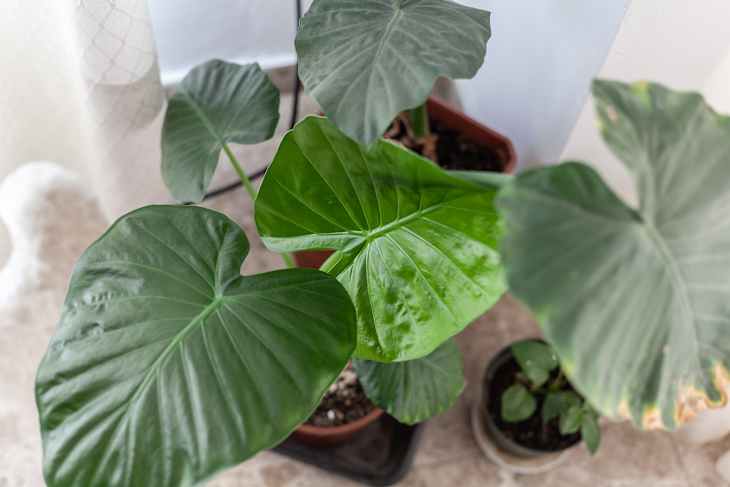
If you don’t give your elephant ear plant the care it requires, you will see issues arising with the leaves.
Perhaps the most difficult “rule” for owners to balance is the need to keep the soil moist but not wet. If this happens, the gorgeous leaves can droop or yellow.
Inadequate soil drainage can also result in corm rot or other root rots. Make sure to pot elephant ears in planters with drainage holes.
The same symptoms can also indicate too much or too little sun, or too much or too little fertilizer. Direct sun can cause sunburned leaves.

FAQ About Elephant Ear Plants
How hot should you keep your home to please the elephant ear plant?
Warm indoor temperatures are best for growing elephant ears. Keep the thermostat at 70°F during the day and at least 60°F at night.
Do I give my elephant ear plant fertilizer?
The more water and fertilizer you give your plant, the faster it will grow. Elephant ears feed heavily, so provide fertilizer every few weeks during the growing season. Use a water-soluble, high-nitrogen fertilizer.
How long do elephant ears live?
While lifespan depends in large part on cultural care, the average well-cared-for elephant ear plants live about eight years.
Can you grow elephant ears outside as annuals?
Yes. If you live in a cooler hardiness zone, you need to dig out the corms and overwinter them indoors to reuse them the following year. Some gardeners opt to grow them as annuals, though.
Elephant ear corms get bigger every year, so instead of overwintering them, you can leave them in the ground and divide them in spring to get new smaller plants.
Can you eat elephant ear corms?
Definitely not a good idea. You might read that in their native tropical realms, some types of elephant ears are considered a food crop, but that’s not the case for all elephant ears. Without proper preparation, every part of this plant is toxic to people as well as pets. Stick to ornamental use only.