
The One Piece of Furniture Every Renter Needs, According to 2 Design Pros (It “Elevates” Your Life)
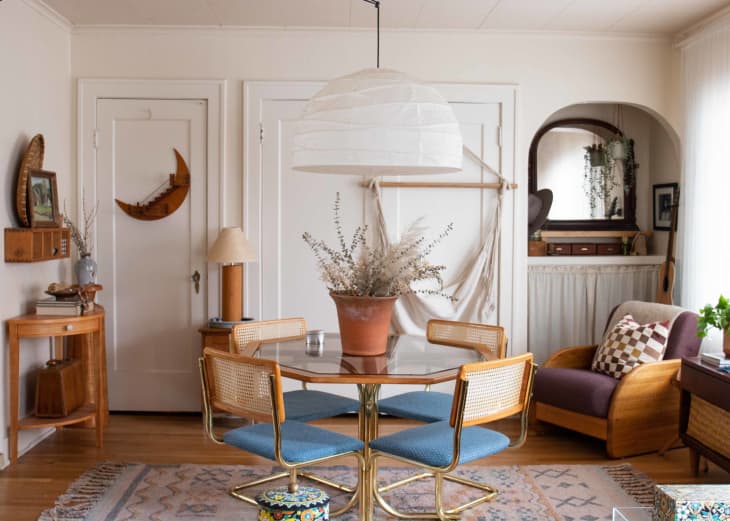
Check out our Start Here Guide for renters to help you make any rental look amazing and feel like home. This content is presented by GEICO; it was created independently by our editorial team.
Whether you just moved into your place or you’ve been there for a while, creating a relaxing haven that’s conducive to the activities that bring you joy is important. But in a rental, a dining table — one of the most central gathering places in a home — is often an afterthought.

Even if you don’t have room for a full-on dining table and have gotten comfortable eating your meals on the couch, there are times when a table just makes things easier, like when you want to have people over for dinner or game night.
“The right table doesn’t just save space; it creates ease, flexibility, and clarity in how you live and ultimately elevates your connection to the space,” says Tina Montemayor, founder and principal designer at Tina Montemayor Design.
Ben Harvey, principal designer and furniture specialist at Patio Productions, says the right table can be transformative. “You are no longer clearing a makeshift desk off your bed or awkwardly eating takeout on the floor. It brings structure, fluidity, and dignity to your routines, and that positively impacts everything from mental health to social life,” he says.
If you like the idea of having a table that can move with you from place to place, but don’t see how it can fit in your current space, these tips will help you choose just the right one.
Choose a Versatile Material
Montemayor shares how important it is to think about your goals for the space in general and your table specifically. This doesn’t apply to only the table shape and size, but also to the material. “‘When advising clients, I always start with how they want to use the space. Will the table double as a workstation, game zone, or homework hub? Do they need something durable enough to skip coasters and placemats?” she says.
Most renters will use their table for a little bit of everything. “For high-traffic households, sealed wood, porcelain, or custom-cut glass toppers are smart solutions,” says Montemayor. “They protect surfaces, hold up to everyday use, and still look elevated.”
Harvey emphasizes that multipurpose tables need to stand up to versatile activities. “Prioritize wipeable surfaces,” he says.
Look for a Shape-Shifter
A multifunctional table that changes shape based on your needs is ideal for small spaces. Harvey says that a table that “seamlessly transitions from workspace to dinner setting to weekend game hub means fewer compromises.”
Adjustable tables, such as those that expand or have a lift top, are great for small spaces because they serve multiple needs without taking up additional square footage. But it’s important to consider how easy it is to use. For instance, if you’re going to raise a coffee table to eat on every night, transforming it needs to be quick and simple. If you’ll only need to expand a dining table every few months when hosting a larger dinner party, you might be able to tolerate something that takes a bit more work to adjust.
“Avoid furniture that takes multiple people to disassemble,” Harvey says. “Renters need agility and longevity.” That means something that’s lightweight but durable — solid wood tops with metal legs or engineered wood with laminate finishes strike a good balance. “Avoid oversized pieces you’ll dread moving,” says Harvey. Montemayor says, “For renters, sourcing a table means balancing aesthetics with mobility. Look for expandable tables that don’t require tools to adjust.”
Go for Slim Legs
The right aesthetics and materials are key to not overwhelming a smaller space. “In tight quarters, proportion is everything. Avoid bulky pedestals or chunky farmhouse-style tables that dominate the visual field,” Harvey says. “Instead, opt for slim-profile legs (especially outward-angled ones that allow more knee room), and materials like glass or pale wood that visually ‘lighten’ the space.”
Specifically, Harvey recommends the IKEA NORRÅKER table due to its “rugged simplicity” and its blend-in birch, as well as acrylic tables for “barely there aesthetics in tight spaces.”
Montemayor also emphasizes style when it comes to multifunctional tables for small spaces. “Even budget-friendly pieces should feel intentional, with details like slim legs, porcelain or glass tops, and floating silhouettes that help a space feel more open,” says Montemayor.

Select Subtle Chairs
Your chairs should complement your room’s style and take up minimal visual and physical space. “If you’re short on chairs, mix in backless stools or upright seating that can tuck away easily but still support proper posture for dining or board games,” Montemayor says.
You want options that offer versatility while maximizing space. “For chairs, stackable or foldable designs are lifesavers,” says Harvey. “I often steer clients toward armless chairs with narrow silhouettes and upholstered seats — comfortable for long dinners but easy to tuck under when not in use.”
Go Round
“Round or oval tables are great for flow in tight quarters,” Montemayor says. Harvey agrees: “Extendable round tables are perfect for switching from intimate dinners to group board games because they eliminate harsh corners and offer better seating arrangements.”
Whatever shape you land on, Harvey underlines the importance of size. “Always measure clearance space between walls and table edges,” he cautions. “You want at least 36 inches to pull out chairs without squeezing.”
When a Coffee Table Is Your Only Option…
“If your coffee table serves as a central hub, go for the height — a typical coffee table is too low to comfortably dine,” Harvey says. “Go for lift-top models that raise the surface to dining height, preferably with a gas-lift or spring-assisted model for convenience.”
Montemayor shares an added bonus to using a lift-top coffee table: storage. She says it can help “reduce visual clutter, which is key in compact rooms.”
Seating (in addition to your sofa) for a coffee table is crucial. “In terms of chairs, padded floor cushions, poufs, or adjustable-height stools can work depending on your lifestyle,” Harvey says. “Alternatively, a low-profile storage bench can offer support and seating without visual clutter.”