
I Tried 5 Methods for Removing Rust from Metal Objects, and I Had a Clear Favorite
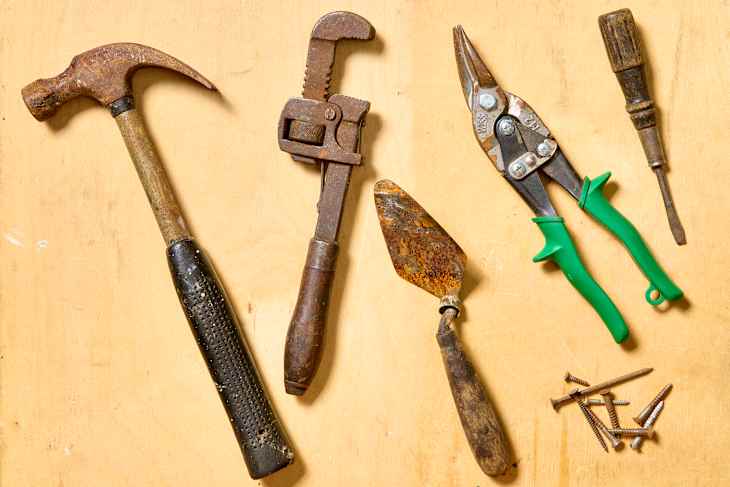
Rust might not be dangerous to touch, but it’s a pain nonetheless. When rust forms on your tools, it can not only make them a mess to hold (hello, rust stains!), but they also won’t function as well, either. Remember that set of garden shears that barely opens and closes because it’s rusty? Exactly.
When water finds its way to the surface of a metal tool and sits there for days on end, the result is an oxidation process can that leaves your tool rusty. But this doesn’t necessarily mean it’s the end of the road for that item! Wondering how to remove rust? It will take some elbow grease, but you’ll be glad to know that pesky rust can be removed from a metal surface.

There are a few tried-and-true ways to remove rust from metal items, so I decided to put some of my favorite methods to the test in a head-to-head battle. Here’s how they fared.
How to Remove Rust from Metal
There are a few different effective methods to remove rust from metal. You can either remove rust passively by letting it soak in an acid (like vinegar, citric acid, or lemon), or remove it actively by scrubbing it away with abrasive materials (like baking soda and steel wool).
For all-over rust, an acid bath works great. If you want to be more precise, scrubbing is the way to go.
How I Tested the Methods
For this test, I chose popular rust-removal methods that had been recommended both on Apartment Therapy and elsewhere around the web.
I put these rust removal methods to the test using different objects from around my house: kitchen utensils, garden tools, hand tools, and more.
The Ratings: I used a scale of 1 to 5, with 1 being the worst and 5 being the best. To get these ratings, I considered the effectiveness of the method at actually removing rust, how long it took, and how much effort I had to put into the process.

Method 1: Removing Rust with Potato and Dish Soap
What you’ll need: A potato (sliced in half) and dish soap
How to Remove Rust with Potato and Dish Soap
- Cut your potato in half and cover the open end with dish soap.
- Use the potato like you would a scouring pad and rub at the rusty item. Watch the rust fade away as it reacts with the soap and potato.

How It Went: This method was able to remove small rust spots fairly quickly, but it was a little cumbersome. It is also probably the messiest method for removing rust. If you do this, be sure to work over a sink, or somewhere outdoors where cleanup is easy.

Overall Rating: 3/5
This method was my least favorite only because it was just really annoying (and potentially dangerous!) to try to hold on to a slippery potato! I liked that this method used things I already had in my pantry, and it worked OK — but there are other methods that work just as effectively and feel a little safer to me.

Method 2: Removing Rust with Citric Acid
What you’ll need: Citric acid, hot water, a bowl, and a scrub brush
How to Remove Rust with Citric Acid
- Add a few inches of hot water to a bowl.
- Sprinkle in 2 to 3 tablespoons of citric acid.
- Submerge your item. Let it sit overnight.
- Remove the item in the morning, and scrub off lingering rust with a brush.
- Rinse and pat dry.


How It Went: Like a vinegar bath, using citric acid to remove rust is a “let it sit and forget” method that requires a little less hands-on scrubbing, which I liked. I found it to be a bit milder than vinegar, so it may take a bit longer to get the rust off.

Overall Rating: 4/5
This method was low-effort, but not quite as effective as vinegar. (It also is not something you’d necessarily have in your pantry.)
Citric acid is best for significant rust found on tools or items that can be submerged without compromising the integrity of other surfaces and coatings. Warning: Citric acid will remove paint!

Method 3: Removing Rust with Lemon and Salt
What you’ll need: A lemon (cut in half) and salt
How to Remove Rust with Lemon and Salt
- Generously coat the rusted area in a layer of salt.
- Cut a lemon in half, and squeeze the juice over the salt.
- Let the mixture sit for about 30 minutes.
- Scrub away the rust with the lemon rind.
- If rust remains, repeat the process and let the salt and juice sit for another hour or two, until rust disappears completely.
- Rinse with water, then pat dry.


How It Went: The lemon and salt rust removal method was the fastest of the methods I tried. It worked even faster with coarse sea salt, since those big chunks really got to work quickly at removing small rust spots.
This method is messier than the baking soda method, but it is effective and allows you to clean only the part of an item that is rusted. You don’t need to submerge the entire rusted item, and you can control how vigorously you clean, which is great for smaller household items.

Overall Rating: 4/5
The lemon and salt rust removal method uses items you’ve probably already got at home, making it a great in-a-pinch rust solution, and it’s pretty effective on mild rust. I also like that you can control where you’re removing rust, so it’s a good pick for anything you can’t fully submerge.

Method 4: Removing Rust with a Vinegar Bath
What you’ll need: Vinegar and a bowl
How to Remove Rust with a Vinegar Bath
- Submerge your item(s) in white vinegar and let sit overnight.
- Remove your item in the morning and scrape off the rust with a metal brush or steel wool.
- If your item can’t be submerged, soak rags in white vinegar and wrap the rusted area.

How It Went: The rusty items needed to soak overnight, so took a while to achieve results — but it was totally hands-off otherwise. You might need to do a repeat soak if the rust doesn’t come all the way off, but effort-wise, this method is super easy.

Overall Rating: 5/5
The vinegar bath method is a super easy “let sit and forget” method. It takes hardly any elbow grease to work away the rust once you remove the item from the vinegar.
Vinegar baths work best on significant rust found on tools or items that are fully steel and can be submerged without compromising the integrity of other surfaces. Don’t use this method on anything with painted surfaces, as the vinegar can end up damaging the finish.

Method 5: Removing Rust with Baking Soda
What you’ll need: Baking soda and a scouring pad or steel wool
How to Remove Rust with Baking Soda
- Rinse the metal item with water and shake dry.
- Dust the metal item with baking soda; the powder will cling to the damp areas. Make sure to cover all rust spots.
- Leave the item for an hour or so, then scour with steel wool or a metal brush to remove the rust down to the metal. If you’re cleaning a pan, use a scouring pad.
- Rinse and towel dry.


How It Went: It can take up to one hour before you can really start to work away the rust. The key to rust removal is using the steel wool or a scouring pad, so be prepared to use some elbow grease.
I liked that this is a simple method that uses just one cheap, easy-to-find ingredient. In general, baking soda is suited to less severe rust, baking pans, light rust rings, and thin metal.

Overall Rating: 5/5
Yes, this method does require elbow grease, but it can get a really rusty item clean, and the materials are most likely to be found in your home. It takes some time but you get really great results. I used both a scouring pad and steel wool and prefer steel wool for the job.
My Favorite Method for Removing Rust
My favorite rust removal method is baking soda and steel wool. You’re basically putting two powerhouses to work to attack one issue, and together the combination works really well — with the addition of a lot of elbow grease, of course!
Unlike letting your rusted object sit overnight in vinegar or citric acid, you have a lot of control when cleaning the piece using the baking soda and steel wool method. You can control how hard you scrub and which parts of the piece you give attention to, and in the end, I’ve never had this method let me down.
That said, if you can’t put in the elbow grease for whatever reason, or if you’re looking to remove rust from an item that doesn’t have any delicate parts, vinegar is your best bet. It’s easy to find, cheap, and low-effort, since all you need to do is submerge the item overnight.