
How to Tape Moving Boxes
Moving is tricky. Whether you’re figuring out how to move your plants without killing them, toting odd-shaped items, or just struggling to stay organized, moving can be a stressful time. One thing that can make it easier on yourself? Knowing exactly how to put together and how to tape moving boxes so that nothing gets broken.
As it turns out, there’s actually a right and wrong way to go about this seemingly simple task, which is exceptionally important if you’re taping a heavy box filled with books or want to secure fragile items like china. There’s even a best tape for moving boxes!
Darina Murashev, a moving specialist at Move.org, says, “One of the most common mistakes that people make while boxing up their belongings is not taping the bottom of the box securely enough for it to hold a certain amount of weight.”
“When packing heavy items like kitchen appliances and fine china, it’s important to prepare your moving boxes by taping the bottom of the box well past the bottom folds, up high onto the sides of the box. This makes the box more secure when handling heavy items. Doubling up on tape is an additional way to ensure your box is nice and secure.”
Here’s our simple guide to taping up your moving boxes so that they’re secure (and so you don’t have any surprises when you unpack your kitchen).
What kind of tape is best for moving boxes?
U-Haul says the absolute best type of tape for moving boxes is paper packing tape. Paper packing tape is also known as paper tape, flatback tape, and packaging tape. You’ll know it as the tape you can tear with your fingers or your teeth in a pinch — which, when you’re in the midst of what feels like a thousand moving boxes, is a huge plus. It’s ultra-sturdy, too, so it’ll help reinforce your boxes, as long as you know how to tape a moving box. More on that below.
Does Gorilla tape work for packing boxes?
Gorilla does sell Heavy Duty Packaging Tape. On their website, they say that the tape is “split and tear resistant,” “easy to cut,” and “painless to use.” They also tout that the water and temperature resistance makes the tape “perfect for shipping, moving and storage.”
How to Tape a Moving Box (the Best, Easiest Way)
Here, Murashev offers a step-by-step guide on how to put together a moving box.
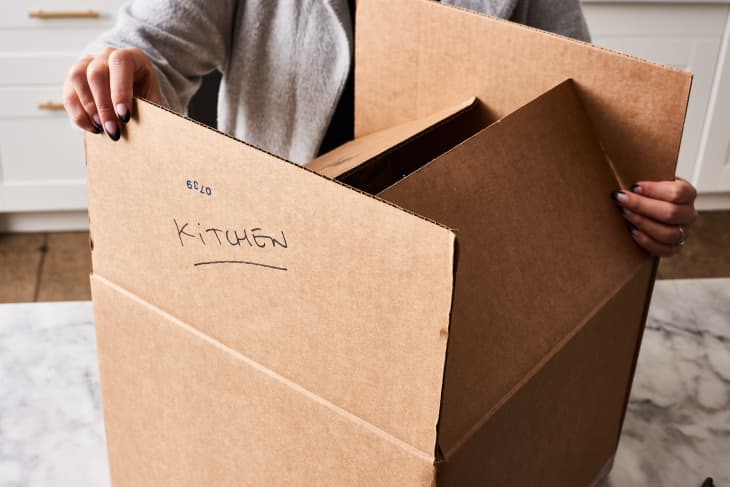
1. Get the flaps into position.
Open the top flaps of the box.
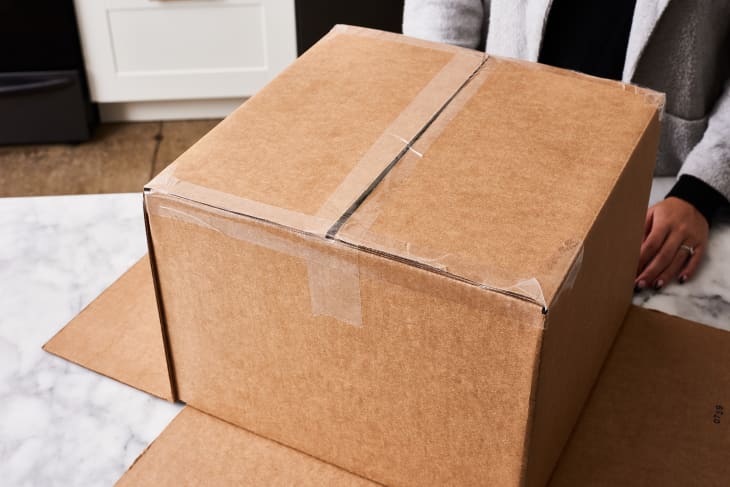
2. Flip the box over and fold down all the flaps into the inside of the box.
It’s better to first put the smaller flaps inside and then fold the larger flaps.
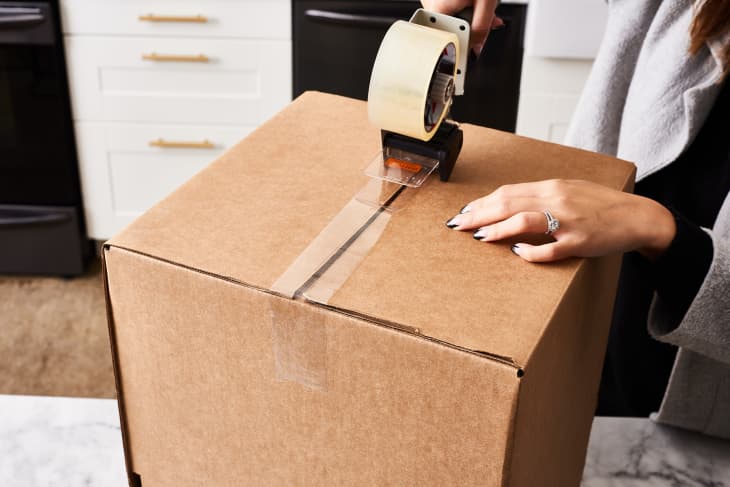
3. Use your packaging tape and tape down the flaps along the length of the box.
Put packing tape about halfway up the sides of the box for extra support.
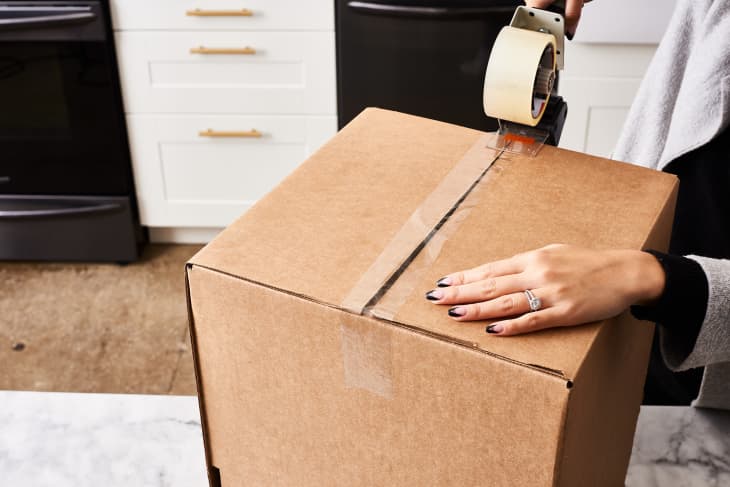
4. Add more tape.
Make sure the cardboard flaps are close together. Do the same taping again, for more protection.
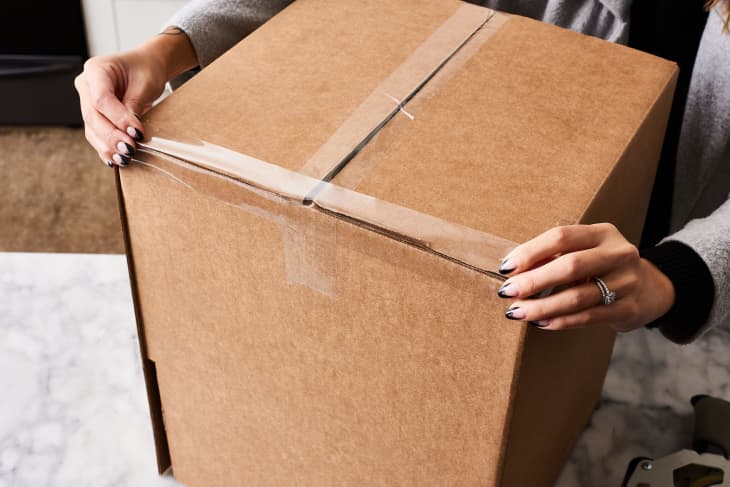
5. Use the “H-taping method.”
Tape both edges of the shorter sides of the box, for extra support.
The Best Tips for Taping a Moving Box
- Make sure that you tape the bottom of the box securely.
- Tape the bottom of the box well past the bottom folds — way high up onto the sides of the box for extra strength.
- Double up on tape.
- Only use paper packing tape, paper tape, flatback tape, or packaging tape.
- Make sure you fold down all of the flaps onto the inside of the box, and tape the long horizontal side of the box first.
- Then use the “H tape method” — after taping the longer line of the bottom of the box, tape both shorter sides of the box for extra support.
Cardboard boxes can be donated to a number of different organizations after your move.