
I Got the 133-Year-Old Blueprints to My Victorian Home — And Discovered Something Unexpected
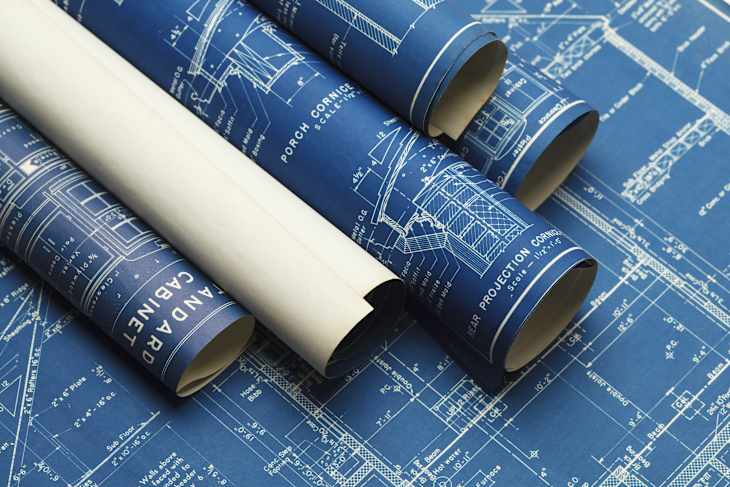
As the daughter of a home builder, I’ve always been fascinated by the process of building a house. When I was growing up, there were usually blueprints on the dining room table. Even though I was always around new construction, I’ve gravitated toward old houses as an adult, and always wanted to know how to get blueprints of my house. That’s because a deep appreciation of craftsmanship runs in my blood, so I want to know the story of the house, to know everything about how and when it was built.
So naturally, when my husband and I bought a giant old Victorian in 2016, I went way down the rabbit hole of the home’s history. And because we lived in a historic preservation district (Old Louisville is known for having one of the largest concentrations of Victorian-era homes in the country), I was fortunate to also have access to a local historic society, The Filson. They turned out to have drawings of my house from back in 1891!
Finding them was a bit of a wild-goose chase — but a truly fun one. They taught me the fascinating history of my home and have become a very cool conversation piece as well (I framed a copy of the blueprints.) Here’s how I got my hands on them.
How I found blueprints to my house
The first thing I’ll admit is that I got incredibly lucky — it’s always not easy finding the original blueprints to your home. But I do have some tips you can use if you’re looking for blueprints for your own house.
I started at my city’s courthouse “deed room,” and I began to dig up the paper trail. (They’ve since digitized them, so depending if your city has digitized blueprints as well, it may not even take a trip there — but it’s fun, so I still recommend it!)
The deed from when we purchased the home referenced the previous owner’s deed book and page number from when they bought it. If you don’t have your deed on hand, it can probably be found on your local Property Value Administration (PVA) website (though there may be a fee for this). I managed to follow the paper trail of each owner’s individual deeds all the way back to when the land was purchased in 1887!
Once I had every owner’s name, I used my library card and the computers at the Filson to access archived newspapers, genealogical records, old census data, and city directories to find out so much fascinating history. For instance, the home was at one time used as a boarding house! There were so many former owners I ended up creating a spreadsheet to help keep things organized.
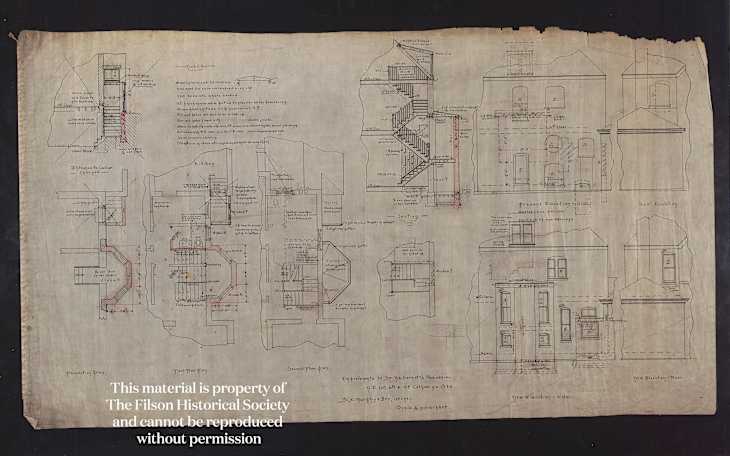
As I was sharing some of my finds on social media, a friend who is also super into research happened to check the records of the historic society. That’s where we seriously hit the jackpot. In their files, they had an original set of drawings from when the first owner, one Dr. T.L. McDermott, was planning a renovation only a few years after it was built. It seriously gave me chills to roll out those century-plus old papers, and, wearing the white gloves they provided, even touch them. The file even included a receipt for a deposit he paid toward the renovation!
What I learned about my house from the blueprint
The architecture firm, Murphy, D. X. & Bro., was very famous at the time, and was responsible for the iconic twin spires at Louisville’s Churchill Downs racetrack (home to the Kentucky Derby). Interestingly, the renovations were never done (maybe it was sticker shock at the price). Because they were so well known, and the first owner of our house was a prominent local figure, these prints survived all those years.
The plans helped me confirm that our grand staircase was indeed original, that the floor plan had never been changed or converted to a multifamily dwelling like so many others in our neighborhood, and that at one time the stairs to the third floor were not enclosed as they had been when we bought the house.
They were planning to widen the porch in their renovation (which would have looked great!) and put on an addition (at 4,000 feet the house was plenty big, so that seems wild).
The Filson allowed me to purchase high-res digital scans of the drawings, which I was able to have printed on a large scale, and hung in the dining room. It was an incredible conversation piece for everyone who visited. Sometimes I just stand and look at them, dreaming about all the stories that unfolded within those walls. When we sold the house I couldn’t part with the drawings, so they’re actually with my parents now, which is kind of full circle when you think about it.
How to find blueprints to your house
While I know not everyone will have such a stroke of luck, it’s still possible to track down your own blueprints.
Start with contacting your local building department — they often have records of building permits and plans. If it’s a newer home, and you happen to know who the builder was, try reaching out to them or the original architect. (My dad says he always gave the blueprints to the owners, so that’s a roll of the dice.)
Or, if your house is new enough, and you can track down the original owner using the process above, maybe you’ll luck out and they’ll have the prints, or be able to point you to the right place.
You can also hit the deed room again at your local courthouse. Ask for the plat books, which will have the owner’s name and the legal description of the property where your home is built, so you may find the builder’s name there. For the uninitiated, a plat is a map that “shows you how a tract of land is divided into lots in your county,” and features “the land’s size, boundary locations, nearby streets, flood zones, and any easements or rights of way,” per Realtor.com.
If you hit dead ends, don’t forget to ask around. Especially if you’re in a subdivision, neighbors may have similar floor plans, or be able to share some intel on the original builder or architect. It’s also worth checking at your local library for research help and looking for local architectural historians who may have ideas.
Barring all that, if you really want the blueprints you could always commission new ones. And a lower budget alternative to that is something I did with another house that I renovated; I hired a local architecture student to draw up the floor plan.
- Or, hire a local architecture student to draw up a floor plan
- Contact your local building department to find records of building permits and plans
- If it’s a newer home, reach out to the builder or the original architect
- Or, track down the original owner
- Hit the deed room at your local courthouse, and ask for the plat books, which will have the original owner’s name and the legal description of the property where your home is built
- If you hit dead ends, ask around — neighbors may have similar plans or can share intel
- Look at your local library for research help or historical society for historians who may have knowledge or ideas
- If you really want the blueprints but can’t find them, you can commission new ones
Why you would want the blueprints to your house
Some people (like me) are history buffs who want to see the history of their house, how it changed, plans that were made for it, and more. It makes a pretty nifty piece of decor, as well, if you want to hang and frame yours like I did.
Regardless of whether or not your home is historic, there are plenty of practical reasons you may want a copy of your blueprints. Of course, if you’re actively building your future home or plan on renovating it, having a set of blueprints on hand is an important guidepost for the designs that will be built, the materials you want to use, and more.
There’s a practical reason to have them for renovations. But, of course, they can also be a gorgeous look into the past — and a view of how your home has changed over the years.
If you hit dead ends, don’t forget to ask around. Especially if you’re in a subdivision, neighbors may have similar floor plans, or be able to share some intel on the original builder or architect. It’s also worth checking at your local library for research help and looking for local architectural historians who may have ideas.
Barring all that, if you really want the blueprints, you could always commission new ones. And a lower budget alternative to that is something I did with another house that I renovated; I hired a local architecture student to draw up the floor plan.