
I Tried 4 Methods for Removing Oil Stains on Clothes, and the Winner Surprised Me
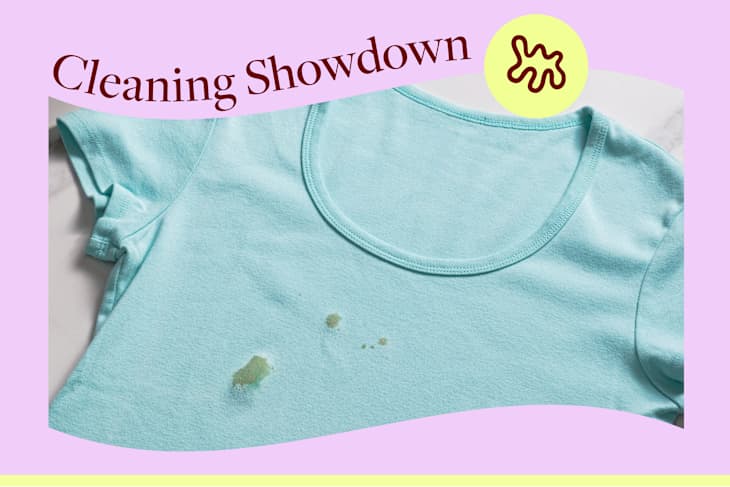
I’m not the neatest home chef. When I’m mixing cookie batter, I’m usually covered in flour, and when I’m stirring pasta sauce I’ll inevitably splatter some tomato sauce on myself. Yes, I know this is why aprons exist — but even when I do wear one, oil always finds a way onto my shirt.
I used to just pretreat these stains with dish soap and hope for the best. That’s worked fine for my everyday T-shirts, but if I’m out wearing something nice and drop a piece of olive oil-soaked bread on me (which has definitely happened), I want to know if there’s a way to truly save that shirt. So I decided to test four different methods for removing oil stains on clothes to see which one actually worked best. Here’s how it went — and the one method that completely surprised me.
How I Tested the Methods
Using a brand-new, long-sleeved white cotton T-shirt, I squirted some extra-virgin olive oil directly on it and tried four different stain removal methods. Some were designed for fresh stains, others for set-in ones, so I didn’t test them all in one wash. Instead, I did three separate laundry cycles total (you’ll see why below).
The Ratings: For each method, I gave two ratings — one for results and one for ease of use — on a scale of 1 to 5, with 5 being the highest.
Method 1: Baking Soda (Followed by Vinegar and Water)
Results: 5/5
Ease of Use: 3/5
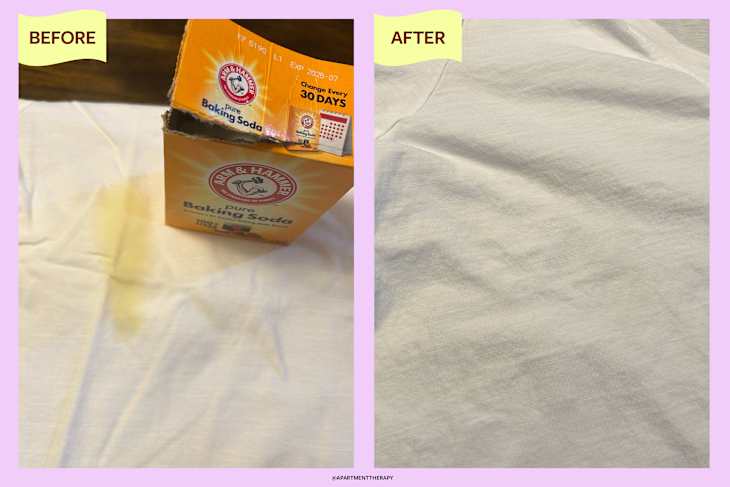
Method: Laundry expert Patric Richardson, the owner of the Minneapolis-based boutique Mona Williams, says baking soda works by pulling oil out of fabric and into itself. I started by blotting any excess oil with a towel, then sprinkled a generous layer of baking soda over the stain and let it sit overnight. The next morning, I brushed off the powder, sprayed the area with a mixture of vinegar and water, and rubbed the fabric together before tossing it into the wash.
How it went: At first, it looked like the oil had spread even more after brushing the baking soda away (which was alarming), but once I sprayed on the vinegar solution, the fizzing reaction started to lift the stain. I didn’t even bother scrubbing with a brush; I just rubbed the shirt together with my hands, and it worked beautifully. After washing, the stain was gone. This method is definitely effective, but I wouldn’t wait a full 24 hours next time. The real action happens when the vinegar hits the baking soda, so I’d skip straight to that step.

Method 2: Chalk
Results: 0/5
Ease of Use: 0/5
Method: The chalk method is supposed to work similarly to baking soda — you rub chalk powder over the stain to absorb oil, then launder as usual.
How it went: As a former teacher who used to be covered in chalk dust, I thought this one would be a sure thing. Unfortunately, I was wrong. I tried using Crayola chalk, but it barely made a mark on the shirt, much less absorbed any oil. The stain didn’t budge at all. Maybe a cheaper, more crumbly chalk would work, but this method was a total miss for me.
Method 3: Set-In Stain Method (with Dish Soap)
Results: 5/5
Ease of Use: 4/5
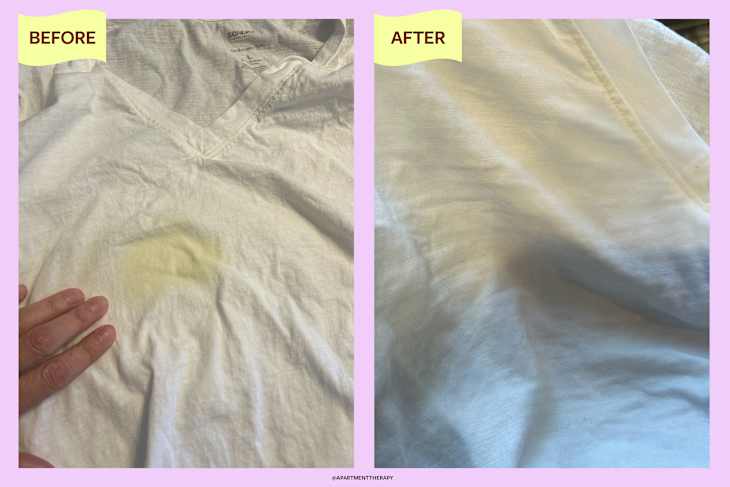
Method: This six-step process also comes from Richardson. It’s meant for tougher, set-in stains. I began by not rinsing the shirt right away (since oil and water don’t mix) and slid a piece of cardboard behind the stain so it wouldn’t bleed through. Then I blotted the area with a paper towel to lift the excess oil. Next, I applied a few drops of Method dish soap directly to the spot and rubbed the fabric together to work it in. Instead of rinsing in hot water (which can sometimes set a stain), I used cold water and then washed the shirt on warm. Finally, I let it air-dry.
How it went: The stain was completely gone. I realized I could even skip a few steps next time, since the dish soap did most of the heavy lifting. This is a reliable, effective option if you’ve got a set-in oil stain. It’s a little more involved but totally worth it.

Method 4: Murphy Oil Soap Spray
Results: 5/5
Ease of Use: 5/5
Method: Another recommendation from Richardson was to try using an oil-based soap like Murphy Oil Soap instead of dish soap. I sprayed enough Murphy’s Oil Soap Spray directly onto the stain to cover it and rubbed it in with my fingers.
How it went: I’ve got a bottle of Murphy Oil Soap Spray that I love using to clean my wood furniture and floors; it’s also great for cutting through grease on kitchen cabinets. But as a laundry pretreatment? I was uncertain. I think I was hung up on whether more oil (even though it’s soap) would help the oil stain. However, the stain practically vanished on contact, and after washing, the shirt looked like new. Plus, it left behind a fresh citrus scent. I’m officially a convert. I now keep a bottle in my laundry room, and while I hope I don’t need it again soon, I’m glad to know it works this well.

Conclusion
It turns out that oil is not the hardest stain to remove. All but one method (sorry, chalk) worked really well. Baking soda and dish soap both got the job done, but the Murphy Oil Soap was the clear standout.

It required no extra steps and worked instantly. I saw the stain disappear before the shirt even landed in the washing machine. I’ll try to wear an apron more often, but it’s good to know that I’ve got plenty of backup options when things get messy in the kitchen.