
7 Things You Should Never Do When You’re Negotiating a House Price

Negotiating the price on anything — a used car, a sweater at the thrift store, fresh goods at a farmers market — can be deeply uncomfortable for some people. But when it comes to how to negotiate a home price and knowing what you can afford to spend, you’re in a whole different ballgame altogether. Consider this your guide to figuring out how to put in an offer and how to negotiate the price of a home — and what mistakes to avoid.
First, a reality check: Negotiating your first home purchase is about way more than one number. You need to consider so many things: how much earnest money (aka a deposit) you’re willing to put down, what contingencies you may want to put in your offer, and how long you want your due-diligence period to be. In other words, there are a million things to consider — and having a pro at the helm is hugely helpful.
Case in point: When I told my mom I was about to put an offer in on my first house, she nudged me to go $5,000 lower. My real estate agent, however, was well-versed in the hot Denver real estate market and disagreed with this strategy. “You’ll lose this house if you bid below the listing price,” they firmly told me. Though it would have been nice to save that $5,000, I went with my agent’s advice.
Thanks to that advice, I ended up winning the bid — I even beat out another buyer who came in over the asking price, but didn’t have much of a down payment saved. Moral of the story: A trusted real estate agent knows the market best and is a good team captain to lead the negotiating process.
Here’s how to negotiate a home price and put in an offer on a home:
First: Get pre-approved for a mortgage.
The first step, says Scott Thomas, a real estate professional at Atlanta Fine Homes Sotheby’s International Realty, is to make sure that you’ve gotten pre-approved for a mortgage. In fact, you may want to get pre-approved before you even start looking for homes; but if not, definitely do it before you put in your offer.
That’s because when you’re pre-approved, you know how much you can afford, and you can appear far more attractive to buyers. Plus, the negotiation and closing process goes much faster when you’re already pre-approved for a mortgage, Thomas says.
“I encourage my clients to have a pre-approval letter from a lender, so that they have a sense of what they can spend,” he says. “It says that they’ve started the process of understanding what their buying power is.”
Second: Determine your offer package.
Thomas says it’s highly important to remember that the offer price, meaning how much you’re willing to pay for the home, is just one part of the picture.
“There are other things that matter to sellers that can affect what they would be willing to accept for an offer,” Thomas says.
Those things are concessions, aka incentives that a buyer may ask a seller to provide or that a seller may offer in order to sweeten the deal, like including appliances or potentially covering the cost of repairs that may be needed.
“While true logic would say that the seller should only be looking at [their] bottom line, there are emotions, and humans are involved. People get fixated on what they think their house is worth,” Thomas explains.
So it might make sense to make an offer that’s much closer to the listing price of the home — but then ask for closing costs and concessions that chip away at your actual financial obligation to the seller.
In your offer package, you’ll also want to decide how much earnest money you want to put down. While “there’s no rule” as to how much you should put down in earnest money, Thomas says, typically, it’s 2-3% of the asking price (and could be more if you’re very serious about the home).
Your next decision is how long you want your due-diligence period to be. Your due-diligence period is usually a 5- to 10-day period during which you can have inspections done on the property and ask for repairs to be made with the buyer. After the period ends and if you walk away from the sale, your earnest money is property of the seller, no matter what.
The next part of your offer package is contingencies. A contingency is, simply, things that have to happen for the sale to go through — there are financing contingencies, appraisal contingencies, and special stipulations, Thomas says — like asking the seller to contribute money towards closing, or asking the seller to buy you a home warranty, or to leave the pool equipment.
Third: Negotiate your offer package.
Congrats! You have your offer package. Now, if your offer is accepted, prepare to negotiate. The seller of the home can negotiate on any part of the contract, especially regarding your offer price, any contingencies you may ask for, any closing costs you may want covered — and you can accept that pushback, compromise, or, if you’re still in the due-diligence period, walk away from the deal.
Fourth: Make it to the closing table.
Everyone has agreed to the offer package! Now, you make it to the closing table, where you pay all the closing costs and, in theory, walk away with the keys to your new home.
But you can make a lot of mistakes in that lengthy process. Here, real estate experts share the most common mistakes people make when they’re bidding on homes and negotiating on the prices.
Mistake No. 1: Ignoring how long the house has been on the market.
You should pay attention to the number of days a house has been on the market when you’re getting ready to negotiate, says Fred McGill, founder and CEO of SimpleShowing, a real estate startup focused on buyers’ agents.
If it’s low — say, less than 21 days — you’ll need a strong offer. If it’s been on the market for more than 90 days, though, then it’s okay to present a low offer. FYI, 90% of the asking price would be considered low, McGill says.

Mistake No. 2: Showing you can afford much more than your offer.
Yes, you want to be a strong buyer, and having a pre-approval letter in hand will lend you credibility — but you don’t want to let the seller know you can actually afford much more than what’s on the table.
“Never produce a pre-approval letter from your mortgage broker, credit union, or bank that lists a price for more than the price being offered,” says Lance Marrs, principal broker at Living Room Realty in Portland, Oregon.
Instead, ask your lender to tailor the letter for the amount you are offering, with the specific down payment accounted for, says Molly Franklin, a real estate agent with Corcoran in New York City.
“Your lender should be happy to reissue a letter for each offer and counteroffer you may submit,” Franklin says.
Mistake No. 3: Assuming all fixtures are included in the purchase.
If you love the chandeliers or custom window treatments, make sure you identify what items you want to be included in your offer (and purchase agreement), advises Franklin.
“The seller may not want to part with them, but the time to discuss such things is the moment the offer goes in, not the day before closing,” she says.

Mistake No. 4: Focusing too much on the home price.
Negotiation is just one of many factors that can affect whether your offer is accepted, says Imran Poladi, vice president of NextHome, a company that helps buyers work with local agents and shop for real estate online.
But instead of focusing on submitting an offer with a lower home price, which may turn off sellers, there are other ways to get the same result. Poladi recommends seeing if the seller can pay a portion of closing costs, or if they are able to speed up or push out a closing date.
Realtor Keri Shull, founder of the Keri Shull Team in Northern Virginia, also recommends offering the home seller a rent-back agreement, where the seller remains in the house as a rent-paying tenant after closing, if they haven’t secured a new home to live in quite yet.
“That makes the seller’s life easier by giving them ample time to find another living arrangement and move out,” she says.
Mistake No. 5: Lowballing your offer.
Housing inventory has been at historic lows nationwide, points out Erica Ramus, broker and owner of Ramus Realty Group in Pennsylvania, but that doesn’t mean you should take too much advantage of the situation by making your offer too low.
“Don’t think by lowballing the offer right out of the gate you’ll be able to get a steal,” she says. In fact, there’s a good chance if you come in too low, the sellers will flat-out reject the offer without even trying to negotiate with you. A good buyer’s agent will show you a comparative market analysis on the property before you make an offer.
After reviewing your market analysis, Justin Stanford, an agent with Keller Williams Realty in Las Vegas, says you should come in no lower than 95% of asking price unless there are issues with the property.
But keep the market in mind. Buyers may be able to get sellers to contribute to closing costs, a home warranty, and more. However, in some competitive markets, buyers will need to bid closer to list price because the sellers are entertaining 20 offers the first day the property hits the market, Stanford says.
Mistake No. 6: Not flattering the seller.
In competitive real estate markets, a well-written buyer’s letter can help the sale swing in your favor.
“There are a fair share of sellers who want to sell their home to a buyer who appreciates the details of the house,” Poladi says. “If two offers are equal in price and terms, that little extra effort could be the difference in getting the offer accepted.”
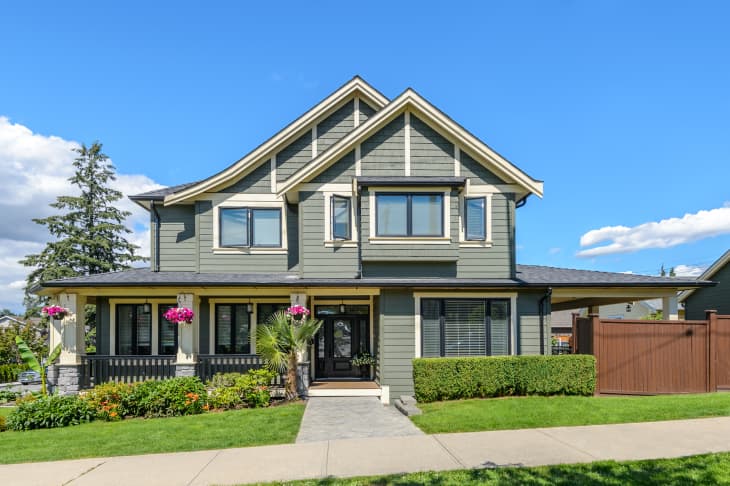
Mistake No. 7: Insulting the home.
Often, prospective buyers will try to justify their offer price by detailing how much time and money they will spend bringing the home up to their standards, says Jane Peters, broker and owner of Home Jane Realty in Los Angeles. They may want to upgrade the bathroom or kitchen, or they may not like the carpet and want to put in wood floors, she says.
“None of this is of interest to the seller,” Peters says. In fact, it might offend the seller! So, when it comes to real estate, one thing Mom may be right about: It never hurts to be kind.