
I Used a Leaf Blower to Clean Inside My House, and It Actually Worked
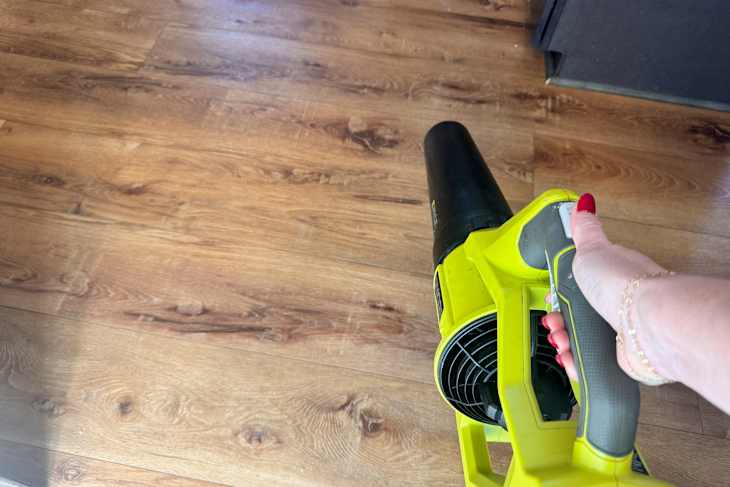
When our robot vacuum mysteriously went missing, the first floor of my home fell into chaos fast — dirt, leaves, crumbs, and everything in between. With kids, dogs, and everyday foot traffic, the mess escalated quickly. Around the same time, I stumbled on a viral cleaning hack that involves using a leaf blower inside the house — and I was genuinely surprised I hadn’t thought of it sooner.
We’ve used a leaf blower in our garage for years, but bringing one inside my actual home had never crossed my mind until I saw someone do exactly that. With the mess building up and my curiosity officially piqued, it felt like the perfect moment to try it.
What Is the Leaf Blower Cleaning Hack?
In an Instagram Reel, creator @alyssalanemcnair demonstrates using a leaf blower indoors to push debris out from under furniture, along baseboards, and out of tight, hard-to-reach spaces. The concept is simple: Instead of vacuuming or sweeping, you use the airflow to move dirt, dust, and debris out from areas traditional tools struggle to reach. It sounds chaotic (and it definitely looks dramatic), but in practice, it’s surprisingly strategic — especially if you’re intentional about where the mess is being directed.

What Happened When I Tried It
I tested the hack throughout the house — downstairs on hard floors and upstairs on carpet — and the experience was very different depending on the surface and space. Here’s what I learned.
The hard floors downstairs delivered immediate wins.
I started in the kitchen, where the kids and dogs had tracked in the most dirt and leaves. Almost immediately, I realized how effective the blower was at clearing crumbs from toe-kicks, under the kitchen table, and along cabinet edges (all those awkward, hard-to-reach spots that are frustrating to vacuum and even tricky to sweep). Within seconds, the dirt was gone with almost no physical effort.

From there, I moved through the rest of the first floor. The blower easily cleared debris from under the shoe rack, dust bunnies and random paper scraps in the corners of the family room, and grit trapped in the rough surface of our fireplace hearth. It also blew out everything that had settled under our couch (a spot our vacuum never fully reaches).
The trickiest part wasn’t the cleaning itself — it was containment. In the kitchen, I could guide the debris straight out the back door to the porch, which worked perfectly. In other rooms, that wasn’t as easy. I ended up directing the mess into small piles in one area and sweeping them up afterward, which turned out to be a surprisingly efficient two-step system.
Upstairs was a totally different experience.
Upstairs is carpeted, and that changed everything. The blower was great for getting debris out from under beds and furniture, but I couldn’t simply sweep it up like I could with our LVP floors downstairs. I had to pick up larger debris by hand and vacuum the smaller particles.
There was also more “life” happening on the floor upstairs — especially in the kids’ bedrooms and the playroom — which meant I had to tidy first. Toys, art supplies, LEGO pieces, and crayons all had to be picked up to avoid turning them into flying projectiles. It became very much a “clean before you clean” situation. The upside? The house got cleaner, and it got more picked up, too. A double win.
Safety Tips I Learned (and Would Absolutely Follow Again)
- Only use an electric leaf blower indoors. Gas blowers should never be used inside because of fumes, carbon monoxide risk, and extreme noise.
- Smaller blowers work better. Ours is bulky and heavy, which made it awkward to maneuver indoors. A compact electric model would be far more practical.
- Angle the blower downward. This helps prevent blowing dust into the air and knocking items off surfaces.
- Avoid floor vents. It’s very easy to blow debris straight into them if you’re not careful.
- Protect people and pets. Flying dust and debris can irritate eyes, and the noise can be startling — make sure everyone knows what’s happening before you start.
- Expect dust movement. This method stirs up particles that can resettle, so it’s best paired with a follow-up vacuum or air purifier.
Overall, I really liked this cleaning hack. Would I use it every week? Probably not. It stirs up dust, requires some prep, and works best as a targeted deep-clean method rather than a daily routine. But when I want a powerful reset for hard-to-reach spots and under-furniture areas, I’ll absolutely reach for the leaf blower again.