
Why It’s Awesome to Live on a Dead-End Street — And Why It’s Not
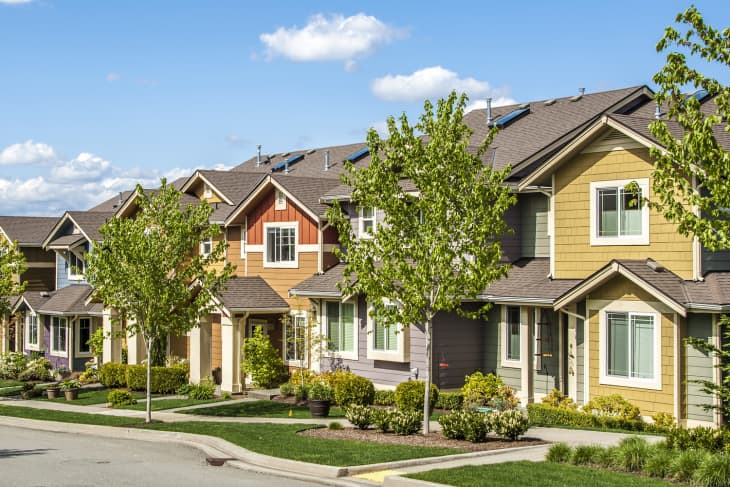
Living on a dead-end street sounds far more ominous than it really is. In fact, for some homebuyers, it’s a highly desirable property feature. For others, not so much. Here’s a look at what it’s like to live on a road that leads to nowhere.
What is a dead-end street?
A dead-end street ends abruptly with no corner to turn on or no intersection to drive through. The blockage could be anything from a concrete wall to a wooded area to a neighbor’s fence. Whatever the case, the only thing to do when you come to a dead-end is turn around and go back the way you came.
A cul-de-sac is the fancier relative of the dead-end street. It also doesn’t have an outlet, but the road is circular so you can make a smoother exit by driving back around the loop.
Here’s why life is good on a dead-end street.
Kris Lindahl, CEO of Kris Lindahl Real Estate in Minnesota, says the main benefit of a dead-end street is less car and foot traffic. The result is more privacy and a stronger sense of security for residents. He says that he and his team of real estate agents have received specific requests from clients to look for properties on dead-ends and cul-de-sacs for that reason.
“Typically, buyers also feel safer and have less concern about crime on a dead-end street or in a cul-de-sac,” Lindahl says. “With only one way in and one way out, it provides an extra layer of comfort for many people.”
That feeling of comfort can boost a home’s value, especially when it is compared to a similar one on a busy street. “A home on a dead-end may have similar value to an identical home on a quiet street,” Lindahl says. “But a home on a dead-end street will likely be valued higher than an identical home on a busy street.”
Andrea, a homeowner from Holbrook, New York, currently lives on a dead-end street, and also grew up on one. “It was great as a kid because we could ride our bikes or play in the street without a lot of traffic coming,” she says. “And since we lived near the dead-end part, we really only ever had to look one way [before crossing the street].”
And here are a few reasons it’s not.
Stephanie is from Dix Hills, New York. Her home is situated on a cul-de-sac in the front of her house with a dead-end on the other side of her yard’s fence. While she loves the privacy and notes that there’s plenty of parking, the people who park at the dead-end don’t always behave themselves.
“People treat it like it’s a community parking lot,” Stephanie says. “The town has dumped stuff there, the workers eat lunch there, and teens congregate at night.” Her fence has been vandalized, so she’s installed a security camera.
Suffice it to say, what really makes or breaks living on any street are the people.
“A dead-end street typically results in a much closer community amongst the homeowners on that street,” says Lindahl. However, he notes that has disadvantages as well as its advantages. “We’ve also seen situations where homeowners on a street like this can be a bit removed from the rest of the neighborhood, like it’s their own little community.”
That type of cozy community has its benefits — just not in winter. Residents of dead-end streets in cold climates lament that they are often the last to see a plow come by after a snowstorm. When it does, woe to the homeowners who live at the end of the street, where the plowed snow becomes a veritable iceberg blocking their driveway.
Location is everything when it comes to real estate. Purchasing a home at the end of the road could be the start of something great — or you could feel like you’re going nowhere fast.