
13 Long Living Room Layout Tips That Helped Me Redesign My Space
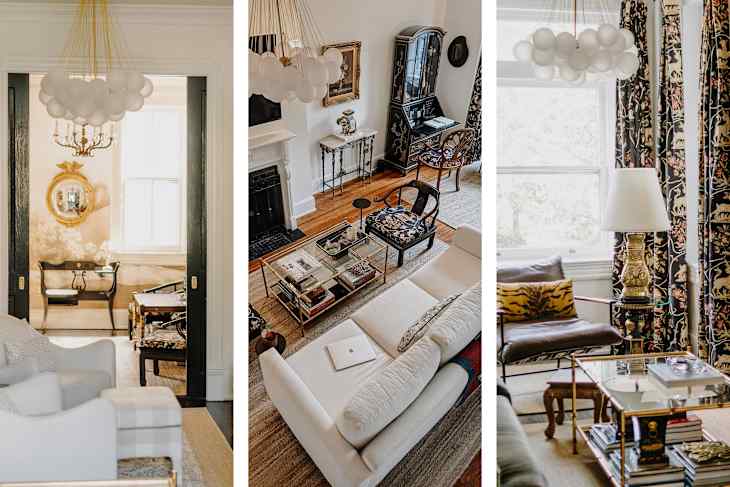
I lived with a less-than-ideal layout in my narrow living room for nearly two years. Visually, I could see it wasn’t working, but there was an added layer — I avoided spending time in that room at all costs. Obviously, that’s not ideal for a living room; and anyone in a railroad-style layout may be living in the same reality as I was. I’d outfitted it with furniture I already had and, with renovations ongoing, rearranging this room kept slipping further down the priority list.
However, as my long list of projects began to wrap up, I was forced to think about why the main room in my house wasn’t functioning in a way that felt comfortable. Of course, there was the obvious space limitation issue. The room is only 12 feet across and is essentially a pass-through, standing between the front entryway and both the stairs and a parlor.
And there’s the length: 24 feet long. It’s a bowling alley! My biggest issue was walking straight into the house and into the back of my sofa. I had areas where there wasn’t enough furniture and sections where I was trying to do too much. Nothing worked.
Once I finally consulted an interior designer, they validated some of the ideas I’d had — and splurged on pieces that fit the space better, helping me land on a layout that’s inviting. It encourages hanging out, and I actually want to be in the room now.
Read on to learn how I did it — plus, tips and tricks from design pros (no consultation needed!) if you’re dealing with an extra-long, narrow living room all your own.
How I Rearranged My Own Narrow Living Room
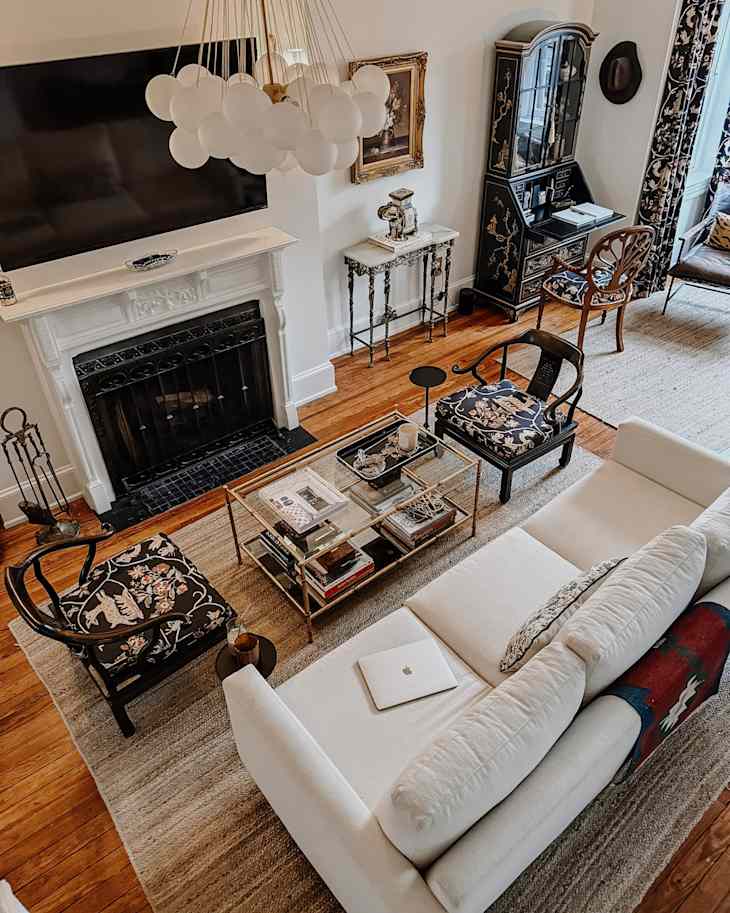
I initially started with a seating arrangement with a sofa, two chairs, and a coffee table in front of the fireplace, as well as the TV on the wall above it. It’s a standard layout that would work in most spaces — just not here. There was an awkward space in between that zone and a comfy chair in the window, along with a secretary desk, console table, and a demilune entry table along the walls. It felt both cramped and spacious at the same time, and it was not efficiently using the space.
My biggest obstacle? I hated walking into the room and seeing the back of my large white sofa staring at me. That had to go, but I also couldn’t lose seating in front of the fireplace entirely.
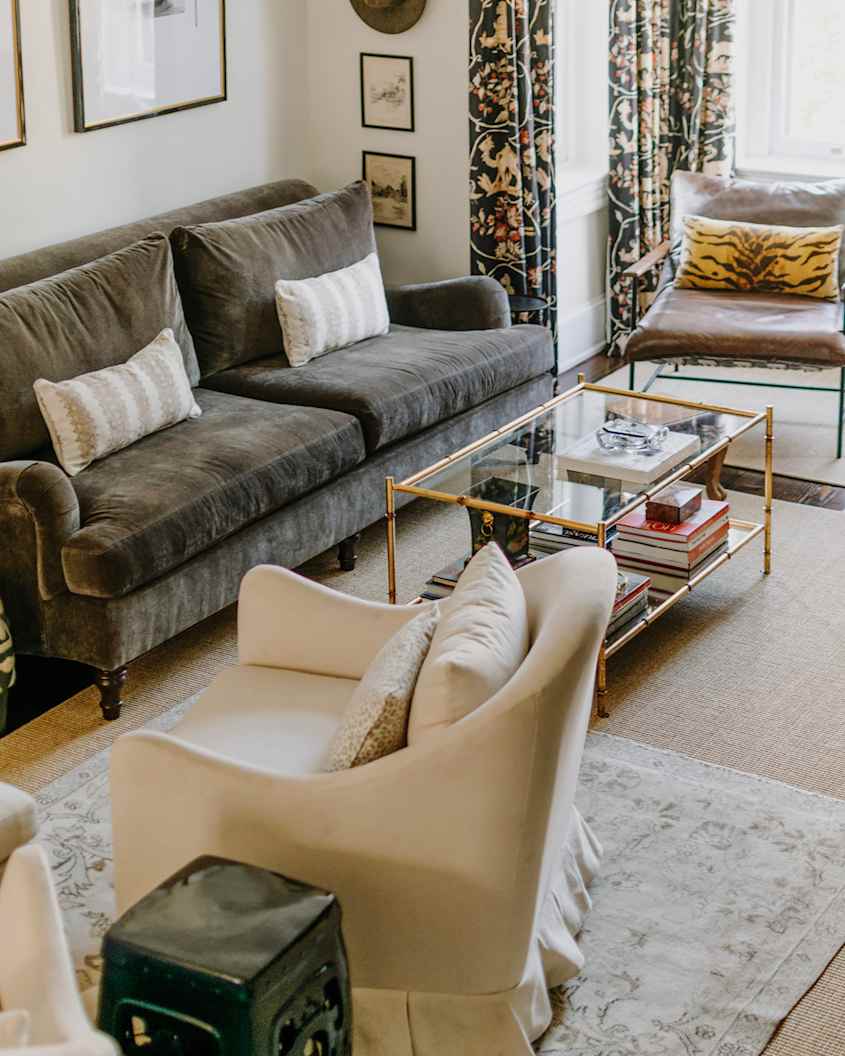


I brought in two comfy swivel chairs from another room, placing them in front of the fireplace along with a side table; I also bought a small ottoman to kick your feet up while sitting in front of a roaring fire. The scale of this arrangement fits the busiest part of the room perfectly. It’s not the hurdle to pass through this setup as the sofa, chairs, and coffee table were, yet it still feels comfortable.
Then I invested in a slightly smaller, curvier sofa, and I put it along an exterior wall of the room. This helped free up traffic in the room, making space for a coffee table as well as the entryway table nearby. The TV was moved across from the sofa, freeing that precious space above the fireplace for art (as it should be!).
I had one last awkward space to fill near the entryway, where the secretary desk was eventually moved — now, it gets the moment in the sun it deserves, with its gorgeous chinoiserie detailing.
The targeted changes created several distinct zones in my living room. As soon as you walk in, there’s the work zone with the secretary desk and its chair for WFH days. Against the window, there’s a new hangout zone with a leather chair, sofa, and TV. Lastly, there’s the relaxing zone with the two chairs positioned in front of the fireplace. It now feels like three rooms in one; each speaks to the other through a similar vein running through all of my decor.

The Best Place for a TV in a Long Living Room
A long living room is inevitably going to have multiple seating areas, but there will probably only be one sofa. And the best place to put your TV is opposite your sofa, design experts say; even if you have comfy armchairs, a sofa is prime for long periods of TV binging.
In my case, I placed the sofa in an area that required me to remount my television on another smaller wall to free up the space above my fireplace. Doing so meant I sized down (to 50”), but that worked out perfectly when you consider how far a TV should be from the sofa.
In an ideal world, the distance between the screen and seating is approximately 1.5 to 2.5 times the size of the TV, according to the interior designer I worked with on my own living room project.
That limits your ability to have a giant TV in a long, narrow living room — with my 50” TV, it worked out just right to sit 10’ away from it. Sometimes, you may have to sacrifice monitor size to preserve good design (but it’s certainly worth it!).
11 Best Layout Ideas for Long Living Rooms, According to Designers
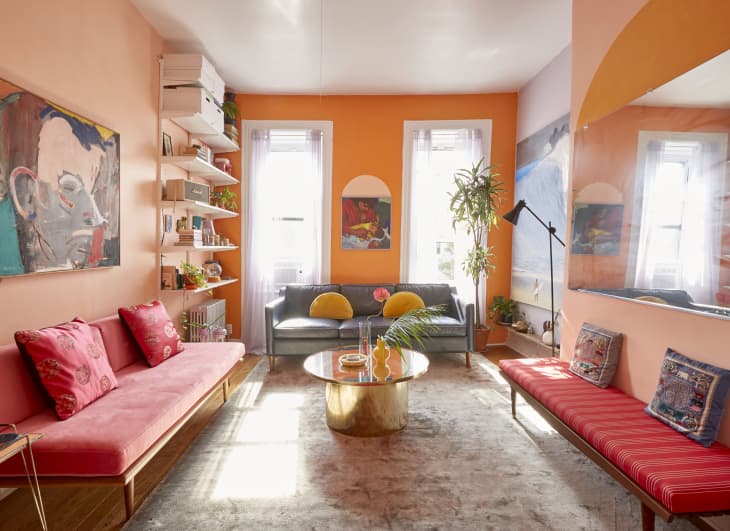
Troubleshooting your own tricky layout and not sure where to start? Here are 11 ways that design pros usually tackle this all-too-common problem — with illustrated blueprints for rearranging your room to ensure optimal flow.
1. Create Distinct Zones
Using both seating and area rugs, create different zones within the space. Trying to make it into one singular zone will feel awkward and beyond normal human scale. “Break the space up into zones. Creating seating around each zone can make it more functional and aesthetically pleasing,” says Marina V. Umali, owner and principal designer of New Jersey-based Marina V Design Studio.
In my own home, I actually had a rug cut to the entire room to set a consistent foundation — then introduced a vintage area rug on top to set apart the middle zone.
2. Don’t Push Everything Against the Wall
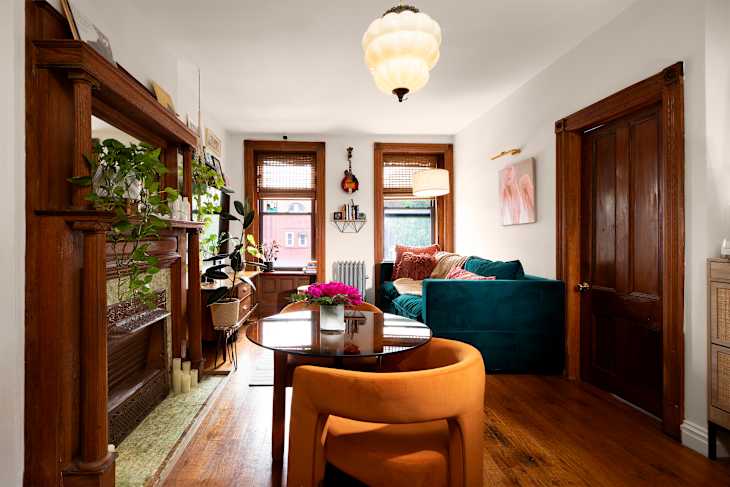
In a long, narrow living room, it’s tempting to push everything against the wall to open up the space as much as possible. But resist the urge. Instead, pull some zones into the center of the room, as they did in this Brooklyn home.
The variation will keep your eye moving and make the space feel more like a welcoming room rather than a hallway with a path down the center. In this home, two chairs and a small table create a dining, work, or reading moment right in the middle of the room.
“Floating furniture like a media console will help create a sense of depth,” Umali advises. “Swivel chairs are a great option for this type of space as they offer flexibility, and they can be used facing different directions.”
3. Triple Your Seating
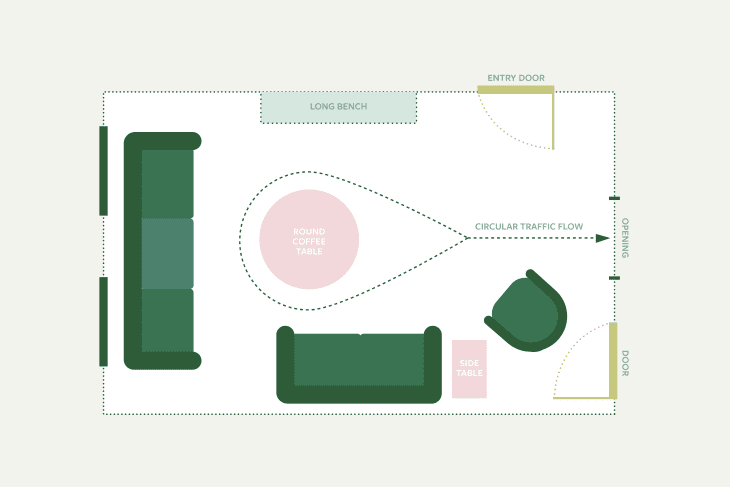
If your long and narrow living room doesn’t have a ton of doors or openings, do something very cool and very cozy. In this Brooklyn railroad apartment, the family used every square inch by incorporating not one, not two, but three small seating pieces up against the living room’s three walls.
A standard three-seat sofa anchors the main far wall. For the other two sides, there’s a small loveseat and across from that, a long bench, all creating a U-shaped conversation area.
Smartly, a small round coffee table allows for easy flow around the seating area. This wouldn’t work as well if doorways or other openings were obstructing the flow of the room, but in this example, it works beautifully.
4. Choose Micro Seating
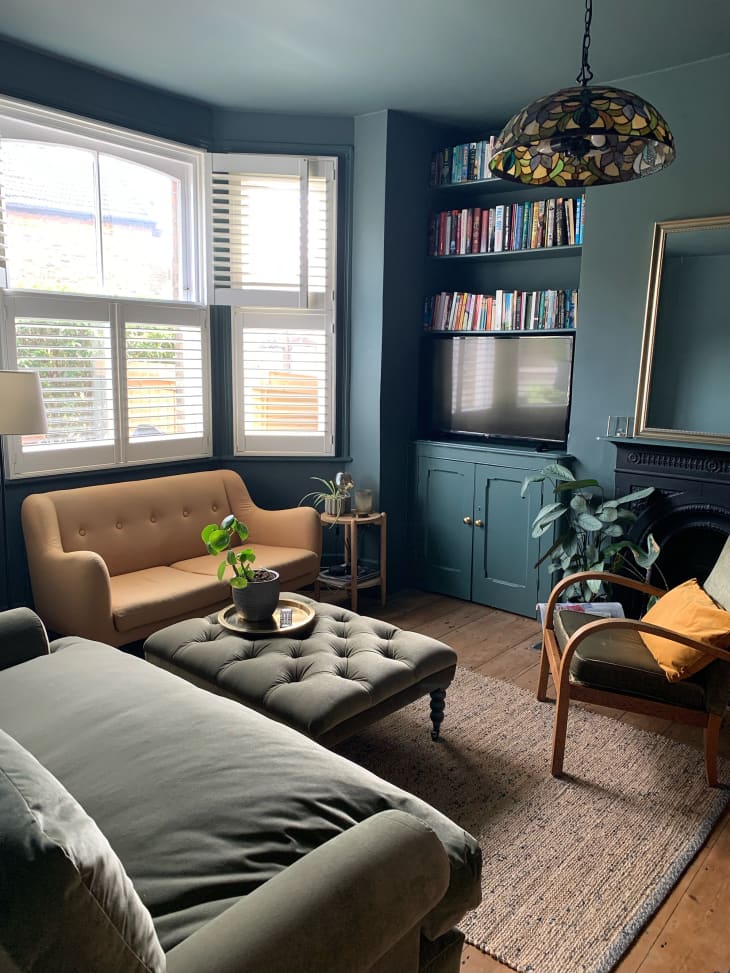
The best way to work with a long living room layout? Choose pieces that are the right scale. This space shows that a few smaller sofas and chairs can fill a space with a comforting, to-scale feeling.
However, Umali also believes that there are situations where a smaller, L-shaped sectional could work with the scale and create zones. “Go with something that is a slim profile and not too bulky. Something that allows for more visual space with a smaller frame would be best,” she adds.
5. Skip a Sofa
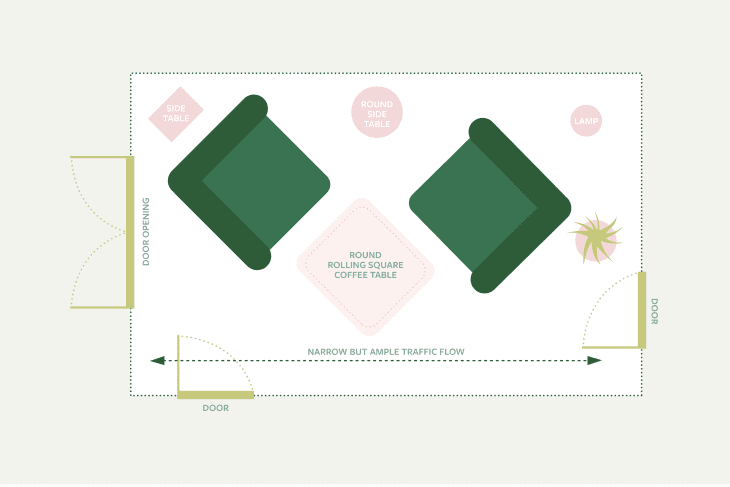
In the narrowest of spaces, sometimes, you can’t fit it all — so skip a larger sofa and keep all of your seating up against the wall.
This small Barcelona apartment is a perfect example of how this tip can make the space feel more livable. This living room is so narrow that it’s more like a hallway than a room, so to preserve the ability to walk through the space, the best bet for the furniture is to place it all along the back wall, leaving a nice open walkway from room to room.

6. Opt for Joint Loveseats
When working with a long space, it’s best to arrange seating and some furniture as well as decor crosswise whenever possible, as designers say this visually pushes the walls outward, making the room seem wider than it actually is.
Instead of one sofa against the longer wall, the floor plan above uses two shorter ones, placed widthwise in the space. This layout seemingly pushes the walls outward, a trick that’s repeated with the console table behind the sofa, and the long bookshelf on the far wall.

7. Center Your Focus
Just because a room is long, doesn’t mean you need to fill it from wall to wall with furniture. The illustrated layout above centers the furniture arrangement in the middle, leaving the sides as open — but not dead — space. This works particularly well in a symmetrical room, when the furniture can be centered around a window or fireplace.
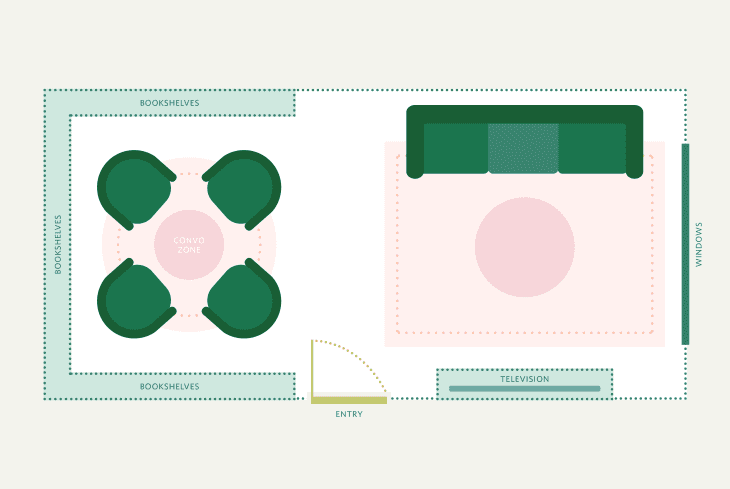
8. Divide the Length of the Room
Often, long living rooms that feel as lengthy as a football field are a blessing in disguise, because they can serve as open-plan spaces. Instead of having one larger-but-awkward living room, why not create a smaller living area, plus a den, study area, or breakfast nook?
The designer-approved floor plan above shows a traditional TV sitting area, plus a cozy den-like conversation nook, complete with surrounding wall-to-wall bookshelves to delineate the space.

9. Consider an L-Shaped Sofa
A proper corner sofa, even more so than one with a chaise, can really utilize the space in a long room well. The floor plan above uses one, and several of the other tips in this guide, to create a usable layout. Notice how the furniture arrangement at the other end of the room (two chairs, a side table and a console) mimic but flip the shape of the sofa, too.
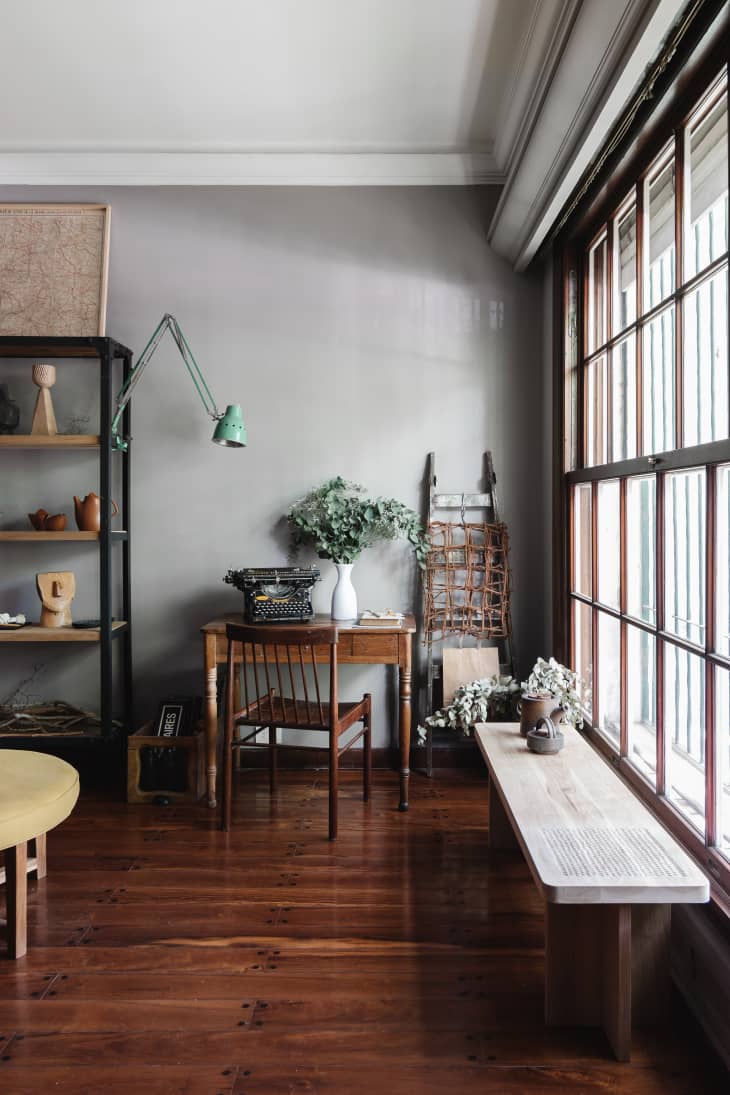
10. Think Beyond Seating
Not every zone needs to be dedicated to lounging. Think about areas that exist primarily as a design opportunity to display beautiful pieces and provide a place of visual rest between the bulk of sofas and chairs. This historic Buenos Aires townhome has a desk and vintage elements to serve as a practical yet impactful break in the zones.
“Placing tall artwork or plants will help draw the eye upward. Go with nesting tables as they could be combined to save space when not in use and provide function and comfort to guests when needed,” Umali adds.
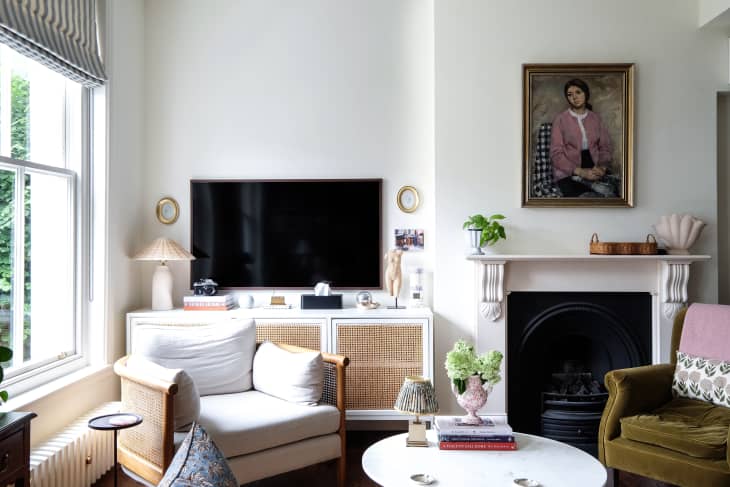
11. Keep a Consistent Underlying Theme
Lastly, for the zones in a living room to work, there needs to be visual cohesiveness. They don’t have to match exactly, but the colors, patterns, and style should speak to each other. Maybe there’s a deep hunter green that’s repeated over and over again — or a certain type of frame style. In this living room, dusty, muted tones and vintage art make the space feel unified.
“For a cohesive flow, stay within a similar color palette and material choice for the entire space, and the space will feel whole,” Umali adds.
Design Defined
Never miss the style inspo and recommendations you crave with Design Defined. Follow along each week as our Home Director Danielle shares the best style advice, latest trends, and popular decor finds you just can't miss.