
How I Finally Found a Way to Honor the Real Mexican Independence Day — And Share It with My Friends
As a first-generation Mexican American, my experience growing up was different than most. I was a kid navigating two languages and two worlds — one with my family, and one at school. My identity was rich at home, but I was often misunderstood (or, worse, mocked) once I stepped outside. My first year outside of the English as a Second Language (aka ESL) program was an immense culture shock — and as I transitioned into my teenage years and then college, this was still the case. The cultural dissonance was never stronger than every May 5.
Each year I brace myself for the same incredibly offensive routine: sombreros, fake mustaches, and foods and drinks that have nothing to do with Mexico. Americans have commercialized Cinco de Mayo, reduced it to caricatures of my people, and made it into a substitute for real Mexican heritage. Many don’t seem to know, or care, what they’re actually celebrating. For the record: Cinco de Mayo isn’t Mexican Independence Day. It commemorates the Battle of Puebla, when we defeated a larger and better-equipped French force during the second French invasion. In Mexico it isn’t a national holiday, and it’s only celebrated in Puebla.
Mexico’s real celebration and day of independence is September 16. A few years ago I decided to reclaim my culture by hosting a dinner every September to mark Mexico’s independence. What started out as a quiet act of resistance has evolved into one of my most joyful, meaningful traditions.
What Is Mexican Independence Day?
Día de la Independencia, or Mexican Independence Day, commemorates the start of the Mexican War of Independence from Spain. The fight for freedom was long, lasting 11 years, from September 16, 1810 to September 27, 1821. The holiday celebrates the event that triggered the war, known as el grito de Dolores (the cry of Dolores). In the early morning hours of September 16, 1810, a revolutionary priest, Father Miguel Hidalgo y Costilla, rang his church bells in the small town of Dolores, Guanajuato. He then gave a brave speech calling for the Mexican people to rise up against Spanish oppression.
Every year on September 15 at 11 p.m., this call to arms is reenacted by the sitting Mexican president, who emerges on the balcony of the National Palace in Mexico City and rings the same bell Hidalgo rang (given its importance, the bell now resides there). Then the president recites a shout of patriotism loosely based on the original grito, and recites the names of heroes who sacrificed their lives for Mexico’s independence. Similar reenactments take place in cities and towns across the country.
The celebrations continue into the next day with colorful parades, Mexican folk dance performances, mariachi bands, firework displays, and, of course, plenty of food. Mexican Independence Day is a time for honoring history, heritage, and the hard-won fight for self-determination, but also for coming together as a community.
How I Celebrate Mexican Independence Day at Home
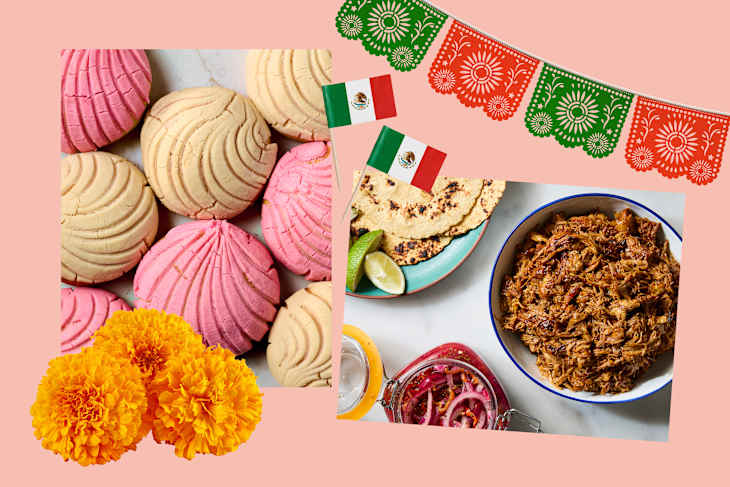
My first Mexican Independence Day dinner party was an equal parts history lesson, cultural showcase, and heartfelt celebration. I invited my closest friends over and I served a traditional meal of cochinita pibil, a tender, slow-roasted pork marinated with flavorful achiote, bitter orange juices, and spices. The dish was accompanied by Mexican rice, frijoles a la charra (a hearty pinto bean dish), and homemade corn tortillas. For drinks, I prepared vampiro cocktails, which are made with sangrita, tequila, lime juice, grapefruit soda, and Tajin. Dessert consisted of pan dulce and café de olla, which is sweet bread and spiced coffee.
The year after, I hosted my friends again and introducing them to a different Mexican dish of pollo en mole, a chicken and mole dish. It has now become a tradition. Every year, I decorate with papel picado banners, marigolds, candles, and Mexican tablecloths. Music is an essential part of the evening, from classics like Pedro Infante and Lola Beltrán to Norteño and contemporary pop stars.
The delicious meals I cook showcase the rich and diverse flavors of Mexican cuisine — always with a focus on family recipes or foods rooted in specific regions of Mexico. My friends know not to expect chips and queso, margaritas, gravy-slathered “enchiladas,” or crunchy tacos, which aren’t Mexican, but American and Tex-Mex inventions. Instead, I serve traditional Mexican dishes, drinks, and sweets.
This September will mark the fourth annual festivities. Although my guests are now intimately acquainted with the history of the holiday, I still assemble us together to celebrate with intention.
What This Tradition Means to Me
Being raised in the U.S., I rarely saw Mexican culture celebrated in mainstream spaces in a meaningful and respectful way. Instead, I saw it filtered through an American lens and reduced to party props. Tired of seeing the commercialization of Cinco de Mayo become the stand-in for Mexican heritage and identity, I decided to take matters into my own hands.
Hosting this dinner has been a way of reclaiming a part of myself that always felt misunderstood and overlooked. For most of my life, I have felt like I had to leave parts of myself at the door to be accepted. Creating a space for cultural celebration on my own terms has helped heal that.
What was born out of frustration has become a beautiful tradition to honor my roots. Sharing the most integral, defining part of who I am with others has helped me reconnect with myself. It also makes me feel connected to my ancestors, who I know are looking down on me and feeling proud.
It means the world to me to immerse my friends in Mexican culture — a culture that’s rich, vibrant, and built on warm, communal values. At the heart of my annual dinner party, is pure, uncomplicated joy.
In a political climate filled with hate and anti-immigrant rhetoric, it’s more important than ever to celebrate Mexican culture in a way that’s rooted in respect and authenticity. Celebrating Mexican Independence Day with my friends helps me not only feel seen, but also reminds me of the beauty of my people. The tradition is about honoring where I come from, sharing that with others, and feeling pride instead of frustration.
There’s an indescribable beauty in connecting with loved ones around a dinner table filled with dishes that make up the heart of Mexico. Celebrating this holiday is a form of both love and resistance. Sometimes the most radical thing we can do is simply gather and say, “this matters.”