
4 Mid-Century Modern Kitchen Features That Are Actually a Pain to Live With, According to Real Estate Pros
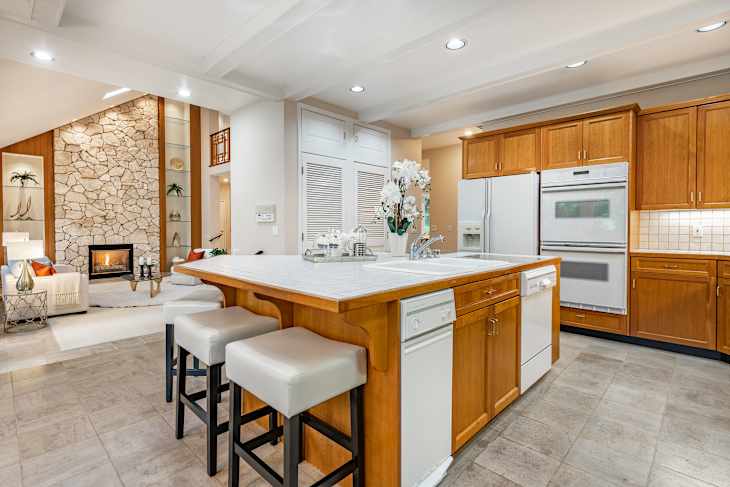
Mid-century modern, or MCM, design prevailed in the 1950s, 1960s, and even into the 1970s, and it continues to be popular today. If you’re a fan of all things mid-century modern, you likely dream of living in a true MCM home. Your fantasy may even include a pristine mid-century kitchen untouched by modern conveniences.
“Most MCM homebuyers are purists and love the details of an original kitchen,” says Drew Marye, broker and owner at The Marye Company, a real estate firm with a special focus on mid-century homes. “Knotty pine cabinets, boomerang Formica counters, and vintage ranges offer a glimpse of meal preparation in a different era. It’s rare to find these untouched features, and some buyers will pay a premium to preserve them.”

Although an unchanged mid-century kitchen is undoubtedly retro and charming, there are some things that you, as the homeowner, might not love the longer you live in the home. In fact, these features might be a “pain” to live with, and may become major inconveniences. Some of them may even be unsafe to live with in today’s world.
Whether you’re in the market for a mid-century home or recently moved into one and are considering renovating, these four mid-century modern kitchen features may sound enchanting at first — but later may become problematic.

Vinyl Floors
Designer and real estate brokerage owner Adrian Kinney of MidModColorado points out that many of the floors in MCM kitchens were made up of vinyl asbestos tile (VAT). Although they might have an adorable pattern, Kinney says that these toxic asbestos tiles need to be “properly removed or remediated” according to local and national guidelines. Instead, as a swap, Kinney recommends “period correct” replacements, like rolled linoleum, terrazzo, cork, or vinyl tiles “for a true authentic diner look” — without being unsafe.
Old Cabinets and Drawers
This one might be controversial — real wood is highly desirable, and old-school pulls are surely gorgeous and period-unique. It’s probably highly tempting to keep those MCM cabinets and drawers.
But Marye says that older “cabinets and drawers can be difficult to open and often lack optimal storage space,” something that may make you think twice about keeping them. Marye adds, “New mid-century inspired cabinets and drawers function more smoothly and provide efficient storage.”
Original Appliances
Marye says that original appliances might look like the “Cadillacs” of the mid-century modern era, but they actually require finding technicians who can service vintage appliances properly, which can be challenging.
“I love a vintage fridge, but they need to be maintained by a true professional that knows these robust machines, to make sure they are not a fire hazard and running in tip-top shape,” Kinney says. They can be an energy drain in your home as well.
To capture the mid-century vibe without the old appliances, Marye says, the brand SMEG offers retro designs for new refrigerator and ranges in a variety of colors.
Original Countertops
You can’t help but fall for those original countertops in MCM kitchens, which often showcase pastel hues and atomic designs. But they can be surprisingly tricky to deal with.
“Original countertops such as Formica can chip and burn easily,” Marye cautions, adding that engineered quartz countertops are more durable while still complementing the mid-century visuals.
However, Formica has come a long way since the mid-century, so this may not be as much of a turnoff for buyers as it was in the past.