
4 Ways My Nana Inspired My Love of Gardening — and the Earth
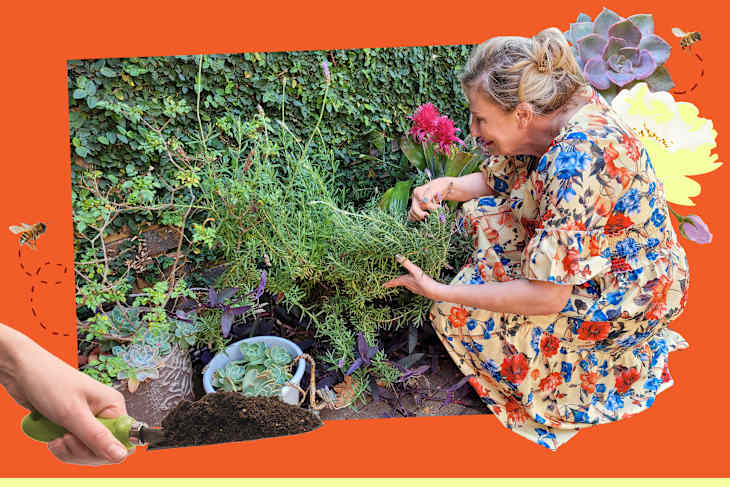
My grandmother (and my namesake!), Nana Rose, pictured above, has an impressively green thumb and a magical, maximalist backyard that puts the most outrageously manicured garden to shame. From eye-catching hydrangeas to wild lavender bushes and an array of delicious produce and herbs, her small garden paradise outside her brick-walled Tucson, Arizona, duplex is truly a beauty.
To this day, I can expect to find her in a floral print dress, with arthritic fingers in soil, a cat or two loitering next to her, and bees buzzing around. But Nana Rose’s green thumb was never just about growing plants. It was about nurturing the soil and the soul. She instilled in me some great gardening tips — don’t overwater your darlings, for example, or you’ll get a bad case of root rot and have to repot.

I didn’t inherit Nana’s green thumb initially. In fact, I asked for potted plants as birthday gifts one year, and three-quarters were laid to rest in my trash can within six weeks, including a plant I thought was artificial. (Nope, it wilted and died, too). But over time, my love for gardening developed, and my necrotic thumb has become a more vibrant green one, thanks, in large part, to my grandmother. That’s why I’m now eager to share the biggest lessons Nana has taught me about cultivating a flourishing garden.

Embrace a wild aesthetic.
While many people opt for a beautifully manicured garden, Nana Rose and I embrace a wild aesthetic, allowing native grasses, roses, lavender, and succulents to self-seed and spread on their own.
Common milkweed has especially grown rampant in Nana’s garden, attracting beautiful butterflies and other pollinators. Fortunately, there are over 100 milkweed varieties in the United States, meaning you will likely also be able to grow it no matter where you reside.

Listen to your plants.
I used to laugh over how Nana talked to her plants, and she names all of them. She has a succulent ironically named Petunia; a collective, wild rosebush called Abigail, and a lavender cluster dubbed Lavender Lass. It is normal to hear her say, “Good morning, Petunia, Abigail, and Lavender Lass, are you thirsty?” and offer them some “delicious drinkies” (nutrient-laced water).
I think the underlying lesson here was that she was almost in a two-way conversation with her plants. As I began learning about native plants in my area, I learned to lean in and listen to my garden’s needs — and look for signs and clues — in the same way.
When one of my potted plants had brown, almost crispy edges — a sign of low-humidity — while the rest of the plant seemed to be thriving, I placed a humidifier next to it. Voilà, the crispy tips were gone. I also created a watering chart after carefully observing each of my plants’ habits and needs.

Forage responsibly.
Nana collects smooth pebbles, unique twigs, and fallen cuttings for filler for her potted plant section on her tiny patio, where she has a magnificent textured display of succulents. She passed this collection technique down to me.
Although I use the term “foraging” today, I do use found items to cultivate my own plants. I see plant foraging as a treasure hunt. I go out in my neighborhood and find useful wild or edible plants.
Sometimes, it’s less wild and more strategic “foraging.” For example, I’m always on the lookout for rosemary bushes in the neighborhood. I carefully snip a few healthy tips, ensuring I leave plenty of growth behind so the plant continues to thrive. It’s a great way to expand my herb garden.
I’ve also learned from Nana (and reading up on techniques) that foraging responsibly is critical. For instance, I only pick what I need in limited quantities, paying attention to specific parts of the plant, select locations, timing and frequency, and harvesting methods. I also ask neighbors if they mind me taking a cutting (yes, prop-lifting is a real thing!), unless they’ve discarded it or if it falls on my side of the yard.

Water wisely.
Nana always tells me (and her six cats) to conserve water by harvesting rainwater and using a watering can instead of letting the hose run or using elaborate sprinkler systems. She’s inspired me to adopt several water-saving methods, such as drip irrigation, rainwater harvesting, and grouping plants with similar watering requirements. A thin layer of drip irrigation tubing allows me to water my plants at their roots, while the rainwater harvesting helps me save significantly on my water bill. Composting has also helped my garden maintain soil moisture and nutrients, especially during droughts.
Nana also reminds me to select hardy plants that can withstand most weather conditions without excessive watering. Nana loves agave, trailing indigo bush, and although not 100%, native but still hardy, lavender. In my garden, I favor hen and chicks, echeveria, and you guessed it, rosemary and lavender.
I like to think that every generation can become a little more sustainable over time, and I’m grateful to my Nana Rose for her timeless wisdom and teaching me the power of native landscaping. I’ve enjoyed the same experiences — with even greater sustainability. I’m curious what gardening and landscaping lessons you’ve learned from someone in your own life, and how you’ve adapted them to fit your own yard and your own practice.