
I Tried the “OHIO Method” and Ruthlessly Decluttered My Closet
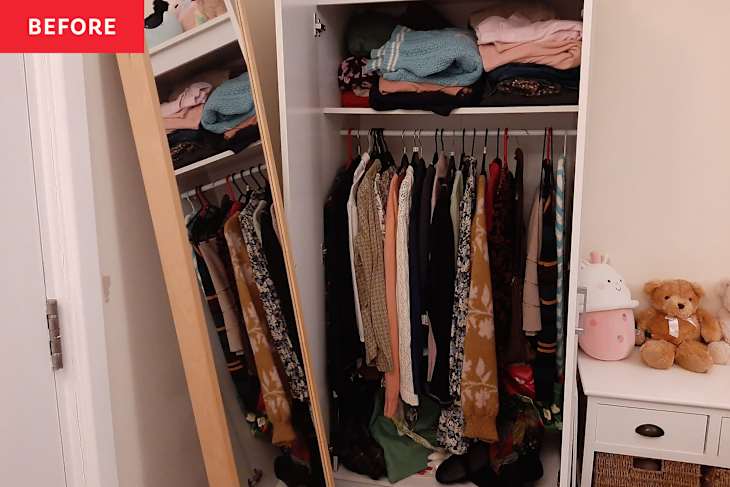
Every time I go to declutter my closet, the same thing happens: I end up with a pile of “maybes” that grows because I keep trying items on and becoming less decisive. The result is a closet that looks pretty much the same as it did to begin with, minus the odd item that doesn’t fit, and perhaps a little neatening up here and there.
To help me become more decisive and ruthless in my decluttering approach I talked to Dana Reder, professional organizer and founder of Winnow & Bloom, about a strategy she often uses with her clients known as the OHIO method. After trying it out, I felt my decluttering immediately become more impactful.
What Is the OHIO Method?
Standing for “only handle it once,” the OHIO method is perfect for decluttering areas like closets where a person is likely to accumulate a “maybe” pile instead of making instant, solid decisions. Because the method only allows the person decluttering to handle each item once, a decision must be made on the spot: You won’t be trying on that shirt that you never wear three times and putting it to the side.
“The OHIO method streamlines decluttering by forcing quick, intentional decision-making,” says Reder. “So instead of moving things around and questioning your decisions, you are taking action to keep, donate, toss, or relocate things in the moment.” Following through with this principle won’t only help your decision-making, but it will also make your decluttering process faster as you gain more momentum with each item you tackle in quick succession.
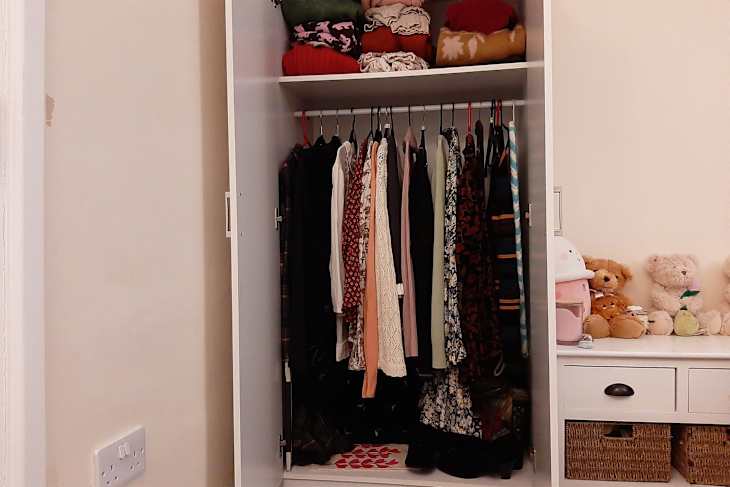
How I Tried the “OHIO” Method in My Home
I began by putting all of my clothing into a pile on my bed. You don’t have to do this if you feel this counts as handling items twice, but it can help you to keep track of what items you have already addressed. It isn’t about looking through anything at this stage — just getting your items to sift through all in one place.
After my clothing was in a big pile, I picked items up one by one and started making decisions. In the process I did my best to pay attention to what I initially felt about each piece (did I feel happy picking it up?) and, if the feeling was positive, I put the item back in my closet.
When I encountered “maybes” or items I liked but never reached for, it was tough not to create a maybe pile for them out of habit. But I instead tried them on once to clarify how I felt and then either put them away or in a pile to the side to donate.
It was definitely tough at first making decisions so fast, as I feared decluttering regret could happen quite easily with the quick pace of the method. But I actually enjoyed the method and how I saw myself gradually building my dream wardrobe out of what I already had.
I kept these words Reder told me in my head throughout my decluttering: A simple philosophy of if it isn’t a yes, it’s a no. “If we’re being honest with ourselves, if you can’t confidently say ‘yes’ to the item in the moment, it’s likely a ‘no’ for you.”
Overall I would recommend this method to others seeking to declutter their home. However, if you’re decluttering sentimental items or pieces that are one-of-a-kind, perhaps this isn’t the best approach, as it isn’t a method that gives the person who is decluttering a lot of thinking time.