
I Tried the “FIFO Method” to Organize My Fridge, and I’m Never Going Back
Feeding my family of seven sometimes feels like a full-time job. There’s so much involved, from planning meals and shopping for them to cooking and cleaning up the kitchen afterward.
Keeping the food I buy well-stored and organized helps things run smoothly when it’s time to cook. Although I have my fridge separated by zones and I clean it out pretty regularly, until recently, I didn’t have an actual system in place for how I store our groceries. When I saw this savvy hack on Instagram from @mac.larena showing off the FIFO method, I knew I had to try it.
FIFO stands for first in, first out, and it involves storing food in a way that ensures that the first thing that goes into the fridge is the first thing that will go out, or, get used. In practice, this means putting the new stuff in the back so you reach for and use up the older stuff first. FIFO is endorsed by StateFoodSafety, which touts the practice as a way to maintain food safety and minimize waste.
FIFO sounds so simple, right? And, like me, you may already do a version of this on auto-pilot when you’re putting away groceries. But I’ve found that naming a method and intentionally putting it into practice has had definite benefits for my household. My fridge was pretty empty when I placed my latest food order, but having FIFO in mind kept me from just adding new items to my fridge bins and sections without making plans to use what we already had first.
Here are five ways implementing the FIFO method was a big help in my kitchen:
It reduces waste
This is the most straightforward and impactful benefit of FIFO. Putting items that need to be used first in front so that they’re easily seen and easy to reach helps reduce (and ideally eliminate) the food waste that occurs from food getting hidden in the back of the fridge. Anyone who opens the fridge can immediately see and access what needs to be eaten first, which encourages my family to choose those items.

The act of moving older items to the front is also key to reducing food waste. Rather than just placing a new container of cheese in the cheese bin, making the choice to move older cheese to the front reminds me of what I need to use up. This way, the Babybel cheese won’t languish in the back, hidden by larger bags of shredded cheddar until they go bad.

It sets me up for better grocery lists
When I’m making my grocery list, I always like to take inventory of what I already have to help me decide what to make and not buy duplicates. When I purposely keep similar items together and organized by use-by dates, it’s so much easier to see exactly which groceries I need to use right away and which ones I’m running low on. For instance, putting my new containers of Greek yogurt behind my almost finished one shows me at a glance if I need to get more on my next Costco run; there’s no wondering if that container in the back is expired or partially full.
It keeps me organized
Keeping FIFO top of my mind as I’m putting groceries in the fridge forces me to look for what we already have in that category. This prevents me from just putting something away in the general area of where it belongs and instead putting each item with what’s most like it. For example, if I bought cucumbers, FIFO encourages me not to just put them in the vegetable bin but to find the other older cucumbers first so I can put them in front.
It gives me more space
Implementing this method made me realize how many duplicate items I buy — and how much unnecessary fridge space they take up. As I put some condiments on the fridge door in FIFO order, I saw that we have two partially used Dijon mustard bottles. What a waste of space! They both need to be in the fridge now that they’re opened, but FIFO-ing (yes, I made it a verb) them at this point will ensure that I don’t buy a third, which has been known to happen.
It works in the pantry too
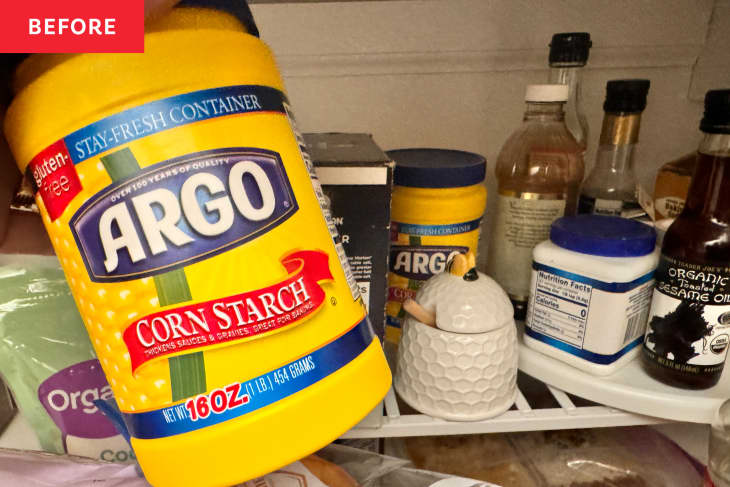
Although pantry food lasts longer, it can still expire or get stale. Practicing the FIFO method in the pantry helps me reduce food waste there, too. I put new cans of beans behind the older ones and took the time to move nearly empty bags of granola to the front of the shelf rather than hurriedly sticking new ones in front of them. Buying less unnecessary multiples has saved me precious storage space. For this restock, I made sure to put my new cornstarch container behind my almost finished one so I don’t add cornstarch to the next grocery list and end up with two full containers.

The FIFO method has so many benefits, even beyond reducing food waste, and it will now be a permanent part of how I think about and practice food storage, both in the fridge and out.