
Why Every Home Should Have This Light-Drenching Feature from the Middle Ages

If you’ve ever walked past a historic Tudor-style home and noticed a beautiful, boxy window that juts out from the upper floor, you’ve probably seen an oriel window. These architectural gems aren’t just charming details from centuries past; they were also a practical cooling feature long before central air conditioning was even an idea.
I myself love them, and dream of one day having a house with one. So I set out to determine where oriel windows are most commonly found, and learned that they’re secretly more useful than I could have ever imagined.


What Are Oriel Windows?
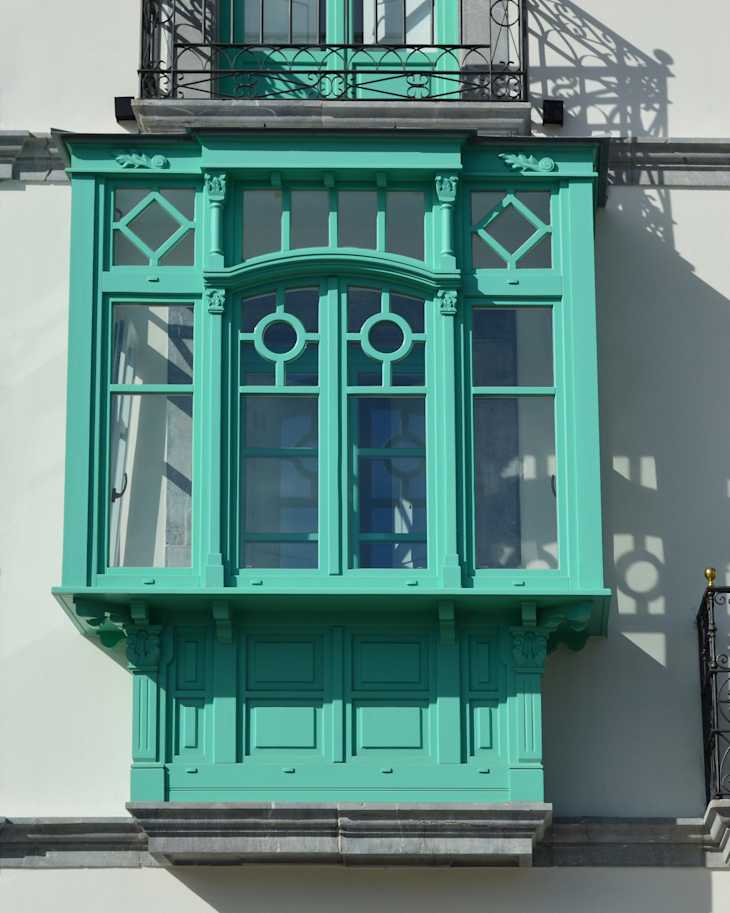
In short, oriel windows are a type of bay window that projects outward from the upper stories of a building. Unlike a traditional bay window, which extends all the way down to the ground, oriel windows are suspended above the street or yard, usually supported by corbels (a type of architectural bracing), brackets, or small columns. Think of them as a room’s extra pocket of space that just happens to hang off the side of the house. Just add cushions and you’ve got the perfect reading nook or people-watching perch.
“Oriel windows stand out because the visual statement they make on a home’s exterior is unmatched by flat windows,” says Isfira Jensen, CEO and principal interior designer at Jensen & Co. Interiors, a New York City-based design firm. “Their projection on the facade [of a home] adds a sculptural touch to the exterior because, unlike standard windows, they break up flat walls. This creates visual interest and makes a home feel more grand and architectural.”
When Were Oriel Windows Invented?
It’s hard to put a year on the invention of oriel windows. The design dates back to the late Middle Ages, according to the Chicago Architecture Center, and really gained steam during the Tudor period (late 15th to early 17th century) in England.
How Do Oriel Windows Work?
Their shape and position helped capture breezes, which improved airflow throughout the room. In an age when cooling a home meant opening a window or fanning yourself, this was a big deal.
But oriel windows weren’t only about ventilation. They also brought in more daylight, which was a luxury in the days before electric lighting. Sunlight streamed in from multiple angles, which made interiors brighter and less cave-like.
”Their outward projection allows sunlight into a room from multiple directions, and also frames the view in a panoramic way, giving you much better visibility than a flat window,” Jensen explains. “Additionally, oriel windows create the illusion of more space, which makes a room feel larger and more open, even if the square footage hasn’t changed. And because the window projected outward, it created a natural nook inside.”
Picture someone in 16th-century England settling into the window ledge to read or embroider by natural light, or to sneak a better view of the bustling street below.
By the Renaissance period, oriel windows had also become a bit of a status symbol. They required skilled craftsmanship and extra building materials, so not every home had them.
Today, real estate professionals still note that oriel windows (and bay windows in general) can boost property values because they add character, square footage, and functional seating space.
Oriel Windows in Homes Today
The oriel’s popularity didn’t stay confined to the Tudor period. The design caught on across Europe and eventually became a staple in Victorian and Gothic Revival architecture in the 19th century. In cities like San Francisco, where the famous Painted Ladies are a bona fide tourist attraction, and New York City, where Victorian-era brownstones in neighborhoods like Bed-Stuy, Harlem, and Brooklyn Heights prominently feature oriel windows, you’ll see modern takes on oriel windows incorporated into rowhouses and apartment buildings for the same reasons they became popular centuries ago: to maximize natural light and create airflow in tight spaces.
Function aside, oriel windows also add a touch of vintage charm. From the street they break up a flat facade, adding depth and interest, while inside they offer extra space without requiring a pricey remodel. Many homeowners turn them into cozy reading nooks, indoor garden spaces, or simply sunny spots to sip coffee.
And yes, oriel windows are still being built today. While you’re not likely to find them in minimalist modern homes, which commonly feature flat windows, architects working in traditional or eclectic styles often use them to add visual variety and comfort.
“There are a few things to keep in mind when considering oriel windows,” says Jensen. “Because they’re cantilevered, they require very careful structural engineering, which means they simply may not be feasible in certain homes. They also tend to be more costly than flat windows since the design, fabrication, and reinforcement are highly customized. From a maintenance standpoint, they may need a bit more attention because they project outward and are more exposed to the elements, which means paint, finishes, or seals may wear faster.”
What’s fascinating is how the feature continues to serve the same purpose it did hundreds of years ago. Even with air conditioning, cross-breezes and natural ventilation are still valuable for reducing energy use and making a home more comfortable.
“These windows will remain a timeless feature rather than a passing trend,” says Jensen. “They’ve been part of architecture for centuries and will continue to be so for many more to come. Their detailing may change with the times, but their essence, that of bringing light and character to a home, will always remain in style.”