
This Is the Real Reason You Hate Your Paint Color (It’s Not What You’d Expect!)
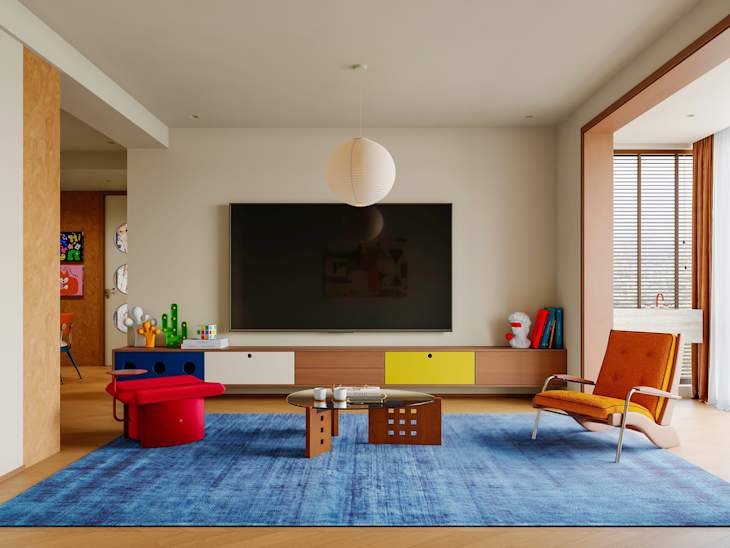
If you’ve ever painted a room, you probably know the drill. You fixate on paint swatches, comparing colors and examining the nuances between two blues that appear nearly identical. You go back and forth a dozen times, and then, when you finally make the big decision, there’s a 50-50 shot that the paint actually looks like what you expected. And, if you’re on the wrong side of those odds, you’re left wondering where you went wrong.
So what’s the magic formula for making sure a color translates from swatch to wall? Here’s what an interior designer and experts at two paint companies had to say — and a little bit of info on a trick I’ve used myself to get great results.


Always Fully Evaluate Your Color Choice(s)
If you’re choosing a paint color based solely off a fan deck or the small swatch you picked up at the hardware store, chances are, you’re not going to have a total understanding of what that color will look like when it’s applied to a wall.
While there’s no perfect apples-to-apples comparison beyond actually painting the color on the wall, which you want to avoid because it can create uneven application down the road, there are a few tricks to help get a better assessment.
Look at Paint Samples In the Room Where You’ll Use Them
A paint sample is going to look wildly different in a spacious south-facing room than it will in a windowless powder room or even a north-facing room full of windows. Without looking at the color in the actual space where it will be applied, you can’t fully grasp what tones the paint might take on. It could lean cool in one space, while it picks up creamy tones in another.
Ruth Mottershead, creative director of Little Greene paint, has a smart suggestion for getting a good sense of colors. “Paint a good selection of samples onto pieces of A4 paper, and pin them up on all four walls in the room to assess the way the shades change according to the time of day and in natural or artificial light.”
She also recommends looking at the samples in the context of any other colors within the room. “All colors — and most notably whites — appear to vary depending on what they are seen next to,” says Mottershead, who recommends viewing the samples both in isolation and next to any other colors that are found within the space.
Look at a Large Sample Swatch
Those tiny swatches are difficult to envision painted across an entire room. So make sure you’re looking at a sample that’s big enough to give you a full taste of the color. “The size of the sample matters,” says Erika Woelfel, vice president of color services at BEHR. “A small swatch can look very different when expanded across a full wall.”
If you want to go even larger than the A4 paper technique, you can paint a piece of posterboard. You can also order large, removable samples from a company like Samplize. These come pre-matched to many of the most popular paint brands’ colors.
Assess Paint Colors at Different Times of Day
Just as the direction that the room is facing can impact the light in a space and the tones that show up in a color, so can the shift in lighting throughout the day. “Lighting plays a huge role too; natural light, artificial light, and the direction the wall faces can all change the way a color appears throughout the day,” says Woelfel.
She recommends looking at the paint sample multiple times over the course of a day — or even a few days — before making a final decision.
Try Paint Directly on Textured Walls
Another variable that could impact why your paint doesn’t look the same on the swatch as it does on your wall is any texture present on the wall. Woelfel explains: “Textured surfaces like stucco or brick may cause shadows and variation in color perception, while smooth drywall offers a more uniform appearance.”
If you have textured walls, that’s the one instance where you may want to try the paint directly on the wall rather than on a sample surface.
She also notes that the paint finish, whether it’s flat, satin, or gloss, will impact the way light reflects, which can also affect the way the color is perceived. Sampling different sheens can also give you a sense of how the color will look in the finished space (and which version you might prefer).

Consider Adjusting the Paint Color Percentage
There’s one more trick that could impact whether you choose the right color for a room, and that’s looking at the paint color percentage. You may have heard designers reference using a paint “at 25%.” But information about paint color percentages is not necessarily common knowledge. They can, however, be the key to getting the exact right version of a color for a space, particularly if you’re using that color on more than one surface in the room.
The paint color percentage actually refers to the value of the color, which is how light or dark the color appears. When you’re looking at a paint swatch, you’re looking at a color at 100%. This is the truest version of that color. But this color can be adjusted up or down, with each tick making it darker or lighter.
Here’s how it works. All paint colors start off as a neutral base, and the paint formula is added to give the paint pigment. You can actually choose how much of that formula you want in the can. For example, if you choose a paint at 125%, that means it has 25% more of the paint formula in the can, therefore making the color appear darker. If you choose it at just 25%, that means the can only has 25% of the paint formula, and it will appear significantly lighter.
Where this is critical is when you’re dealing with a room that has more or less light or if you’re working with a monochromatic palette where you need some variation among elements in the room. “In rooms with strong natural light, I’ll often reduce the formula to 75% or even 50% to keep the original color intent but get a softer, less overwhelming effect,” says Isfira Jensen, CEO and principal designer at Jensen & Co. Interiors.
She suggests testing the different percentages on the walls and watching the colors shift throughout the day, much like you’d do with different color paint swatches. For a monochromatic look, Jensen says, “I would keep a color at 100% strength on the trim and reduce the strength to 50% on the walls and ceilings to soften the overall effect.” Another area where paint percentages can be useful? If you’re looking to create tone-on-tone stripes on the walls.
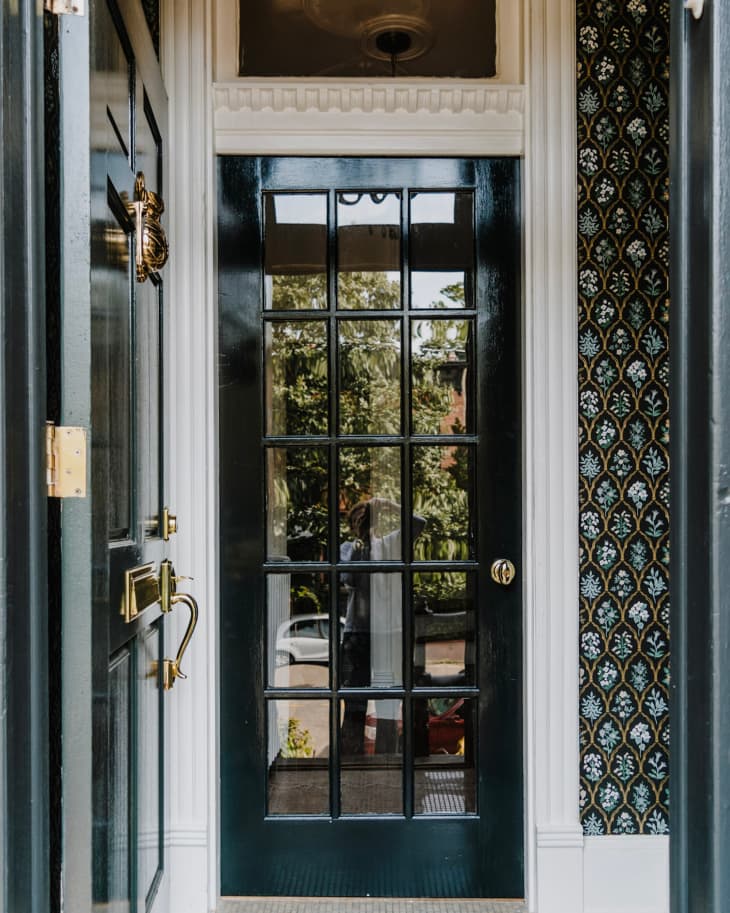
I’ve also personally used this trick in my own home when I loved the idea of a green so dark that it could be seen as black. Benjamin Moore’s Black Forest Green (HC-187) seemed to be the answer. But when applied to my railing and doors, it looked more green than black. I went back to the paint store and asked for the same color at 150%. This gave me exactly the color I’d envisioned.
There is, of course, a bit of trial and error involved in the paint percentages process, and it’s important to go back to the first recommendations of sampling the color correctly. With this percentage trick, though, it can be easier to customize a color for your space to make sure it matches your exact vision.
So now you know — and if a swatch that you loved at the paint store has you stumped, you could always try a different strength using paint color percentages.
Design Defined
Never miss the style inspo and recommendations you crave with Design Defined. Follow along each week as our Home Director Danielle shares the best style advice, latest trends, and popular decor finds you just can't miss.