
I Finally Learned What the “Red Thread Theory” Really Means — And It’s Brilliant
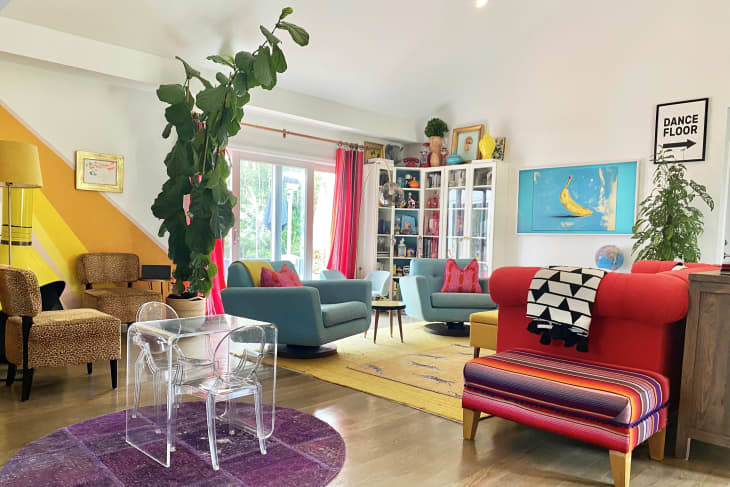
Cutely named decorating trends come and go so quickly these days that I can hardly keep up. But occasionally an idea with a catchy name comes around that has some staying power. When a video by interior stylist Charlotte Alldis of Thrifted Abode came across my Instagram feed about “Red Thread Theory,” my mind instantly went to the “Unexpected Red Theory,” which made the rounds last year. But I quickly realized the Red Thread Theory was something else entirely — and it was some of the best decorating advice I’d heard in a while.

The Red Thread Theory suggests that every home needs a consistent element running through all the rooms. This could be a color, a pattern, a style of furniture — anything really — it just needs to “thread” through the whole house. The result is a home that feels more cohesive and polished — but in a subtle, understated way. It’s a cheat towards a more professionally decorated look that anyone can master.
I asked Alldis, who moonlights as an interior design consultant, if she could remember when she’d first heard the phrase, but she could not. Alldis, who is based in the U.K., did note that this idea’s been covered in the British design press this year, including Homes & Gardens and Living Etc. But more importantly, she says, Red Thread Theory aligns with some of the most basic principles of interior design.
“Through classes I’ve taken and interior design books, I’ve learned it’s wise to have a visual element that runs through the whole house,” she says. “Whether it’s a color or a particular style that appears in every room of your home, the repetition makes it have that cohesive look and feel.”
How to Define Your “Red Thread”
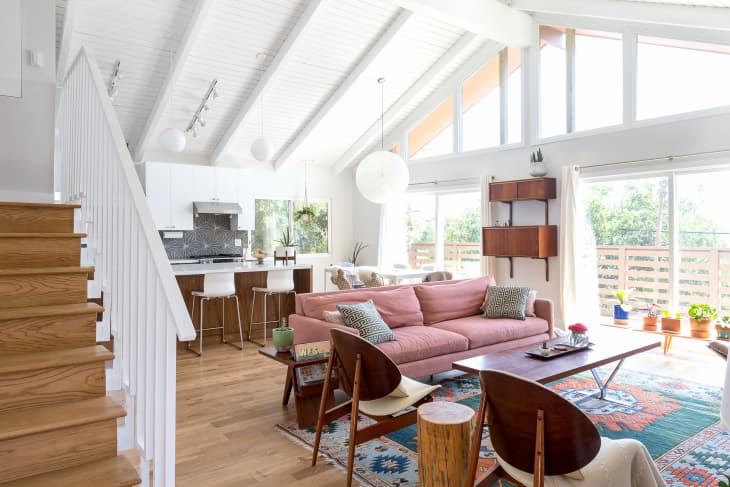
So how do you find your own red thread? “If your home is filled with things that you love, the thread is probably already there,” says Alldis. “You might just need to amplify it a little bit.” She recommends looking at your current home and zeroing in on the pieces that you absolutely love. What is consistent? It could be a style of art, a specific color, a pattern, or the age of the furnishings you own.
“It could be anything,” she says. “Once you find it, try to introduce a few more of those elements in each of the rooms to make sure that it’s consistent throughout the home.” So let’s say you have mid-century furniture in most rooms — Alldis suggests adding a little touch of MCM to those that don’t have it.
“It doesn’t even have to be particularly big,” adds Alldis. “The repeated element can really be a small thing.” In fact, Alldis recommends varying how much of the red thread appears in each room: It could be the wall color or covering in one room, but just the trim on a pillow in another.
What If You Don’t Have a Thread?
If there isn’t a consistent visual element running through your home, your decor may feel disjointed. Alldis says to spend some time trying to define what you love (versus what’s trendy).
If you want to bring more consistency to what you already have, color is an easy place to start. “Think about the colors that you reach for a lot,” Alldis says. “Fashion can sometimes be a good way to get inspired: The colors that you like to wear a lot are a good starting point.”

You Can Have Multiple Threads in One Home
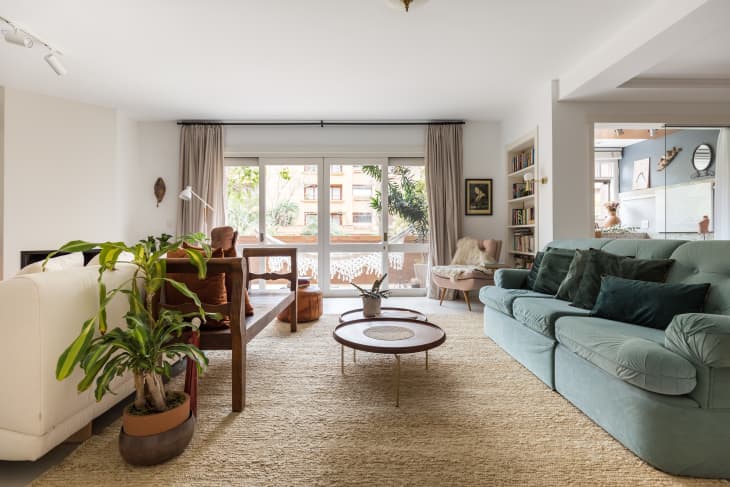
Alldis says her own home has several red threads, including the color mint green, vintage accessories, and a French-inspired aesthetic. In her opinion, it’s OK to have three, four, or more threads. “I think you just need at least one,” she says.
So Why Red Thread?
Neither Alldis nor I could figure out why the theory is named the Red Thread Theory and not just the “Thread Theory.” Perhaps it’s just because it sounds catchy? ‘Red’ and ‘thread’ create rhyme and rhythm, after all; plus, the popularity of the earlier “unexpected red theory” could explain it.
The name might also be subtly alluding to the Chinese “Red Thread of Fate,” which, according to Wikipedia, is “an East Asian belief originating from Chinese mythology. It is commonly thought of as an invisible red cord around the finger of those who are destined to meet one another.”
Whatever the theory’s name’s origins are, just know that your thread doesn’t have to be the color red.
Design Defined
Never miss the style inspo and recommendations you crave with Design Defined. Follow along each week as our Home Director Danielle shares the best style advice, latest trends, and popular decor finds you just can't miss.