
My Mom’s Remixed “Rule of Threes” Makes Mixing and Matching Wood Tones *So* Simple
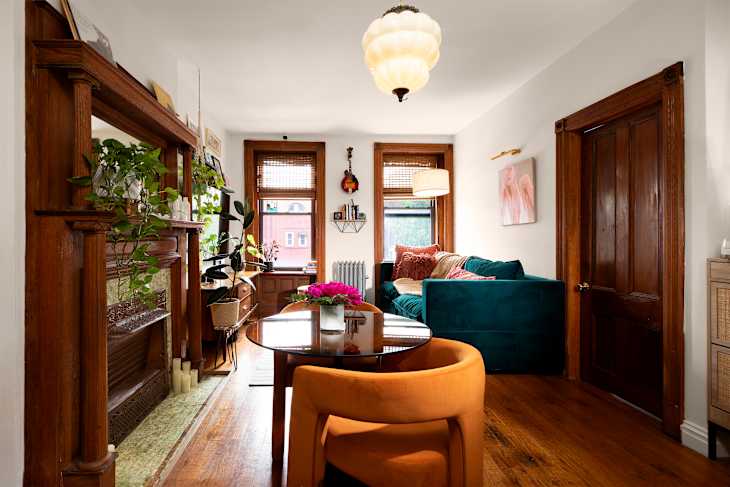
I moved into a new apartment a few months ago, and have been constantly looking for ways to make it feel lived-in and inviting without it looking cluttered. In a quest to add some warmth and charm to the space, I brought in primarily wood furniture. While the rest of my home looked great, I felt that my den (which has a different tone of hardwood flooring from the rest of my house) looked a bit chaotic.
That’s when I remembered what my mom, an interior design enthusiast, would always say: When mixing wood tones, less is always more. She called it the “rule of threes,” and insisted that no more than three distinct wood tones should be used in any single space.

What Is the “Rule of Threes” Wood Tone Rule?
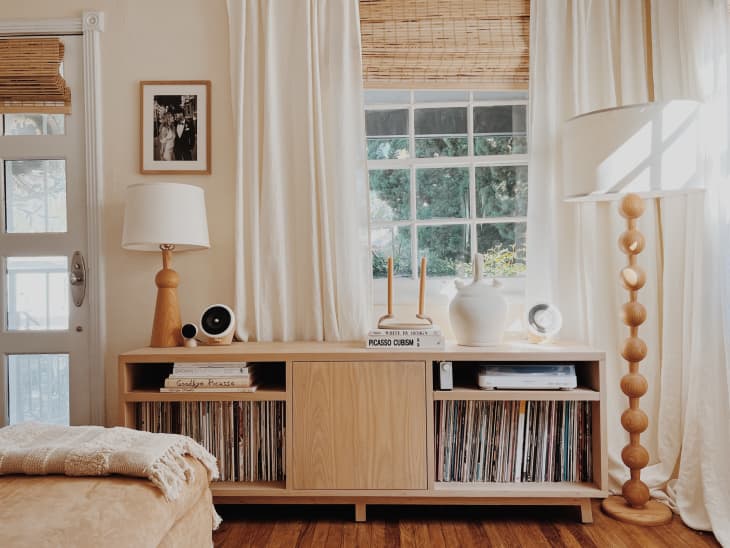
Introducing too many mismatched wood finishes is a common interior design mistake that can create a disorganized look. On the other hand, trying to keep all of your furniture the same tone is equally cringe, and can flatten the space. So, like my mom, I always try to stick to no fewer than two and no more than three wood finishes to keep a space looking perfectly layered and harmonious.
To achieve a cohesive look, my mom suggests creating a “hierarchy” of three wood tones:
- The base: This could be your flooring or the largest piece of furniture in the room.
- The contrast: This is a secondary tone to add depth.
- The accent: A final wood tone for smaller vintage pieces or shelving.
These three tones will generally look best together if they at least share the same undertone (warm, cool, or neutral), but there’s definitely room to play around with this — and no set ratio. A good way to ensure cohesive undertones is to seek out the same few species of wood. For example, if you have a sofa with beech legs, a teak coffee table, and an oak sideboard, it’s a good idea to stick to these three species for the other wooden elements in the room.
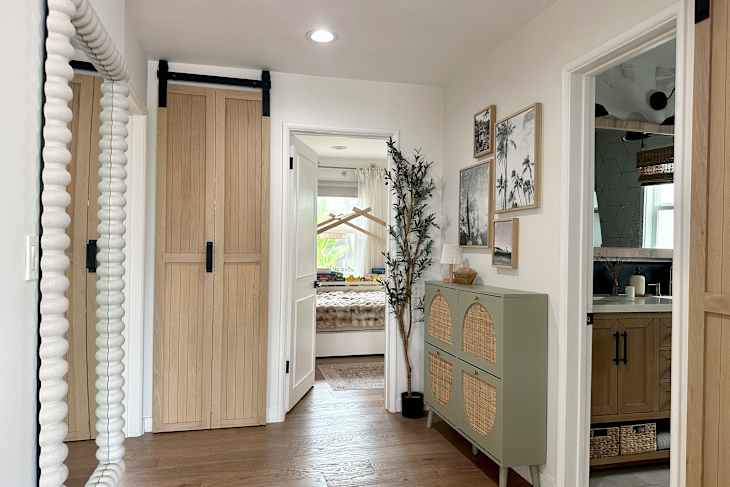
“I don’t see the ‘three wood tones’ approach as a strict rule, but as a way of creating hierarchy and visual calm,” says Sneha Ostawal, principal architect and founder ofSource Architecture. “A limited, well-layered palette allows each material to breathe, and metals work best when they quietly echo the undertones of the wood instead of drawing attention to themselves.” Brass, for example, looks best with warm woods like walnut or oak.
Why Does the “Rule of Threes” Work?
By following the rule of threes and sticking to a maximum of three different tones, you create a layered yet balanced space — a sense of harmony as opposed to noisiness and distraction. Natasha Jain, CEO and co-founder of Bent Collective, says, “When too many wood finishes enter a room, even beautiful ones, the space can start feeling visually noisy. Instead of warmth, you get distraction. Limiting yourself to two or three wood tones helps the eye settle and allows each surface to breathe.”
Gabby Bourne, home renovating creator, adds, “The ‘rule of threes’ wood tone rule has helped me so much in designing my home. Since I’ve gotten more comfortable mixing and matching, the rule of threes has helped keep me at that safe threshold while still providing enough variety so the space doesn’t feel bland.”

Back in my new apartment, I realized that the reason my den felt off was thanks to its four clashing wood tones, which made it look cluttered. The fix was simple: I swapped my coffee table (the fourth tone) out for a new one that matched the wooden legs of my sofa. The change was instant: The room felt grounded.
It seems like everyone’s talking about “layered” spaces right now, but the art of layering requires a good sense of balance. My mom’s “rule of threes” doesn’t have to be law, but it’s a great place to start if you’re not sure how to style your space, or if something feels off.