
This Age-Old Home Feature Is Secretly Everywhere, And It’s So Practical
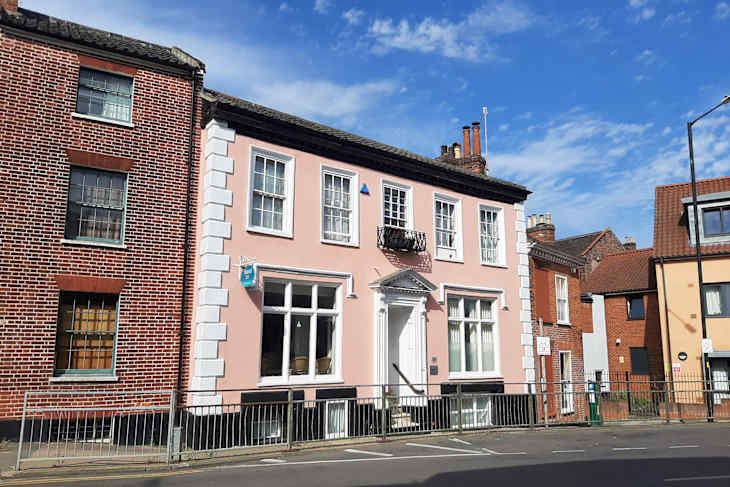
When I see older home features that have stood the test of time and exist today, from witches stairs to razor blade disposal slots, it’s always such a pleasure to pause and admire their beauty. I love living in an older home for just this reason. There are a few things that I’ve come to learn about my place and love about it as well — most notably, its prominent rusticated quoins that have remained intact since the 18th century.
To learn more about this design feature and its origins, I spoke to some experts in design and real estate. Perhaps you’ll now start to fall in love with these, too.


What Are Rusticated Quoins?
If you’ve ever walked past an older building and noticed that it has irregularly placed, raised brickwork where the edges meet, you may have spotted rusticated quoins.
As Jessica Lauren, a real estate investor at Fire Damaged House Aid, explains: “A rusticated quoin is a stone used on the corners of buildings, typically only on the lower floors of multilevel structures in traditional designs. These quoins are set out from the walls themselves, raised from the rest of the brickwork in an almost zigzag pattern.”
Functionally, rusticated quoins would serve to protect the corners of a building, especially its lower-level structure, which is most prone to damage. But in terms of aesthetics, rusticated quoins bring visual interest to otherwise flat-faced buildings by adding dimension.
When Were They Invented?
Although an official invention date hasn’t been mentioned for rusticated quoins, there is evidence of the design feature dating back to ancient Rome.
Roman architect Vitruvius discussed rusticated quoins in a treatise he wrote back in 27-22 BCE known as De Architectura, or Ten Books on Architecture. In this written work, the architect described how rusticated quoins were traditionally used to strengthen walls, especially on buildings with heavy roofs or multiple stories.
He also mentioned how the specific layout of rusticated quoins — with alternating long and short edges facing inward — was a method to maximize strength and stability, and not just a decorative choice.
When Were Rusticated Quoins Popular?
Rusticated masonry was popular throughout many different periods of time. My home in particular comes from the Georgian era. Back then, quoins were adored for their decorative nature, and homes featuring them were considered to hold an elevated sense of grandeur and elegance.
During the Georgian era, homes were often built in the Classical style, which drew inspiration from Roman architecture as well — which makes sense, considering Vitruvius spoke about rusticated quoins as an architect himself back then. Rusticated quoins were also popular during the Renaissance era.
Rusticated Quoins in Homes Today
You may still see some rusticated quoins if you walk around a town or city that has homes built before a certain period of time, but they don’t tend to appear on many newly built homes.
“Today they are mostly decorative details used on traditional homes, historic restorations, and high-end buildings, not so much a structural element,” says Elana Mendelson, a luxury interior designer at Elana Designs.
Stephanie Lindsey, principal designer at Etch Design Group, echoes this, noting how although the design feature is largely lost today it is still sometimes replicated for visual effect. “Today, they are most often for aesthetic rather than structural purposes.” She adds that they offer “a timeless way to reference historic architectural styles without fully replicating them.”
This is definitely something I noticed while wandering around the city I live in. I noticed many more buildings with genuine rusticated quoins, but also a number with brickwork painted to create the illusion of quoins. I wish more rusticated quoins were around as they look so intricate and thoughtful, truly elevating the face of buildings, but it made me smile seeing the faux ones dotted around different streets, too. Little tucked away nods to the city’s broader history.