
10 Small Bedroom Layout Ideas That Maximize Space and Comfort
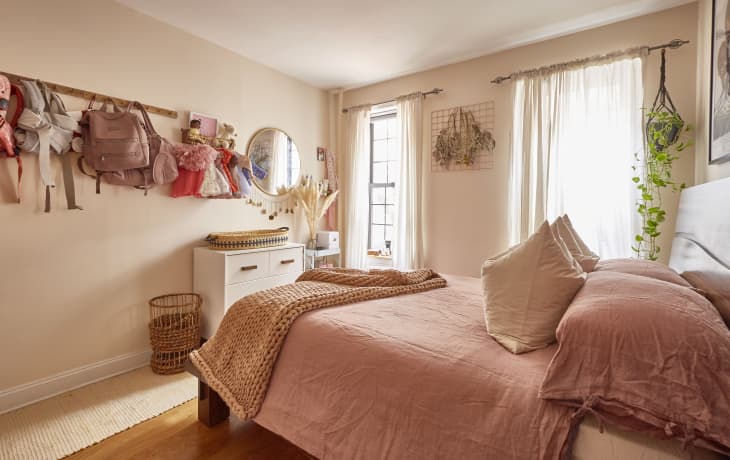
Figuring out the best layout for a small bedroom isn’t an easy task. As small bedrooms are usually around 120 square feet on average (if not smaller!), you’ll have to balance practical features with any aesthetic you’re hoping to achieve — and most of all, maximize every square inch for proper storage. Whether you’re living in a tiny studio apartment, or you’re simply repurposing a bonus space, organizing furniture and decor can make or break how comfortable you are in an otherwise cramped home.

Besides sleeping, you’ll need to decide which functions will happen routinely in your bedroom before you begin laying out your belongings, advises Chloe Wang, principal designer of Mastuvu Design in Santa Monica, California. “Does the bedroom need to double as your workspace? Do you need extra storage? Answering these kinds of questions will guide your choices for selecting furniture and deciding the layout.”
Decor can take shape in any room — but first, let’s identify three common design pitfalls within small bedrooms (plus, tips on how to avoid them!). Then, read on for 10 custom layout suggestions that help you prioritize creating more space wherever possible.
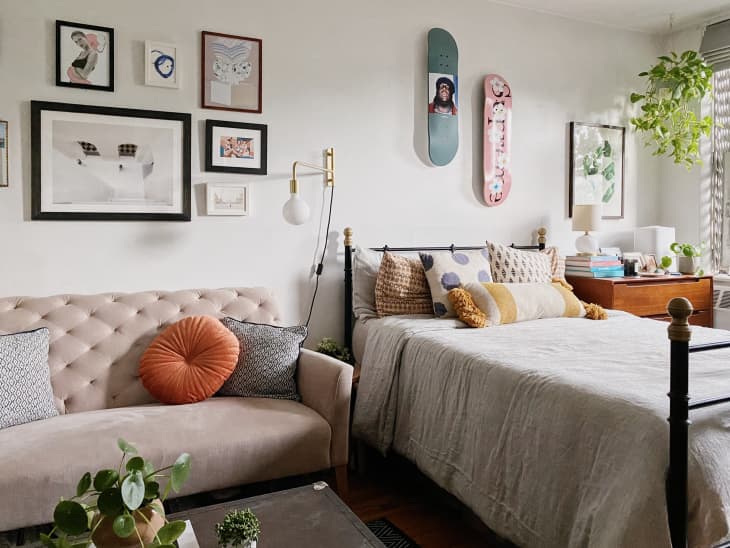
3 Most Common Small Bedroom Layout Issues
The tight floor plan of a small bedroom presents several spatial issues; namely, how big of a mattress you can use, as well as closet storage issues. Design pros weigh in on the most common layout issues in small bedrooms — plus, how you can solve them.
The Size of the Bed
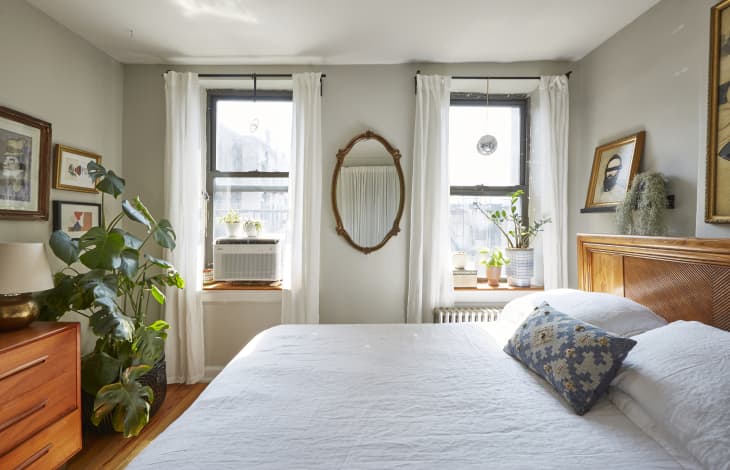
One of the most common problems for small bedrooms — and also the hardest one to solve — is that a bed can easily dominate the space. Even if it means repurchasing a bed and frame, design experts say queen or full beds are preferred over king-size beds.
Wang also recommends being mindful of the amount of furniture you have in the first place. “Embrace the policy that less really is more,” she advises. “Eliminate unnecessary furniture or decor that clutters the room.”
Using a Bedroom to Work
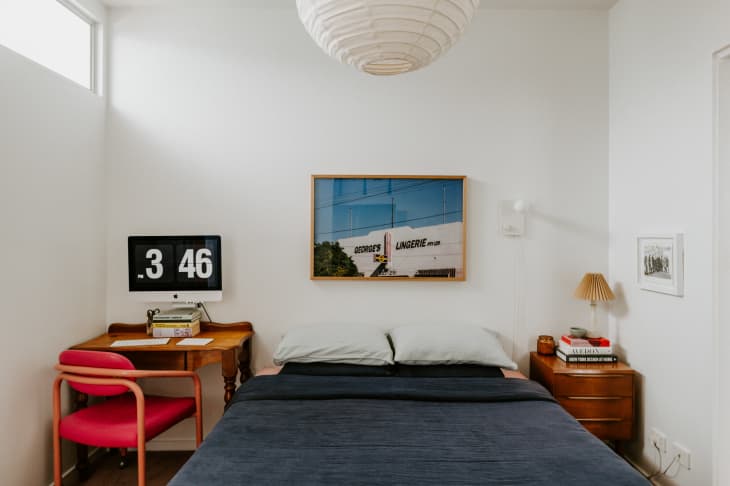
It’s true: Not everyone has the luxury of a separate home office. An already-tiny bedroom may be the only logical spot for a workspace.
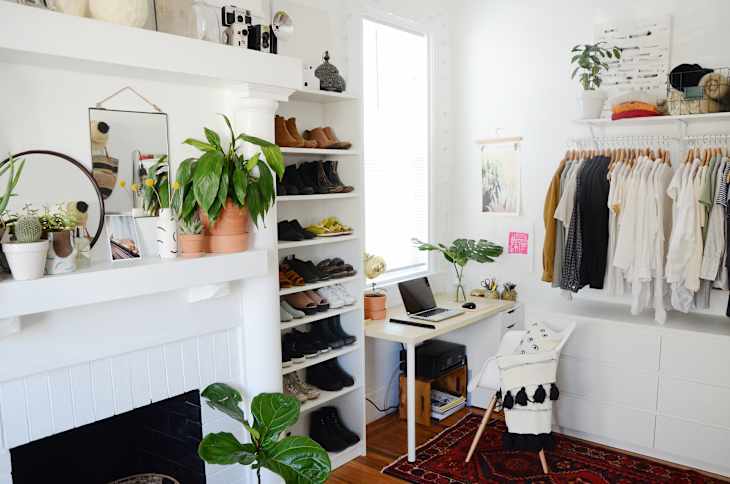
You may first try replacing a bedside table with a small desk to keep your bed centered and the room as symmetrical as possible (as shown above) — or, you can push your bed against a side wall or corner and position the desk across from it. Ultimately, the decision will depend on your bedroom’s size: If you can place that desk in front of a window, even better. The option you choose will come down to the square footage you’re working with and what other pieces and architectural features you’re working around.
A Missing Closet
Older homes often don’t have spacious, built-in closets, which obviously are a major challenge for storage. You may want to fit a dresser into your layout, but doing so may eat away at any clearance space you have around your bed.
Consider multifunctional furniture (including bedframes with built-in drawers!) to make up for a missing closet. Using a small dresser instead of a bedside table can help, as well as taking advantage of vertical wallspace for floating shelves or mounting a clothing rack to the wall. If you simply can’t avoid a dresser, try pushing your bed up against a wall or corner to offset it, Wang adds.
Best Small Bedroom Layouts
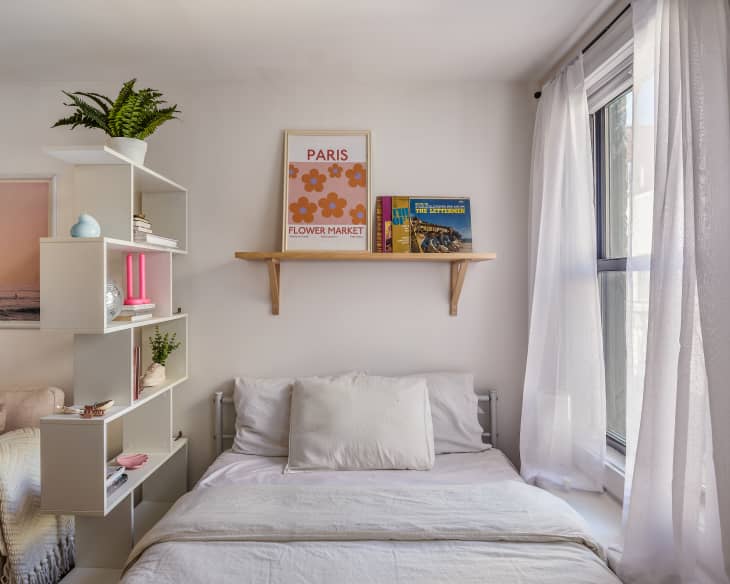
When your bedroom is short on square footage, an optimized layout can change everything. The right setup can turn a tight squeeze into a cozy space that actually supports the way you live.
1. Double Nightstands
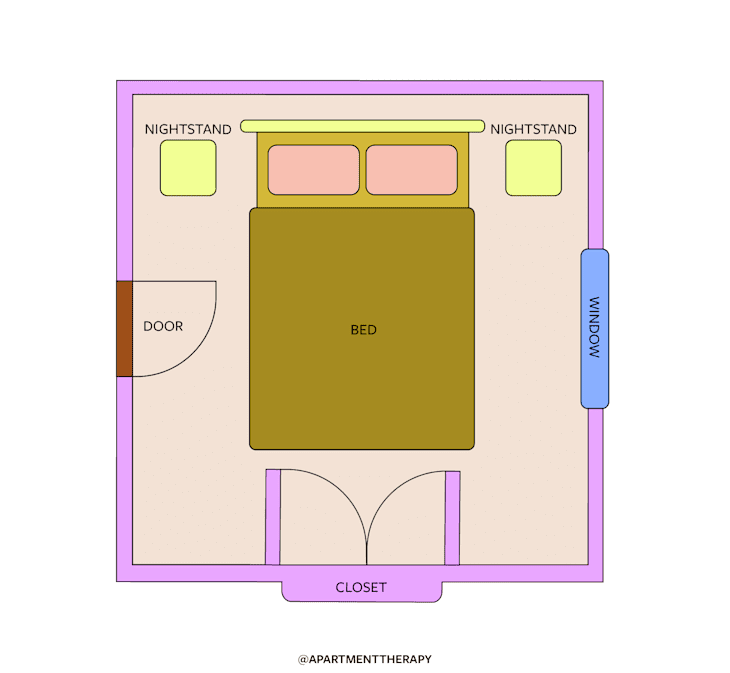
If space allows, centering the bed on one wall and flanking it with nightstands creates a symmetrical, sophisticated look that’s classic for a reason. You may associate this layout with roomy bedrooms, but the setup works just as well in tighter quarters.
The key? Just shrink your furniture selections down to scale. While a king bed feels luxurious, it’s almost always impractical for tiny bedrooms. Stick to queen or even full beds, unless an oversized bed is required. The same goes for nightstands; they should be small, compact, and functional. You could even use wall-mounted shelves in lieu of freestanding tables.
2. A Slim Console Dresser
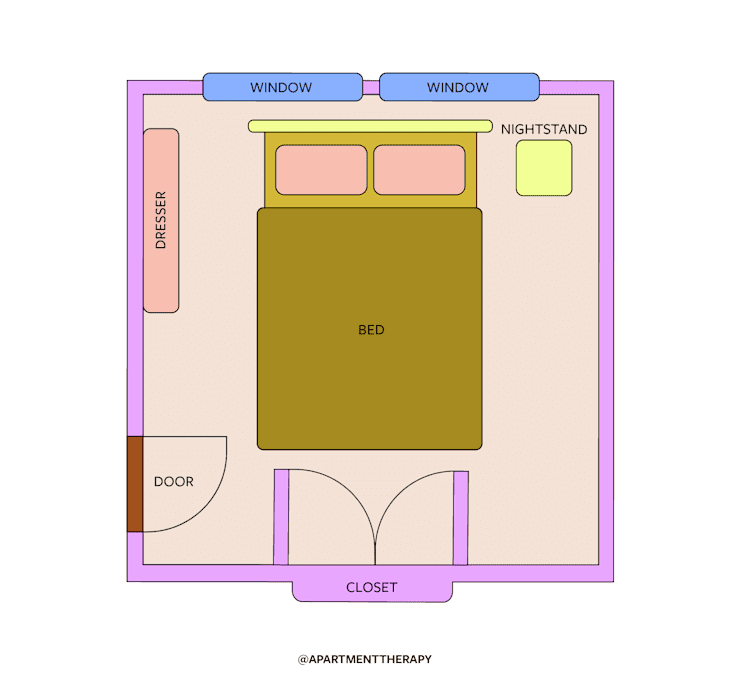
Don’t be afraid to stick to just one bedside table to boost clearance between the bed and a freestanding dresser. This custom layout may also help accommodate awkwardly shaped small bedrooms or bedrooms with unusual architectural features that hinder having a nightstand on each side. Try to balance out the space visually in some way — place a floor lamp, sconce, plant, shelf, or even a piece of artwork on the other side of the bed to ensure that a single nightstand doesn’t create an uneven look.
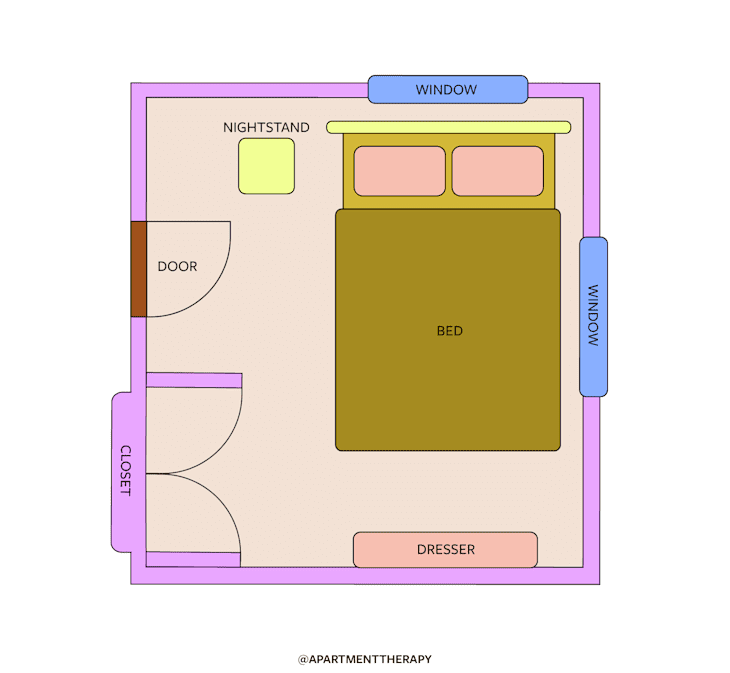
3. Corner Bed
Pushing the bed into the corner is an ideal way to maximize floor space in a small bedroom. This configuration can accommodate WFH setups and is often the easiest way to fit a fullstanding dresser or additional cabinetry into a small bedroom without sacrificing walking clearance to move around.
When it comes to choosing furniture for the rest of the room, Wang advises steering clear of overly bulky pieces, which can make the space feel cramped. She also recommends opting for tall (versus wide) dressers or wardrobes with compact footprints to draw the eye upward, which gives the illusion of a larger space and preserves floor space by maximizing vertical height.
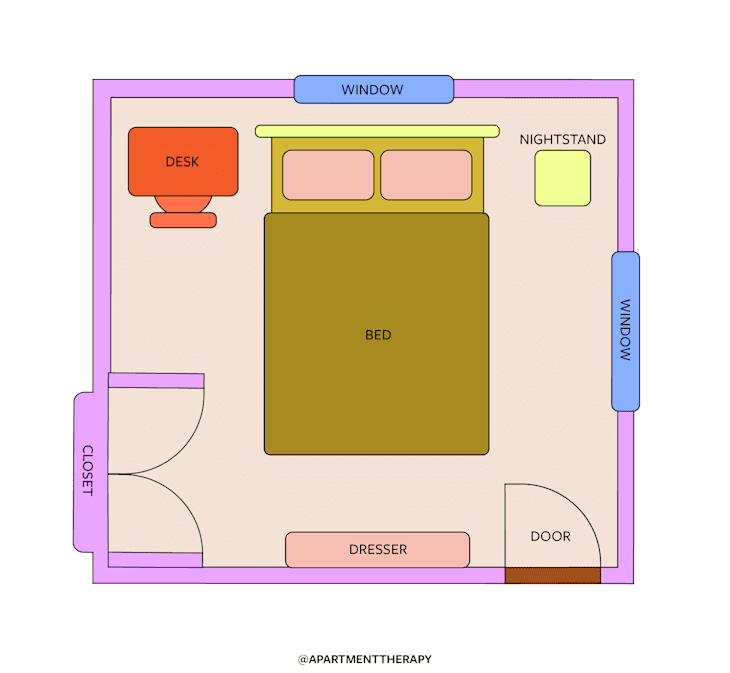
4. Bedside Desktop
Looking to make your small bedroom double as a functional work-from-home space? Try replacing one of your nightstands with a low-profile desk. It’s ideal for those who need both sides of the bed to be accessible or simply prefer a more symmetrical look. The trick here is choosing a small desk that won’t overwhelm the space.

5. Create a Custom Built-In
If you’re willing to invest in a custom solution, take advantage of recessed storage that doesn’t eat up additional floor space. Placing your bed directly opposite a built-in can also give you an opportunity to customize which uses this area provides — in this particular bedroom in a family home in Toronto, that meant deliberately sacrificing shelving for a desktop workstation. If you’re someone who has to use a small bedroom as a WFH setup, this project may save you from retrofitting a desk into a cluttered room.
Storage isn’t the only constructed element in this bedroom; there’s a banquette added beneath the window to create slim-profile seating without the need of a bench or loveseat. Window seating can also give you an opportunity to provide additional storage beneath this bench space.
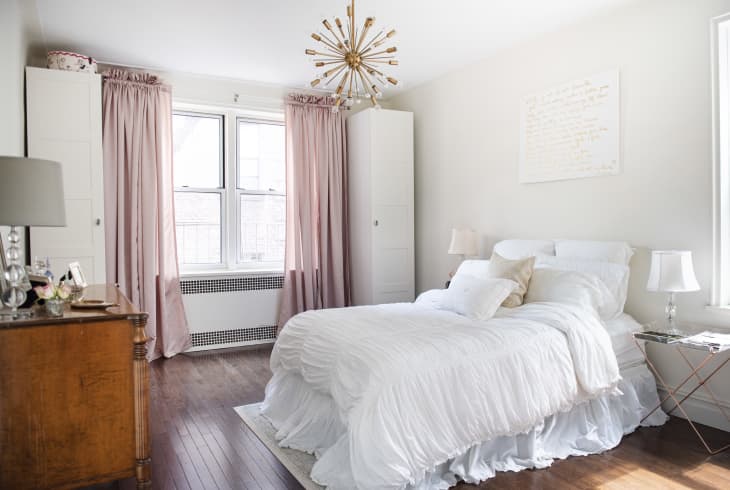
6. Split Storage Units for Closets
In this tiny primary bedroom without any closet space, a larger bay-like double window meant that a large storage unit for clothing would have obstructed direct sunlight. The solution? Splitting the need for storage into two stand-alone cabinets, which are tall, thin, and only about 6 inches deep to prevent floor space from being overrun. It’s a much better move than a full armoire or a freestanding closet.
Placing the bed away from each of the three windows in this space also ensured that natural light wasn’t obstructed from flooding this space. The more light that trickles in, the airer and more spacious that this tiny New York bedroom feels. Work as hard as you can to avoid obstructing windows to achieve the same effect.

7. Use a Dresser as a Nightstand
In this partially enclosed alcove in a studio setting, zero closet space is available. However, the function of this extra-wide dresser is more than simple storage. Flanking the bed on either the right or left side with a full-size dresser can double as a nightstand and vanity as needed. Just like many other Manhattan apartments, this particular home is pushing the limits of the clearance around the bed — but eliminating nightstands ensured this room is still livable.
Choose to flank the side of the bed that’s not often in use, as the drawers in this dresser restrict any movement on the left side of this bed when fully extended.
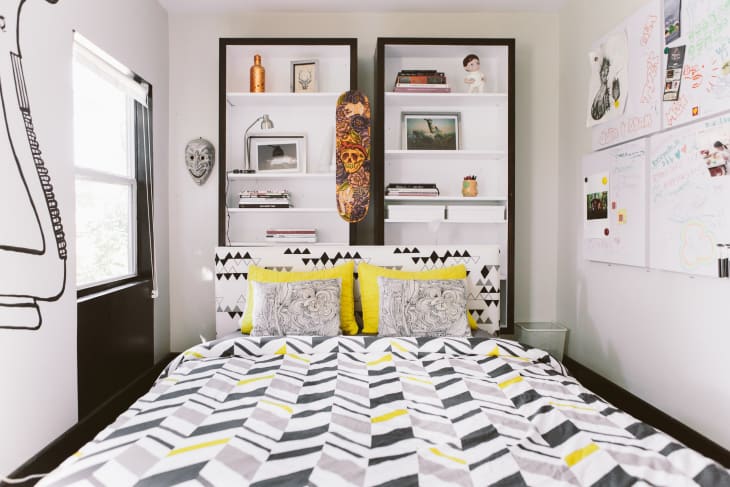
8. Enhance a Headboard with Storage
If you think about it, the space behind your bed immediately becomes a dead zone — but becomes an opportunity if there’s vertical clearance and wall space available. In this teensy Chicago bedroom, the homeowner chose not to impede the only window in the room by mounting a shelving unit right behind this eye-catching upholstered headboard. Doing so allows more light to filter in; and in this case, still provides necessary storage without eating up more clearance around the bed.
Whether you choose to use open shelving or a full encased unit, always choose to build up along a wall if you’re looking to maximize the square footage of a small bedroom. Place your bed away from windows and use the space behind it for shelving.
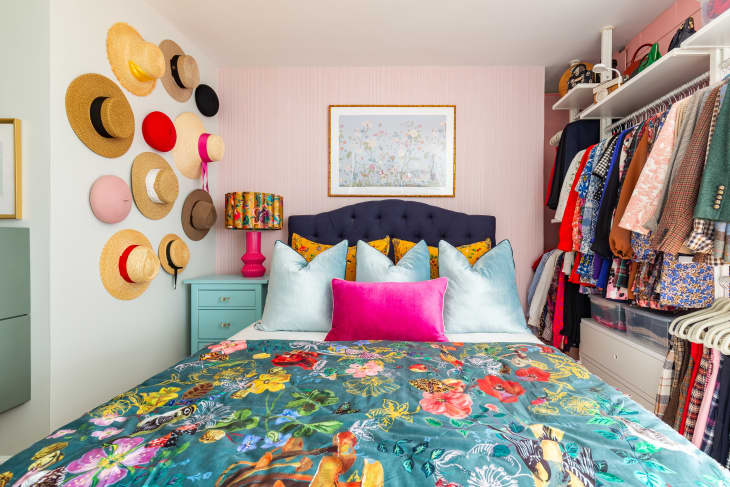
9. Wall-to-Wall Clothing Rack
If you don’t have a closet in your small bedroom, place your bed in the center of the room, creating clearance in two distinct lanes. Then, dedicate an entire wall to create a freestanding closet, as was done in this Washington, D.C., bedroom. The same clothing racks and shelving units that are typically installed in enclosed closets can be mounted into drywall and reinforced to support the weight of the clothing.
There’s enough room for one nightstand in this particular layout, but some may choose to skip it altogether. Forgoing art and wall decor in your bedroom allows you to use every inch of wall space to make up for a lack of a traditional closet.

10. Use Dividers in Studios
While studio apartments don’t exactly provide you a true bedroom, there are ways you can manipulate this floor plan to “create” one, so to speak. The quickest way to pull this off? Use a divider (or, in this case, a shelving unit!) to cordon off a more formalized sleeping area within your home.
As shown in this small-scale Miami studio, furniture pieces stand in for more formal dividers to create distinct living zones. A double-pass-through shelving unit is used to create a “bedroom” wall — and it’s further defined by a desktop that anchors the foot of the bed. You can choose to place seating here or even a dresser if your own layout doesn’t have a formal closet space provided. A curtain or a room divider works wonders in creating privacy in a makeshift bedroom environment.
Design Defined
Never miss the style inspo and recommendations you crave with Design Defined. Follow along each week as our Home Director Danielle shares the best style advice, latest trends, and popular decor finds you just can't miss.