
I Really Dislike This One Feature of My Victorian Home (It’s Such a Pain!)
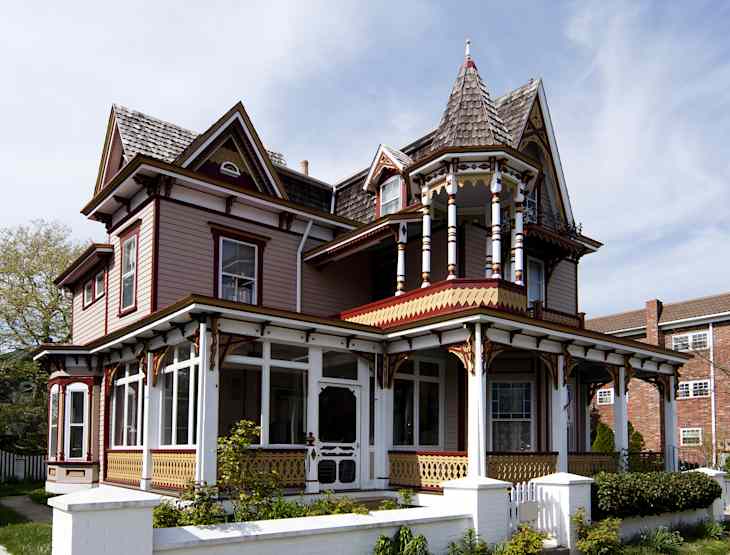
Victorian homes, like the one I live in, aren’t necessarily known for having great storage spaces. These large homes provide ample rooms and nooks, but skimp on the closets. The primary bedroom of my 1895 row home, for instance, only has one tiny closet, and the storage in the home is limited in every room.
That’s why when I moved in nearly two years ago, one of my very first — and very necessary — projects was putting into place some type of closet system in the bedroom. I am admittedly not known for any sort of minimalist tendencies in my wardrobe (sue me!) and, try as I might, I couldn’t make it work within a tiny closet with barely enough depth for a full-size hanger. What I did have was space: big rooms with lots of nooks. Reading nook, coffee nook, sitting pretty nook — you name it, it’s all there. So, when it came time to problem solve my closet situation, I looked to a nook.


How I Fixed My Victorian Home Closet Issue
The bedroom has an awkward nook that seemed to be the perfect spot for a 70-inch long reach-in closet, but after reviewing a few custom closet quotes, it seemed too costly. Then, I tried a DIY closet hack that ended up working just fine, but I knew I’d eventually need to upgrade it.
I ordered a clothing rack, hung a drapery rod from the ceiling, then hung two drapery panels to conceal it. For over a year and a half, this carved-out space is what I used as my closet, confirming my vision that this nook could function as a closet successfully and without impacting the function of the room. But, I knew it needed a “real closet.”
I ordered an Elfa system from The Container Store, had it installed, then enlisted a contractor to build the walls and doors around it. It’s as if it was always there, and I now have a closet that feels like it belongs in 2025 rather than 1895.

How to Make This Closet Hack Work in Any Home
Victorian homes aren’t the only ones with minimal closet space. Any old home, whether it falls under a vintage or antique designation, to use a furniture comparison, will likely fall short on storage.
You don’t need an assortment of nooks to choose from to make this exact closet hack work. All you need is a single empty wall that’s out of the way of the flow of traffic. A simple closet shelving mounted to the wall can then be hidden either by drapery or a more permanent drywall option. It’s creating the closet you need out of the space you have.
In my case, it already had walls on two of four sides, which made it a little less expensive to work with as well as a little less awkward since it wouldn’t fully protrude into the room. The goal is to make it feel integrated into the space, as if it had always been there.

Why Don’t Older Homes Have Big Closets?
Of course, the big question is, why don’t these older homes have closet space? The answer is simple. They had less stuff. They didn’t refresh their wardrobes every season or fall victim to impulse purchases. Both clothing and the cabinetry to hold them were pricey, and people were more likely to have a wardrobe or a chest to hold their items rather than a spacious closet.

What a Real Estate Agent Recommends Her Old House Clients Do for Closets
For real estate agents that work in areas where many of the homes are older than a few decades, they’re used to hearing a familiar refrain complaining about the lack of closets.
Susan Thayer, owner and real estate agent with The Thayer Group, often works with these clients looking at older homes, and she’s found that almost all go in with the idea that they’re going to have to modernize the space to make it work for living today.
“A few ideas that clients will consider are to combine two adjacent bedrooms into one, larger bedroom with a walk-in closet,” Thayer says. “It is a great solution for homes that have four or more bedrooms, or the ability to add a third or fourth bedroom, if combining rooms in the home.”
However, she never recommends turning a bedroom into a closet space if it means that the home is only going to have two bedrooms total following the addition of the new closet. “If combining still leaves three to four total bedrooms, it’s totally acceptable to do that without diminishing the home’s value.”
And, for homeowners who find themselves with extra living space but not enough storage, Thayer even sees formal living and dining rooms turn into extra closed space. “Many homebuyers do not need both of those spaces, so they can consider what rooms are adjacent, and renovate to add closet space in an otherwise not desirable room in the house.”