
The 300-Year-Old Glassware That’s Making a Comeback in Homes Today
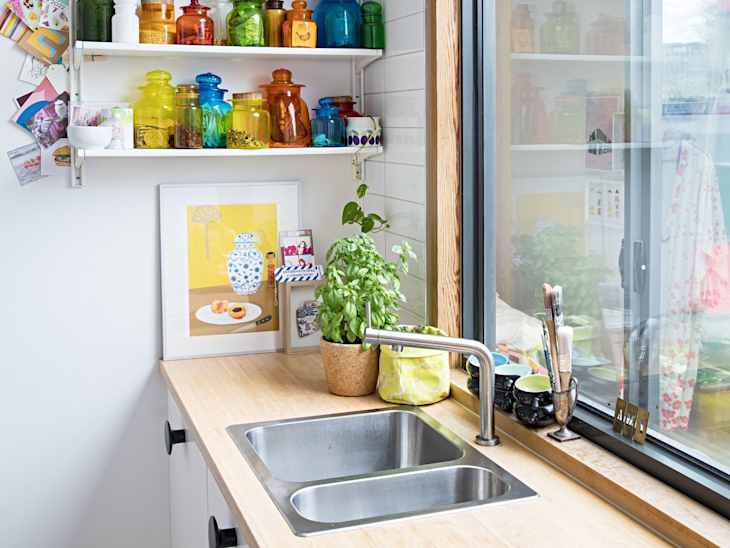
Vintage decor can add heart and soul to a space — especially when items are well-curated and mixed with modern finds. And one of the easiest ways to incorporate a little more vintage into your space — without making it seem like you live in an antique mall — is through glassware.
Vintage glassware is often ornate with unique-yet-timeless silhouettes. And pieces are available in tons of colors to elevate anything from a bar cart or entryway cabinet to a kitchen table (a heavy crystal flower vase makes for the very best centerpiece).

Vintage glassware collectors aren’t just interested in emerald green, sapphire blue, and rose pink hues, though. Carnival Glass and Depression Glass, step aside! Collectors have been expanding their purview with a type of glass that adds a touch of magic to everyday life: uranium glass. This glowing glass has a small-but-mighty cult following, with more and more vintage-lovers finding it hard to resist its unique properties.
Haven’t seen uranium glass pop up at your local flea market or in your Instagram or TikTok feed yet? No worries. This primer will help you identify and build your collection, plus give you some historical info around this funky, statement glassware.

What Is Uranium Glass?
Uranium glass is a type of glass that glows under black light, thanks to its uranium oxide composition. “Its fluorescent properties give the glass a green glow when exposed to UV light,” says Amber Novak, the owner and curator of Gem Finds Home, an online shop for vintage glassware. “The glass itself is usually yellow, green, or a shade in between, but it can be found in other colors depending on what other elements were mixed in during production.”
This type of glowing glassware has some serious wow-factor, especially on social media, where vintage resellers like Novak showcase its impressive and magic-like luminosity for collectors and admirers alike to ooh and aah over.

When Was Uranium Glass First Sold?
According to Novak, most people associate uranium glass with the Depression Glass of the 1920s and ’30s, but this glass has actually existed for much longer than that. “Some sources suggest that it may have been used in Roman mosaics as early as the first century,” she notes.
While it might have an origin dating back 2,000 years, the first time uranium glass was manufactured and sold to consumers (on record) was in Bohemia in the 1830s. “The vibrant colors soon inspired other manufacturers across Europe and eventually the United States to explore producing glass with uranium in it,” says Novak. She adds that this type of glass became wildly popular in the 1880s and continued wowing consumers through the 1920s.

While many vintage glass collectors admire its glowing properties, uranium glass wasn’t originally popular for this unique factor. “UV lights didn’t start becoming widely available until the 1930s, so its early popularity has nothing to do with the fluorescence and more to do with the unique color adding uranium to glass gives,” says Novak.

When Did Uranium Glass’ Popularity Decline?
The uranium glass craze took a turn in the 1920s. And, most interestingly, Novak says, “even though a notable amount of uranium glass was produced during the Great Depression, it wasn’t out of popularity.” During the Great Depression, factories tried to keep their products affordable and workers employed, so a lot of the glass from that time (again, fittingly referred to as Depression Glass) was produced using inexpensive and mass-produced techniques.
“Uranium glass production was halted in the 1940s because uranium was redirected for military use during World War II,” says Novak. This halt limited its availability for household use, and, when production eventually resumed after the war, depleted uranium was more commonly used compared to natural uranium.
The glass began to regain popularity in the late 20th century, and interest around the glowing glass has continued to grow steadily. Novak credits social media, niche collection communities, and the allure that the unique glowing properties offer as part of the revived interest.

Where Can You Find Uranium Glass Today?
“If you’re looking for hard-to-find, high-quality uranium glass pieces, the best places to find them are antique stores, online vintage shops, and marketplace platforms like eBay,” says Novak, who does source some uranium pieces for her shop. Other uranium glass pieces can also be found at thrift stores and flea markets, although it might take some right-place-at-the-right-time luck.
It’s important to note that not all yellow and green glass is uranium glass; “regular” colored glassware won’t glow under a UV light if it doesn’t have uranium oxide in it. To know what you’re looking at, you can perform a quick glow-in-the-dark test. “While you can carry a UV flashlight to help identify uranium glass pieces, I find it most helpful to get a small UV light keychain to put on your keys — that way, you never forget it,” says Novak.

Is Uranium Glass Dangerous?
Albeit small, the amount of uranium oxide found in uranium glass is known to be slightly radioactive, says Novak. For that reason, she recommends only using this kind of glassware decoratively. “I would especially advise against using uranium glass pieces for eating and drinking, as there is no easily accessible way to test them to guarantee their safety.”
Design Defined
Never miss the style inspo and recommendations you crave with Design Defined. Follow along each week as our Home Director Danielle shares the best style advice, latest trends, and popular decor finds you just can't miss.