
7 Genius Ways Designers Fill Awkward Gaps Behind a Sofa
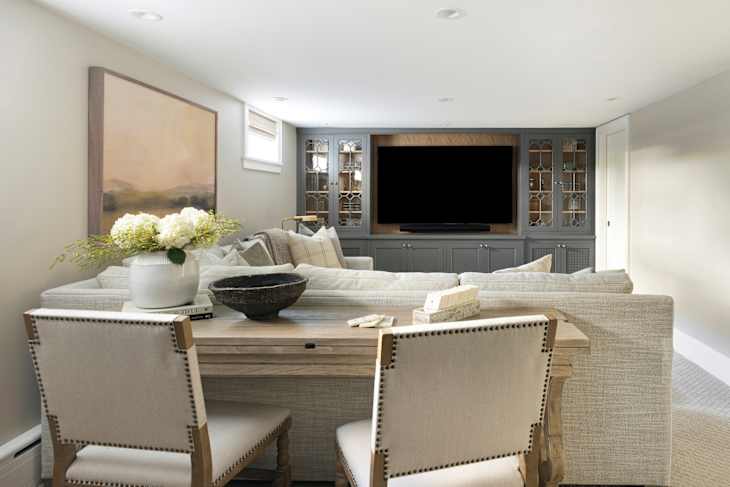
It’s one of the most-used areas in your home, but the living room can provide more than its fair share of layout issues, especially if it’s a small living room. Anyone living with an open-concept floor plan, where kitchens, dining spaces, and living rooms can easily feel disjointed if not thoughtfully designed, can attest to that. This is especially true for anyone who chooses to use furniture to create intentional division between spaces in a large, spacious layout — and that’s where the sofa usually comes in.
Floating your furniture (or simply pulling sofas and other pieces off the walls) helps to create distinct zones within a living room, enhancing the flow of movement from one end to the other. As a by-product, however, you’ll find that it creates noticeable space along and around the walls themselves. It can be as little as 12 inches or as wide as a 4-foot gap, or more.

Your living room layout may also require you to place a sofa somewhere that creates an awkward space — just like my own space. In my Manhattan apartment, exposed pipes intersect with my primary window bay in my living room. And because my floor plan is tight (to say the least!), I’ve placed my sofa right up against this awkward plumbing feature.
Since every inch of a living room layout is essential — whether that’s behind a floating sofa or up against a space you must access — I turned to interior designers for help. Below, I’m spotlighting solutions from leading design pros working in metropolitan spaces across the country. I’ve also implemented a special tip for my own apartment after asking designers what they’d suggest (more on that below, with pictures!).
Some ideas revolve around maximizing storage while others provide more of an aesthetic solution. A few are outside of what you may have thought possible. Follow along as I share smart, designer-approved ways to fill the awkward gap behind your sofa.
Add a Console Table
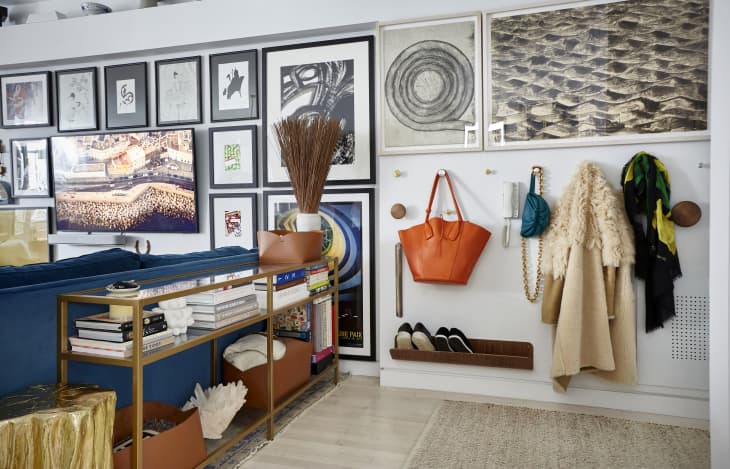
Backing your sofa with a console is a classic, designer-approved solution for floating sofas that are working to better define seating areas in a home. Jennifer Carter, principal designer at New Jersey-based Studio Envie, often eliminates the awkward gap between the sofa and a wall with a well-placed console table.
“We recommend a slim console with lamps to add lighting and a useful ledge in an unexpected place,” she explains, adding that a console can also divide open-floor space into distinct sections. “Another option for the back of a centered sofa is to back it with a game table. This creates a separate space but one that can easily be considered part of the sitting area as everyone gathers around.”

Create a Dining Area Where Space Allows
Console tables can be used for more than just stylish storage and display. Jennifer Davis, founder and principal designer of Minnesota-based Davis Interiors, turns to buffet tables and expandable consoles to anchor seating in her projects.
“One of my favorite ways to turn that awkward walk space behind a sofa into something attractive and functional is a table with drop leaves or an extendable design,” Davis says. “When you need it, the leaves pop up and you’ve got a spot for dining, working, or playing games. It’s such a clever way to maximize square footage without committing to a larger piece, or taking up valuable passing space between rooms.
Utilize the Space for Storage
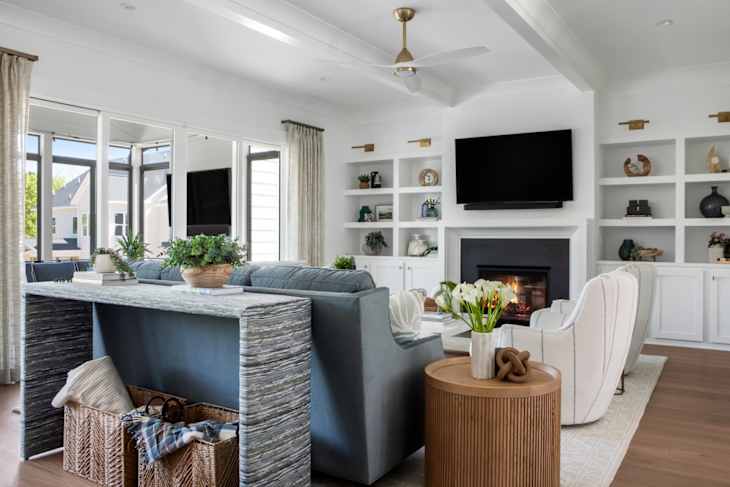
Whether your sofa is facing outward toward guests — or it’s floating away from a wall — creating a long-term storage system in that space is a great way to declutter your living room. Laura Koshel, principal designer at LK Design in Raleigh-Durham, North Carolina, designed this console table to be functional in that it is home to additional throw blankets and pillows for this home’s main seating area. It also creates additional seating when necessary.
“We have storage with the throws, a nice element that is decorated while remaining 36-inches high; it also doubles as a counter space,” she adds. “When you have a big gathering, you can pull stools from the kitchen island and flip them to sit at that console and watch television; it serves as storage but also increases capacity at the same time.”

Install Vertical Storage
If the actual square footage is tight behind your sofa and you can’t find the room to put anything on the floor itself, look upwards instead. Koshel says that built-ins can provide a functional backdrop for a sofa, as she did for this home office, pictured above. It’s utilitarian in that shelving obviously increases storage, but depending on what you choose to display, it may instantly add character to a space that could use personalization that won’t drain your security deposit.

Widen the Gap Even More
Before you balk, think about it: Pushing your sofa further into the living room gives you more space to create an interesting focal point behind it. That’s exactly what Aishah Nisar, creative director at Chicago-based Aishah Nisar Interior Design, did in the space pictured above.
“Sofas can close off a space, which isn’t always a bad thing. Embrace the wall that your sofa back creates and look at it as an opportunity to add another ‘room’ to your home,” she advises. “Add a small bistro table for a cozy dining area; or, in this case, a piano to create a space for music. One inefficient living room instantly transformed into a much more intimate living room and a cozy music nook.”
Personalize the Space with Decor
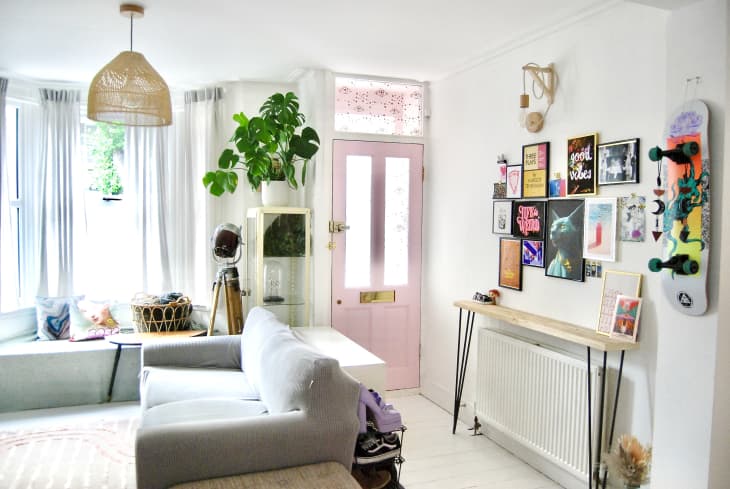
Function is great, but more often than not, the gap behind your sofa may be simply too small to create a utilitarian touch. In that case, lean into a decorative statement; even a few inches is enough to place a floor lamp, advocates Jonathan Culp, principal designer for Land Agency, a Denver, Colorado-based residential firm.
“If it is a small gap that doesn’t offer a lot of space, I focus on using items like art, floor lighting and potted plants to visually bridge the gap,” Culp adds. “A nice piece of art directly behind the wall pulls eyes away from the gap, while layering some plants or decor on either side can help blend everything together.
Consider What Your Space Needs, Then Place It Behind Your Sofa
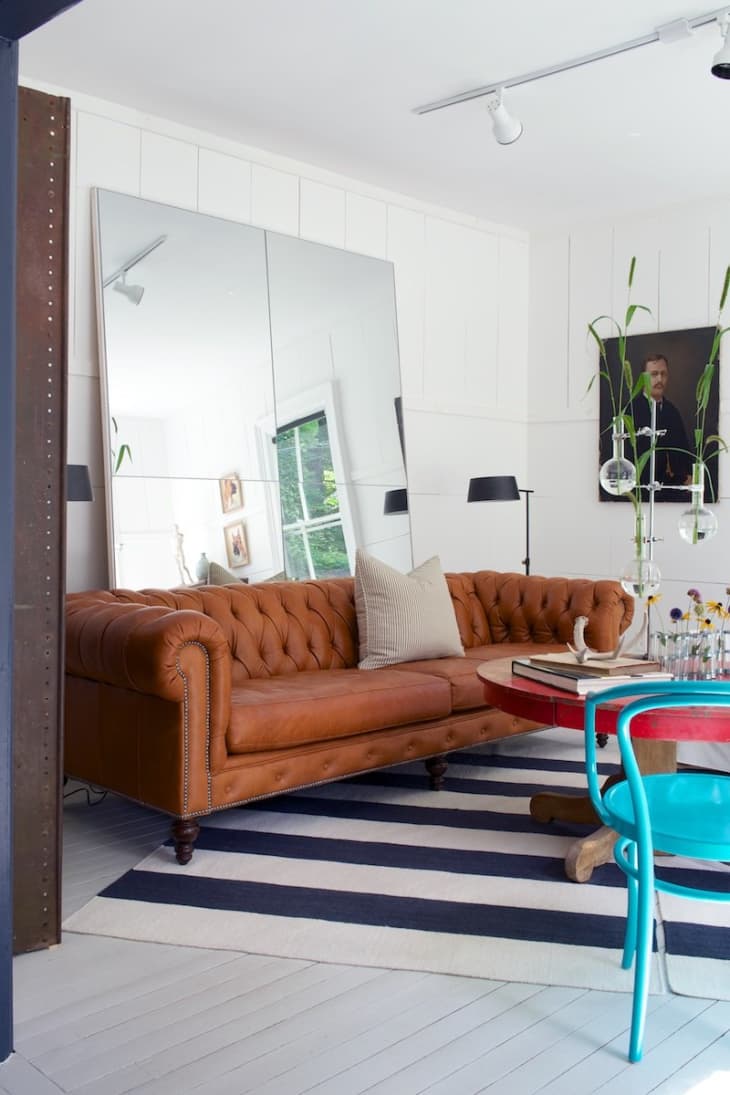
Ultimately, the space you create when floating a sofa is an area that can house an element you may sorely need in your living room that can’t fit anywhere else. Case in point: This upstate New York home lacked sunlight in a compact living room due to a single window placement. The solution? Anchoring a full mirror in the gap between the sofa and the primary wall, reflecting the natural light back across the space.
“The key is thinking through what needs are unmet in your home and using that littlest bit of extra space to fill in the gaps, literally,” advises Nisar, who regularly encourages her clients to use this nook-like space for distinct features.

Bonus: How I Filled the Gap Behind My Own Sofa
Like many others that may be stuck with a dead zone behind their couch, I decided to lean into a storage solution to make use of every inch of space. In this case, I couldn’t install the designer-approved solution of custom floating shelving as I was scared that hardware could penetrate the plumbing nearby. Instead, I found my own storebought solution from (where else?!) IKEA.

Since the back of my sofa intersects this ledge used to encapsulate the heating system in my building, I had about a 3-foot-long, 6-inch-wide gap to fill. Micro-size shelving abounds at IKEA, luckily, and I found a product that’s under $20 (really!) and requires literally just two minutes to install. This VESKEN bathroom storage unit worked perfectly; I chose the black version to better blend into my brown suede loveseat, especially during evening hours.
Now this formerly dead space is a boon for me as I lounge on the sofa to binge my favorite shows. I have access to a space that neatly stores controllers and other electronics, as well as a few products I use for relaxation, including room sprays and lotions for dry winter days; all items that are saved from my small coffee table (and hidden from guests!). Genius! That’s what I’d call both form and function.
Design Defined
Never miss the style inspo and recommendations you crave with Design Defined. Follow along each week as our Home Director Danielle shares the best style advice, latest trends, and popular decor finds you just can't miss.