
Everything You Need to Know About the Delicate Cycle on Your Washer
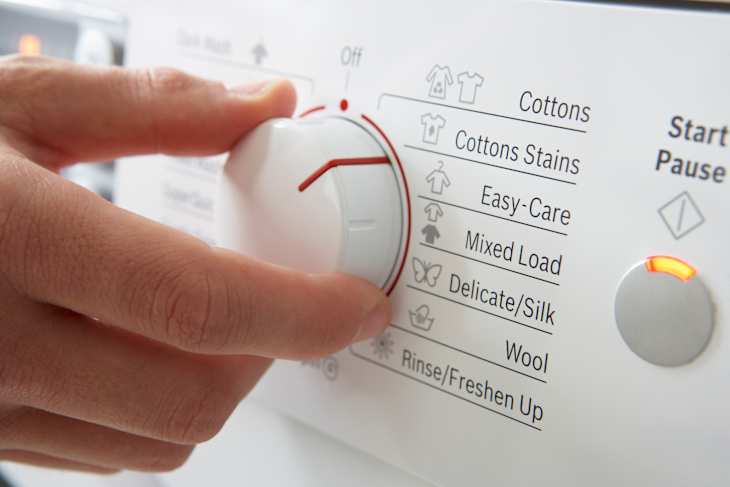
When I first did laundry for my husband, I completely ruined one of his shirts. I didn’t shrink it or dye it a different color (though that did happen with other clothes of his … oops), but I did destroy the fabric — and all because I didn’t read the laundry care symbols on the tag to know how to wash this particular garment. It turns out it needed to be washed on a delicate setting!
Don’t make the same mistake I did. Here’s what you should know about clothing typically washed on a delicate setting, and how that cycle differs from a standard one.
What Temperature Does the Delicate Setting Typically Use?
The delicate setting on your washing machine uses cool or cold water, with a temperature typically ranging from 60°F to 80°F. “Colder water that stands around this temperature will ensure your linens will not shrink, as water that is too hot can cause damage to your clothing and bedding that can be irreversible,” says Parima Ijaz, founder of Pure Parima, a bedding brand.
Warmer water can also cause your garments to fade, says Dennis Godynuk, owner and lead appliance expert at Comfort Appliance Repair. The delicate setting will keep your fragile items looking like new.
How Is the Delicate Setting Different from a Normal Wash Cycle?
On a delicate cycle, your clothes will be washed with a slower spin speed and less agitation. That means your clothes won’t be pulled or stretched nearly as much as they would on a normal cycle. The cycle time for a delicate wash is shorter as well.
“A normal wash uses faster spins and more intense movement to really scrub out dirt,” Godynuk says. “It’s great for tough fabrics like denim, but for something like a lace blouse? Delicate is the way to go.”
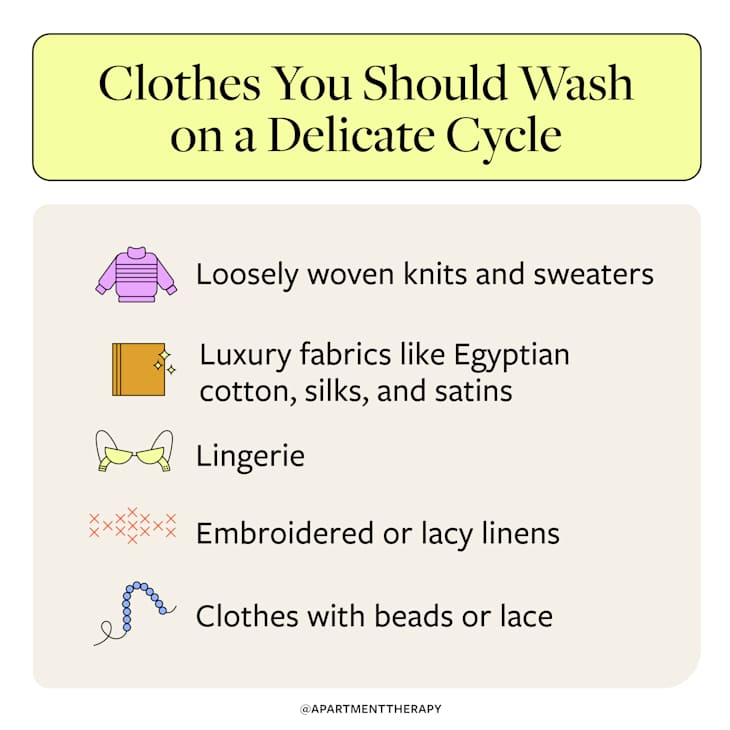
What Clothes Should Be Washed with a Delicate Setting?
If you consider your clothes to be fragile or fancy, you’ll want to use the delicate setting. “Basically, anything you’d be nervous to throw in with jeans should go here,” Godynuk says. Here’s a quick guide to the types of items to put in the wash on delicate.
- Lingerie
- Loosely woven knits and sweaters
- Embroidered or lacy linens
- Luxury fabrics like Egyptian cotton, silks, and satins
- Clothes with beads or lace
What Mistakes Do People Make Using the Delicate Setting?
Selecting the delicate cycle for your fragile clothes is a great start, but some washing machine mistakes can negate the cycle completely. Ijaz cautions not to overload the machine, because it can cause too much friction for your clothes and inadvertently damage them. She also suggests skipping harsh detergents or other chemicals, which can ruin your items. Remember, as well, that air-drying will be your best friend with delicate clothing. Heat can ruin them — so skip the dryer.