
A Dining Room Renovation Makes a “Closed-Off” Space Feel Brighter and Bigger
Some people love closed-concept, compartmentalized homes, while others prefer an open-plan layout. Jerry Nguyen (@east_van_bungalow) says she and her family didn’t have a ton of budget to add on square footage to their home, but they wanted to make it feel larger.
“We wanted to make the space feel bigger by tearing down the existing walls and achieving an open concept,” she says. “The existing layout did not take advantage of the amazing natural light that was already available.”
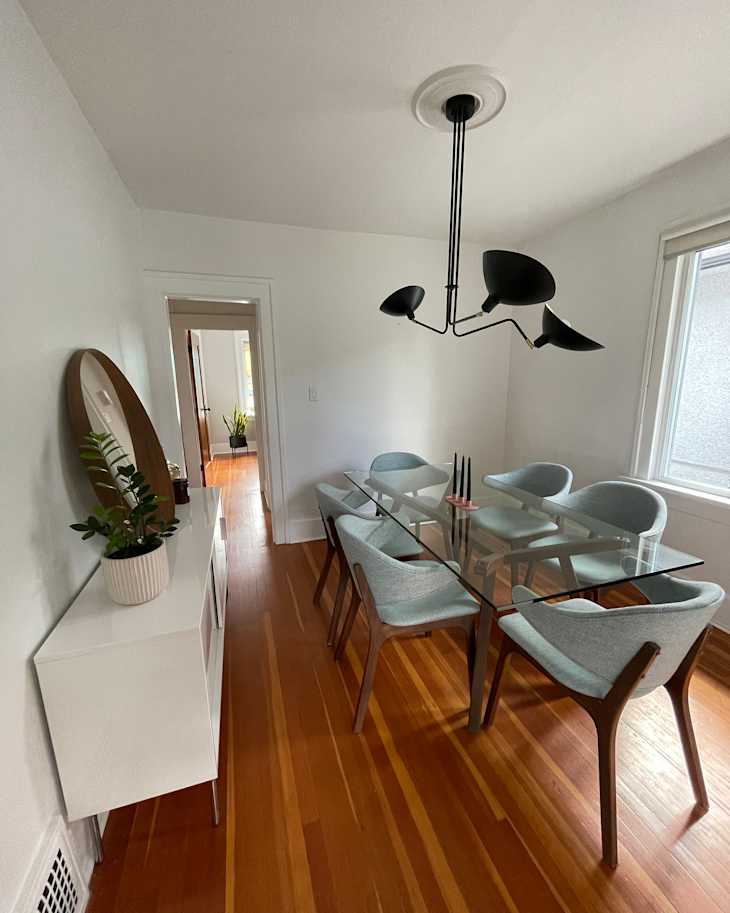
Knocking down the lefthand wall was step one of the project.
Before, the dining room was a closed-off space. Jerry and her husband hired professionals to create an open-concept home and refinish the wood floors. (This cost about $180,000, and the work included the kitchen and living rooms, too.) “The existing space was not conducive to entertaining,” Jerry says. “The dining room was a whole separate room, the kitchen was a separate room, and the living room was separate,” she says.
Jerry says if you’re embarking on a major home renovation like she and her husband did, you can expect to double your initial budget and timeline. “There were significant scope changes once the walls were torn down,” she says of her reno. “Nothing about the house was to current code.” But she and her spouse tackled several projects themselves, too, to save money.


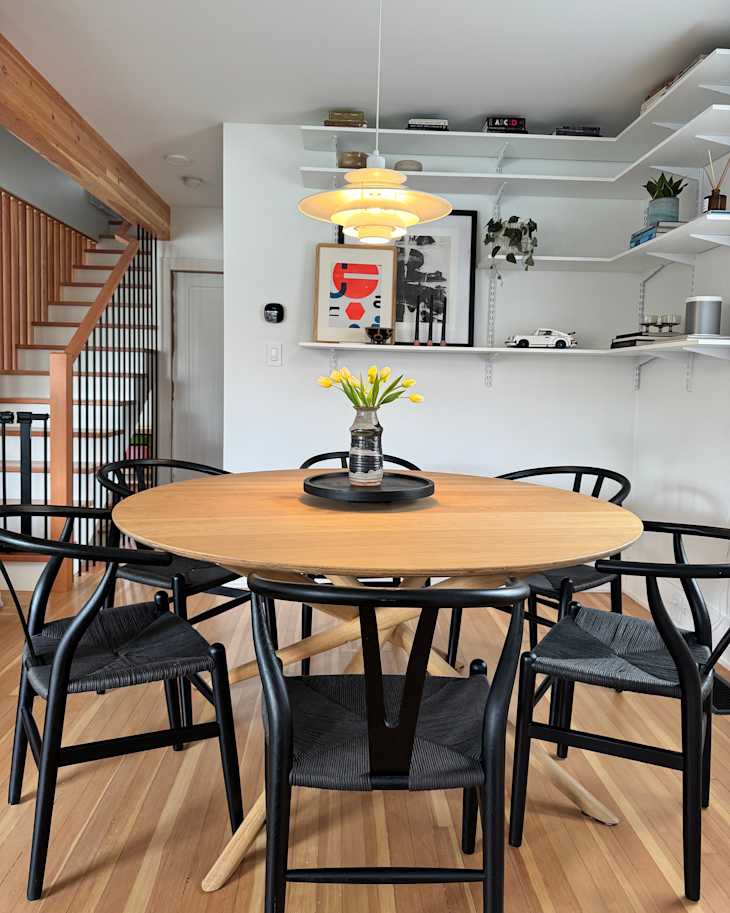
The shelving and lighting were DIY installations.
“The shelves in the dining area are DIYed,” Jerry says. “We weren’t ready to splurge on String shelves, so these are a Home Depot dupe.” She adds that installing the modular shelving was a “super easy” project using closet components, and she uses them to display travel and thrifted treasures. “Nothing is too precious — [it’s] just things that make us happy in the given moment!” she says.
Plus, Jerry gets lots of compliments on the new look. “I listed an old dining light fixture on Facebook Marketplace, and all I got were messages asking where the shelves were from!” she says. Speaking of Facebook Marketplace, shopping secondhand was also a budget-saver in this dining room transformation. Jerry’s dining table, which costs about $4,000 new, was a Facebook Marketplace find.
Jerry says the entire renovation was a lesson in determining what to DIY and what to hire out. “If you look closely, none of the trim or baseboards are finished,” she notes. “Due to scope changes with our contractor, we decided to take this out of the project and DIY it ourselves to save money … the lesson learned is to just pay the professionals.” Thanks for sharing, Jerry, and in the meantime, I’ll just look up — at the cool vintage light fixture from Etsy, that is.
Inspired? Submit your own project here.