
I Tried “Dry Tripping,” and It Wasn’t Perfect (but It Was Worth It)
Content Warning: This story discusses alcoholicism. If you or someone you know is struggling with alcohol issues and are in need of support, please check out the resources below or dial 911 for immediate emergencies.
Hi, I’m Cullen, and I’m an alcoholic. At least that’s what I recited in front of hundreds of strangers once a week while attending virtual Alcoholics Anonymous meetings last year. I mumbled the words, but often didn’t believe them or give their depth of meaning to my life.
When I was 16, I was introduced to alcohol (via some unnamed punch or a plastic handle), and it quickly became an enormous part of my life. Almost overnight, it became the central focus and goal of most social gatherings for me. I got wrapped up in how I was going to get it (usually through someone’s older sibling) and how I was going to hide it from my parents (a water bottle). It was (somewhat) innocent teenage stuff — the kind of behavior that’s normalized and almost encouraged through popular movies and television shows.
But when I turned the legal drinking age, even though I swapped out plastic bottles for premium glass ones, that frenzied “teenage” spirit didn’t go away. I didn’t necessarily rely on alcohol on a daily basis, and I could go weeks without it, but after my first taste I would order drink after drink; I was unable (or unwilling) to stop myself from having another, usually before the one I was sipping was finished. Soon enough, I was the wasted person at every party.
Why I Needed to Address My Relationship with Alcohol
Things took a turn last year when I suddenly and unexpectedly lost a friend. That painful loss was a one-way ticket to self-destruction, and then hopeful absolution. In my grief, I confronted the fact that I didn’t like myself, and realized that alcohol was a driving force of that feeling. Losing someone as cool and powerful and beautiful as my friend forced me to examine all my flaws — especially my binge drinking. I looked back on all of the major regrets in my life, and they stemmed from being the drunkest girl at the function.
I’d damaged relationships with friends because of my selfishness and inability to stop drinking, put myself in unsafe situations (too many to count), disrespected my family and friends, and acted in ways that sober me couldn’t relate to or understand. I didn’t want to cut out alcohol entirely, but I needed to find ways to heal my relationship with it.
Luck has a way of wonderfully revealing itself at our darkest moments. Mine appeared last summer when I was at an all-time low. I’d become somewhat of a performer — no one at work knew what was going on. As fate would have it, journalist and lifestyle expert Hilary Sheinbaum’s name popped up in my work inbox.
Sheinbaum is the author of Going Dry: A Workbook: A Practical Guide to Drinking Less and Living More and founder of GoingDry.Co, a non-alcoholic event and menu curation company that organizes non-alcohol public pop-up bars, private events, and classes, and even works with restaurants and hotels to create menus that pair food options with gorgeous and delicious mocktails. She was inviting me on a trip to the Four Seasons Jackson Hole to experience “dry tripping,” which is essentially traveling sans alcohol. I immediately said yes.
What Is “Dry Tripping,” aka a Sober Vacation?
Dry tripping is exactly what it sounds like: a trip that’s done without any alcoholic beverages. Also called a “sober vacation,” dry tripping has been on the rise for years now, with people swapping their alcohol for non-alcohol libations or mocktails.

Benefits of a Sober Vacation
“Going dry during a vacation or work trip can really shift your perspective on how alcohol is impacting your sleep, energy, finances, and overall day-to-day,” says Sheinbaum of the benefits of a sober vacation. “Being booze-free in an environment away from home can provide an opportunity to analyze the role alcohol is playing in your everyday life, and also encourage you to explore non-alcoholic beverage options.”
Surprise, surprise — up until this trip traveling was, in large part, just another excuse to order a ton of yummy cocktails, and it seemed that if I got drunk it was more understandable because we were on vacation. I’d never heard of “dry tripping,” and didn’t know what to expect. I was in such a low spot that I honestly was scared at the thought of meeting new people and upholding conversations without the endorphin rush that over-consumption brings.
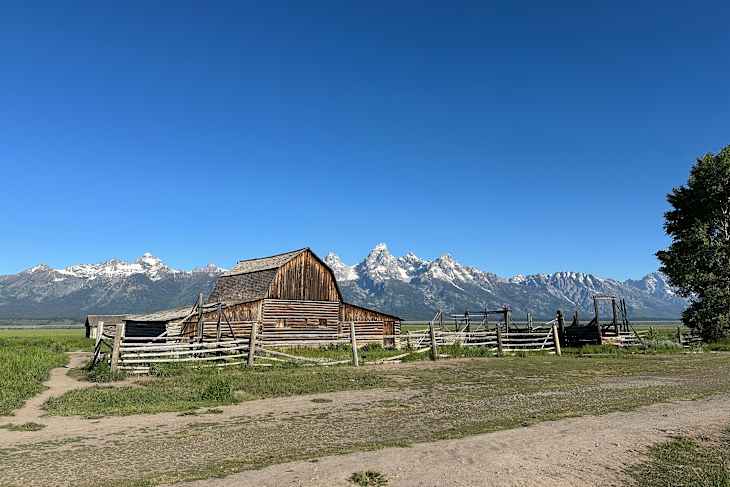
But as soon as we touched down in Jackson Hole, the surrounding strikingly beautiful Teton mountains silenced those worries. I breathed in the crisp, fresh air and kept moving forward. We had a full itinerary, which included a wildlife safari (I saw a moose!), biking through nature, spa treatments, riding a gondola high up the Teton mountains, and being one of the first people to taste the mocktails at the hotel’s new Steadfire Chophouse.
During the trip, I noticed an unexpected decrease in stress: At meals, without the pressure of drinking, I wasn’t worried about whether I should have a red wine before a martini in the hopes that it would somehow lessen, or completely eliminate, the chance of a hangover. That isn’t to say I didn’t partake in any alcohol on this trip; I had a couple glasses of wine over the several days, but never got drunk. I realized that if I were following my usual drinking patterns, I’d already be making up some excuse to cancel the next day’s plans because I wanted to carelessly imbibe. That mental noise was gone. Throughout the days I had more energy, and felt more present in all moments — especially the quiet ones.
One morning on the trip I called my mom, and she began to cry. I panicked. How had I disappointed someone this time? But she told me that it was the first time in months that I sounded like myself again. That was a gift I’ll never get over.
Initially, I feared that without the social crutch of copious amounts of alcohol, I’d crawl into myself and not make friends. But the exact opposite happened. I made several new friends and had genuine, belly-aching laughter that I thought was only associated with liquor. I felt connected to the younger me, who was freely playful.
Waking up without a hangover, clear-minded with a view of the breathtaking mountainside out my window, made me feel deep gratitude for every second. For the first time in months, I felt energized by the simple pleasures that a quiet life brings; I felt hopeful about the future and the journey I was on. And the rest I got over just a few days made me confident enough to continue fighting. And I realized something else: Even if I wasn’t on a personal journey, entering my own personal do-not-disturb mode would be fulfilling regardless. I vowed to do it again one day.
How to Plan a Sober Vacation
You know that feeling when you need a vacation from a vacation? That didn’t happen after my trip. I left feeling refreshed and restored rather than exhausted. At the time, I was in the middle of an intensive weekly mental health program that included group therapy. The conversations I had after the trip were more raw, honest, and helpful than before.
The trip was totally restorative — physically, mentally, and emotionally — and I feel strongly that I need to have at least one of these trips yearly. So, I’m taking the lessons I learned from this dry trip into my next planning phase. Here’s how you can plan a sober-centric (even if it’s not 100%) vacation.

Scan the Menus to Ensure There Are Non-Alcoholic Options
Planning is essential, especially when it comes to restaurants. For example, when I think of a steakhouse, my mind immediately jumps to a martini or red wine. But at Four Seasons Jackson Hole’s Steadfire Chophouse, you can have the experience of drinking something that’s “crafted with the same care as a classic cocktail” without any alcohol, shares general manager Luis Martinez. He adds that each zero-proof cocktail is thoughtfully built “using teas, botanicals, fermentation, and layered acidity to create structure, texture, and complexity.”
In our group, the Huckleberry Sour, which is a mixture of huckleberry purée, whey, lemon, egg white, and orange blossom water, was a crowd favorite. However, Sheinbaum explains that the hotel is now serving two Giesen 0% white wines in their Ascent Lounge. “It’s very cool to see individuals — and hotels — leaning into a dry and dryish lifestyle. Having readily available options to help visitors consume less alcohol, or simply try it on, is so important,” Sheinbaum says.

Create a Full Itinerary
Whenever there’s a lull in a vacation or a period of zero plans, it’s a natural reflex to toss out the idea of grabbing an Aperol spritz near the pool or a hot toddy near a roaring fire aprés ski. But having a set itinerary, even if the activity is simply lounging by the pool or getting a massage, helps stave off the unexpected detour to the bar.
The Four Seasons Jackson Hole naturally boasts so much to do and see, but I realized if I had been drinking like on other vacations it truly wouldn’t have mattered where I was. One of my favorite activities was e-biking around Jackson Hole, and (insert humble brag) because I wasn’t hungover I manually pedaled. It was a workout with incredible views!

Travel Solo or with an Understanding Group
I am guilty of encouraging friends to order that one final drink. (Face it — it’s never the last cocktail.) But I think for me, the key to a restorative sober vacation is to go with people who are aligned with the trip’s goal. There was no peer pressure or expectations to be silly, goofy, or tipsy because we all understood the memo.
While I wasn’t traveling solo, there was a lot of meaningful solitude, which helped me reconnect with myself away from the pressures and stresses of daily life. Taking time away from the group or going whole-hog and traveling alone can be rejuvenating.
The benefits of my dry trip to Jackson Hole are some that I still feel to this very day. It reframed my thinking about what a vacation could and likely (at least for me) should look like. While I’m still figuring out my relationship with alcohol every day, including what a sustainable relationship with it looks like, the trip was a great reminder that vacations should be a time for restoration — and alcohol only gets in the way of that.
Resources
If you or someone you know is struggling with alcohol issues and are in need of support, visit one of the websites below or call any of their helplines.
- For any life-threatening situations, call 911
- SAMHSA National Helpline, 1-800-662-HELP (4357)
- Alcoholics Anonymous